

A crisp, high contrast visual to frame the topic. Images are compressed and cached for speed.
Common Async/Await Errors: 21 Proven Fixes to Stop Bugs
By Morne de Heer · Published by Brand Nexus Studios
If your team ships JavaScript, you have tripped over common async/await errors at least once. The good news is these bugs are predictable. With a few habits and patterns, you can eliminate most of them before they hit production.
In this guide, you will learn how to spot common async/await errors fast, why they happen, and the exact fix you can apply today. We will use small examples you can paste into a REPL or test file and see the result right away.
Quick note for performance minded readers. We also show when to run tasks in parallel, how to add safe timeouts, and how to tune concurrency without breaking APIs. Every example favors clarity first, speed second.
And yes, every image here is optimized. We compress assets and leverage caching so this page loads fast on mobile and desktop.
Why common async/await errors keep showing up
Async code is easy to read but still runs on promises and the event loop. Most common async/await errors come from mixing sync expectations with async behavior. Once you learn the patterns, your fixes will feel obvious.
Below, we catalog 21 common async/await errors you are likely to see in real apps. For each one, we give a quick diagnosis and a proven fix.

21 common async/await errors and how to fix them
1. Forgetting to mark the function async
It looks small, but it breaks instantly. You write await inside a function that is not async and get a SyntaxError. This is one of the most common async/await errors for new code.
// Wrong
function getUser() {
  const user = await fetchUser(); // SyntaxError
  return user;
}

// Right
async function getUser() {
  const user = await fetchUser();
  return user;
}
Fix it by adding the async keyword to any function that uses await. Keep a lint rule active to prevent this category of common async/await errors.
2. Forgetting await on a promise
You call an async function but forget to await. You pass a promise instead of a value downstream, which yields odd behavior later. This is among the most common async/await errors in reviews.
// Wrong
async function handler() {
  const data = fetchData(); // Promise, not the resolved value
  process(data);
}

// Right
async function handler() {
  const data = await fetchData();
  process(data);
}
Add lint rules that flag floating promises. Consider TypeScript strict settings to catch these common async/await errors sooner.
3. Swallowing errors with try-catch that does nothing
Another of the common async/await errors is catching an error but doing nothing with it. You lose the stack and the caller never knows it failed.
// Wrong
async function save(doc) {
  try {
    await db.insert(doc);
  } catch (e) {
    // swallowed
  }
}

// Right
async function save(doc) {
  try {
    await db.insert(doc);
  } catch (e) {
    e.message = `Insert failed for id=${doc.id}: ${e.message}`;
    throw e; // propagate
  }
}
Always propagate or return a typed result. Silent failure is one of the most costly common async/await errors.
4. Not returning in try-catch
Inside try you compute a value, but you forget return. The function resolves with undefined. This shows up often in refactors and is part of common async/await errors catalogs.
// Wrong
async function login() {
  try {
    const token = await auth();
    // forgot return
  } catch (e) {
    throw e;
  }
}

// Right
async function login() {
  try {
    const token = await auth();
    return token;
  } catch (e) {
    throw e;
  }
}
5. Await inside a hot loop instead of batching
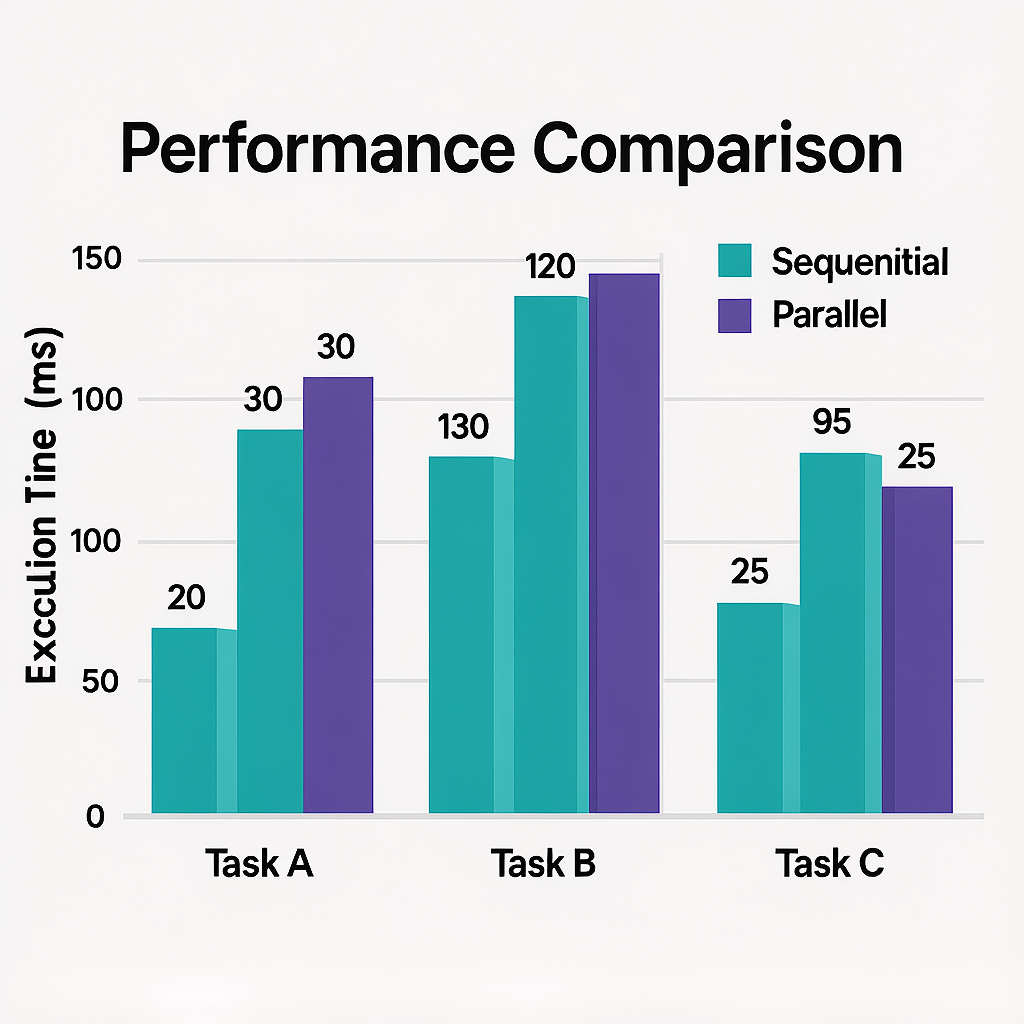
Await in a loop forces sequential execution. That is sometimes correct, often slow. This is one of the most visible common async/await errors in performance reviews.
// Sequential - often slow
for (const id of ids) {
  const user = await getUser(id);
  users.push(user);
}

// Fast parallel - correct if calls are independent
const users = await Promise.all(ids.map(getUser));
Use Promise.all when tasks are independent. Use a concurrency limiter when you must control pressure. Avoid this category of common async/await errors on hot paths.
6. Using Array.forEach with async callbacks
forEach does not await. This is one of the classic common async/await errors that lead to unhandled rejections or exit before completion.
// Wrong
ids.forEach(async id => {
  await doWork(id);
});
console.log('done'); // logs too early

// Right
for (const id of ids) {
  await doWork(id);
}
// or
await Promise.all(ids.map(id => doWork(id)));
7. Confusing map with await
map plus async returns an array of promises. That is fine if you await them. Forgetting to collect or await is part of common async/await errors in PRs.
// Wrong
const results = await ids.map(async id => getUser(id)); // results is array of promises, not values

// Right
const results = await Promise.all(ids.map(id => getUser(id)));
8. Assuming try-catch will catch async errors outside its scope
try-catch only catches awaits inside its block. Detached work is not caught. This is one of the trickiest common async/await errors because the crash happens later.
// Wrong
try {
  doWorkAsync(); // not awaited
} catch (e) {
  // never runs
}

// Right
try {
  await doWorkAsync();
} catch (e) {
  handle(e);
}
9. Launching fire-and-forget tasks that outlive the request
Starting tasks without awaiting can cause leaks, rate spikes, or lost work on shutdown. This shows up as common async/await errors in server apps.
// Safer pattern
const task = doWork();
backgroundTasks.add(task);
task.finally(() => backgroundTasks.delete(task));
await Promise.race([task, requestClosed()]);
Track launched tasks. Use lifecycle hooks to shut them down. Avoid fire-and-forget unless you have a durable queue.
10. Over trusting Promise.all when a single failure cancels all
Promise.all rejects on the first failure. If you want best effort, use allSettled. Misuse here is a frequent member of common async/await errors.
// Fails fast
const results = await Promise.all(jobs.map(run));

// Best effort
const settled = await Promise.allSettled(jobs.map(run));
const ok = settled.filter(s => s.status === 'fulfilled').map(s => s.value);
const failed = settled.filter(s => s.status === 'rejected').map(s => s.reason);
11. Blocking the event loop with heavy CPU
await does not make CPU work cheaper. If you block the loop, timers and promises stall. This is one of the costliest common async/await errors at scale.
// Offload CPU heavy work
const result = await workerPool.run(task); // or a queue to a worker service
Use workers or a service for CPU bound work. Keep the event loop free to schedule microtasks and I O callbacks.
12. Missing timeouts and aborts on network calls
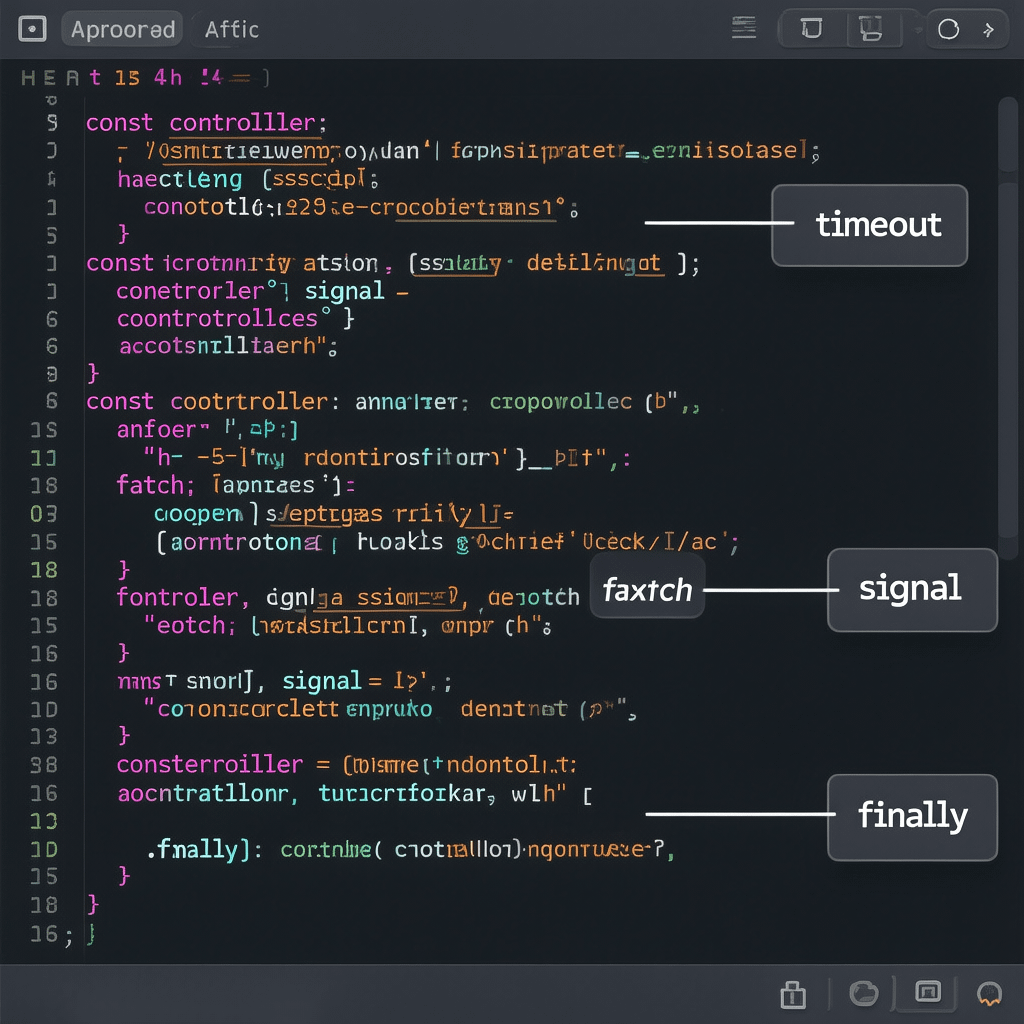
Hangs are silent killers. Without a timeout, your await can stall forever. This is a top entry in lists of common async/await errors.
async function fetchWithTimeout(url, ms = 5000) {
  const ctrl = new AbortController();
  const t = setTimeout(() => ctrl.abort(), ms);
  try {
    const res = await fetch(url, { signal: ctrl.signal });
    return res;
  } finally {
    clearTimeout(t);
  }
}
13. Ignoring unhandled promise rejections
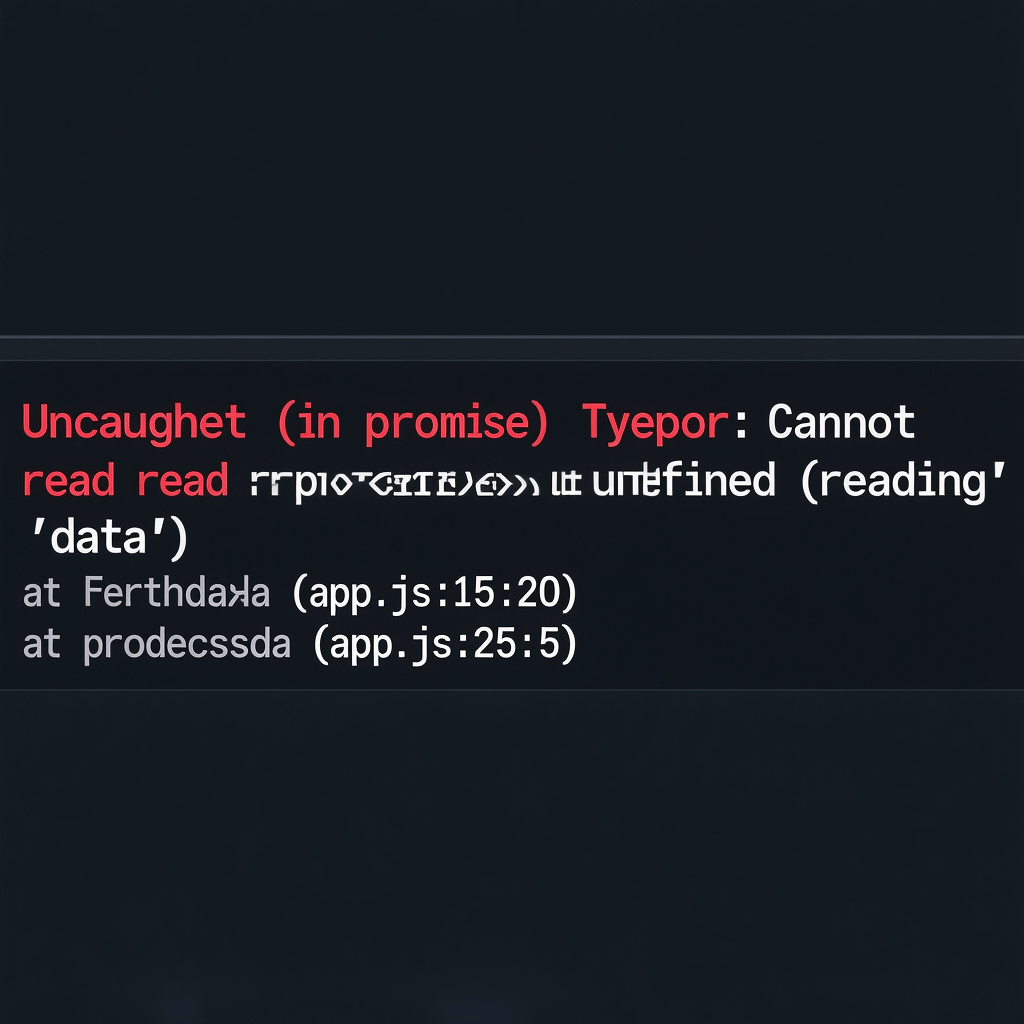
Unhandled rejections can crash processes or hide bugs. This is one of the most dangerous common async/await errors because it looks fine until production.
// Browser
window.addEventListener('unhandledrejection', e => {
  console.error('Unhandled promise rejection', e.reason);
});

// Node
process.on('unhandledRejection', reason => {
  console.error('Unhandled promise rejection', reason);
  // decide whether to exit
});
14. Not using finally for cleanup
Cleanup should run even when an error happens. Skipping finally is a source of leaks and is common in async code. Include it to avoid common async/await errors that drain resources.
async function handle(conn) {
  await conn.open();
  try {
    return await conn.query('SELECT 1');
  } finally {
    await conn.close(); // always runs
  }
}
15. Creating new Promise when not needed
Wrapping async in new Promise is the promise constructor anti pattern. It invites common async/await errors by duplicating resolve-reject logic.
// Wrong
function read() {
  return new Promise(async (resolve, reject) => {
    try {
      const data = await fs.promises.readFile('a.txt');
      resolve(data);
    } catch (e) {
      reject(e);
    }
  });
}

// Right
async function read() {
  return fs.promises.readFile('a.txt');
}
16. Top-level await without considering startup time
Top-level await works in ESM but can slow cold starts. Used carelessly, it ranks among common async/await errors that surprise teams.
// module.mjs
const config = await loadConfig(); // TLA
export function handler() { /*...*/ }
Prefer lazy loading or pre-initialization where possible. Measure startup and keep TLA away from critical import chains.
17. Forgetting to handle rejected values from allSettled
Teams adopt allSettled to avoid fast fail, then forget to handle failures. That turns into silent data loss. This pattern fuels common async/await errors in pipelines.
const settled = await Promise.allSettled(tasks);
for (const r of settled) {
  if (r.status === 'rejected') {
    report(r.reason);
  }
}
18. Losing context across async boundaries
Logs without a correlation ID are hard to stitch together. One of the subtle common async/await errors is missing context propagation.
// Attach a requestId through calls
async function withReqId(id, fn) {
  return await fn({ requestId: id });
}
Use AsyncLocalStorage in Node or pass context objects explicitly so every log line is traceable.
19. Not limiting concurrency against rate limits
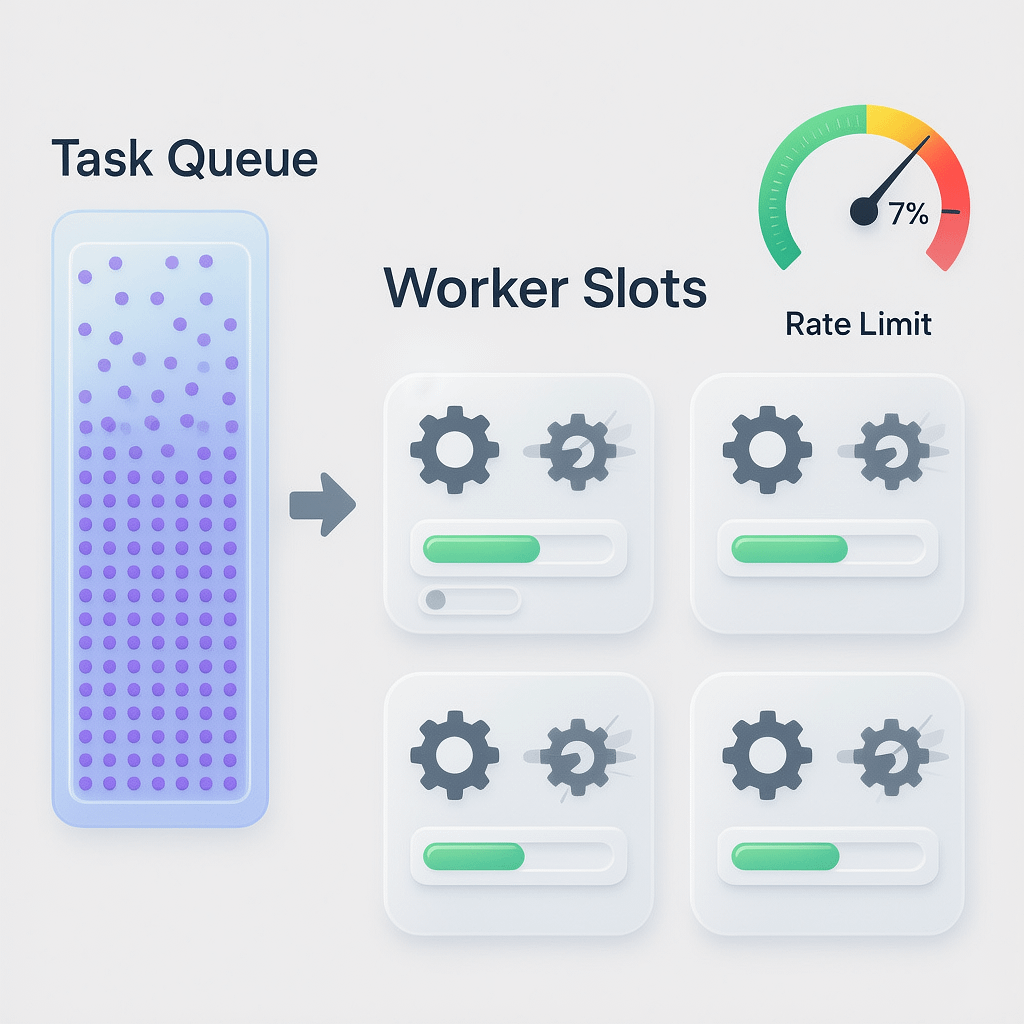
Promise.all on thousands of tasks can overwhelm an API. Spiky load then retries make it worse. This is a performance flavored member of common async/await errors.
async function mapLimit(items, limit, fn) {
  const ret = [];
  const queue = [...items];
  const workers = Array.from({ length: limit }, async () => {
    while (queue.length) {
      const item = queue.shift();
      ret.push(await fn(item));
    }
  });
  await Promise.all(workers);
  return ret;
}
20. Treating async setters or hooks as synchronous
Some frameworks have async lifecycle hooks. Forgetting to await them causes inconsistent state. This lands on many lists of common async/await errors across UI and server code.
await store.hydrate(); // ensure state is ready before rendering or handling a request
21. Misreading microtask timing and ordering
Promise callbacks run as microtasks before timers. If you rely on setTimeout to run before a then, you will be surprised. This subtle timing is behind several common async/await errors.
Promise.resolve().then(() => console.log('microtask'));
setTimeout(() => console.log('macrotask'), 0);
// logs: microtask then macrotask
When in doubt, add explicit awaits or wrap work in a next tick helper to document intent and avoid these common async/await errors.
Production guardrails that prevent common async/await errors
You can prevent most common async/await errors with a few guardrails. These are quick wins you can add to any project in under an hour.
- Add lint rules for no floating promises, no async in forEach, and consistent return in try-catch.
- Enable strict TypeScript settings. Let types force you to await and handle null cases.
- Set process-level handlers for unhandledRejection and uncaughtException in dev, and log with context.
- Wrap network calls with timeouts using AbortController. Add retries with backoff only for idempotent calls.
- Use a concurrency limiter for bulk I O. Keep external APIs happy and predictable.
- Instrument latency and error rates. Alert on spikes and new error signatures.
If you want expert help building resilient web apps, our website design and development team at Brand Nexus Studios builds fast, robust systems that avoid these pitfalls.
Security and data safety in async code
Many common async/await errors double as security issues. Timeouts, retries, and concurrency all affect rate limits and resource control.
- Always validate inputs before making outbound calls. Bad data plus retries can amplify attacks.
- Use timeouts and aborts so an attacker cannot hold a connection open for free.
- Protect secrets. Avoid logging tokens or PII when you handle rejected promises.
- Use circuit breakers to shed load on dependencies that are failing.
Consider a small red-team style test for your async paths. It reveals classes of common async/await errors you cannot see in happy path testing.
Quick how to debug common async/await errors
Use this fast method when a bug hits production. It tackles common async/await errors without guesswork.
- Reproduce with a small, stable fixture. Remove non essentials until the bug is visible in under 3 seconds.
- Add structured logs. Include a request ID, the function name, and a duration for each await.
- Wrap network calls with a timeout using AbortController. If the bug hides, it was a hang.
- Run sequentially first. Then increase concurrency with a limiter to find race conditions.
- Write a regression test before shipping the fix.
Real world patterns that replace common async/await errors
Patterns beat patches. Adopt these and you will sidestep most common async/await errors automatically.
Use a result type for business logic
type Result<T> = { ok: true; value: T } | { ok: false; error: Error };

async function safeGet(id: string): Promise<Result<User>> {
  try {
    return { ok: true, value: await getUser(id) };
  } catch (e) {
    return { ok: false, error: e as Error };
  }
}
This reduces try-catch nesting and turns many common async/await errors into clear control flow.
Centralize timeouts and retries
async function withTimeout<T>(p: Promise<T>, ms = 5000): Promise<T> {
  const ctrl = new AbortController();
  const t = setTimeout(() => ctrl.abort(), ms);
  try {
    // pass ctrl.signal to the underlying fetch or request
    return await p;
  } finally {
    clearTimeout(t);
  }
}
Collect errors by type and context
function wrap(msg: string, err: unknown) {
  const e = err instanceof Error ? err : new Error(String(err));
  e.message = `${msg}: ${e.message}`;
  return e;
}

try {
  await write();
} catch (e) {
  throw wrap('Write failed', e);
}
Message discipline cuts mean time to repair. It also makes common async/await errors obvious in logs.
Need help instrumenting and reporting performance across your stack? Our team at Analytics and Reporting can wire up the metrics and dashboards that spotlight problems before users notice.
Dev speed tip: write tests that catch common async/await errors
Tests make refactors fearless. Aim for small, focused tests around async edges. These catch common async/await errors where they start.
- Test successful paths and failure paths. Ensure you see the right error message.
- Use fake timers to control timing issues around microtasks.
- Mock slow services and assert on timeouts and retries.
- Assert that cleanup runs by checking finally behavior.
Frontend focus: async UI pitfalls
The browser surfaces a few unique common async/await errors.
- Race between navigation and pending fetch. Abort on route change to avoid state updates after unmount.
- Double fetch on strict mode dev. Guard idempotent calls.
- Stale closures when the state changes between awaits. Read fresh state after await.
Treat UI effects as async first. Add guards and aborts. Most UI bugs here map to the same common async/await errors you have seen on servers.
Server focus: async service pitfalls
On servers, common async/await errors often involve resource limits and shutdown.
- Not awaiting database close on shutdown. Add a graceful shutdown sequence.
- Leaking timers or intervals. Store handles and clear them in finally.
- Chain of awaits in hot endpoints. Batch, limit, and parallelize carefully.
Performance quick wins that avoid common async/await errors
These small changes pay off instantly.
- Prefer Promise.all plus a limiter to reduce tail latency.
- Cache stable data for short windows to cut repeated awaits.
- Trim response objects before stringify to reduce CPU load.
On the topic of speed, remember your site performance too. Compress images, set long cache headers for static assets, and use a CDN. That is why every image in this post is compressed and cache friendly.
When you need a trusted partner to ship fast sites and apps, Brand Nexus Studios is ready to help with design, builds, hosting, and maintenance.
Mini reference: dos and donts for common async/await errors
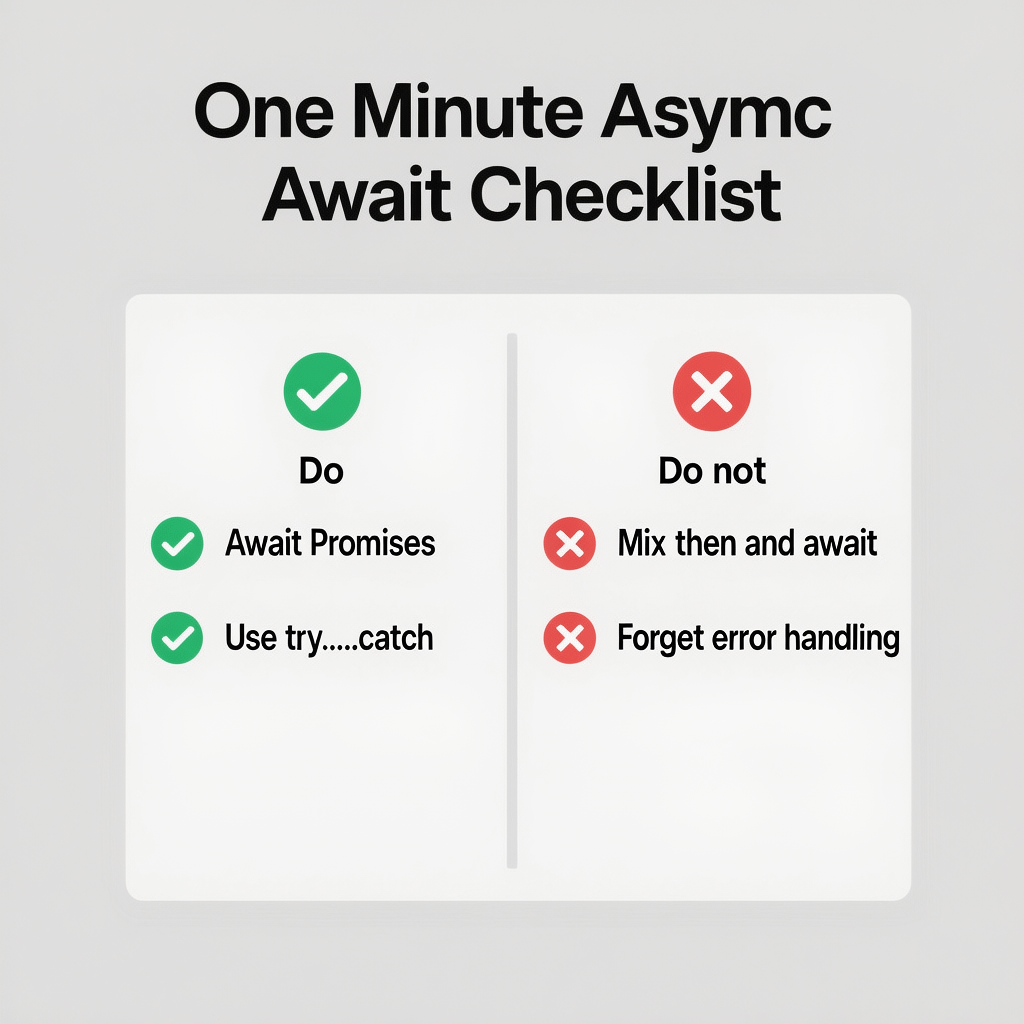
- Do await every promise you care about.
- Do use finally for cleanup.
- Do batch independent work with Promise.all and a limiter.
- Do set timeouts and aborts on I O.
- Do log with context and durations around awaits.
- Do not use forEach with async callbacks.
- Do not swallow errors in empty catch blocks.
- Do not block the event loop with heavy CPU.
Annotated example fixing five common async/await errors
// Before: slow, noisy, and brittle
async function importUsers(ids) {
  const results = [];
  ids.forEach(async id => {
    try {
      const user = await fetch(`/api/users/${id}`);
      results.push(await user.json());
    } catch (e) {
      console.error('err', e);
    }
  });
  return results; // returns early and empty
}

// After: fast, reliable, and clear
async function importUsers(ids) {
  // limit concurrency to 5 to avoid rate limits
  const users = [];
  const queue = [...ids];
  const worker = async () => {
    while (queue.length) {
      const id = queue.shift();
      const u = await fetchWithTimeout(`/api/users/${id}`, 3000)
        .then(r => r.ok ? r.json() : Promise.reject(new Error(`HTTP ${r.status}`)));
      users.push(u);
    }
  };
  await Promise.all([1,2,3,4,5].map(() => worker()));
  return users;
}
We removed forEach with async, added a timeout, added a limiter, and handled HTTP errors explicitly. That clears multiple common async/await errors at once.
Visual recap to avoid common async/await errors
FAQs
These quick answers cover questions that come up when dealing with common async/await errors.
What are the most common async/await errors in JavaScript?
They include forgetting await, using await inside loops, mixing callbacks with promises, swallowing errors in try-catch, skipping timeouts, and ignoring unhandled promise rejections.
How do I handle errors with async/await without cluttering code?
Return result types for business logic, centralize low level error handling, and use helpers that wrap timeouts and retries. Keep try-catch near where decisions are made.
Should I use Promise.all or await in a loop?
Promise.all for independent work, await in a loop for required ordering, and a limiter when you want controlled parallelism.
How can I avoid unhandled promise rejections?
Ensure every promise has an await or a catch path. Add global handlers in dev, and monitor logs for unhandled patterns.
Is top-level await safe to use in production?
Yes in ESM modules, but it can slow cold starts. Test and measure. Avoid it in libraries where consumers cannot control timing.
How do I debug async stack traces effectively?
Turn on async stack traces, add context in error messages, use correlation IDs, and preserve ordering by awaiting each step where ordering matters.
What is a safe way to add timeouts to fetch with async/await?
Use AbortController with a timer and clear it in finally. Translate abort errors into domain errors your caller understands.
References
About the Author