
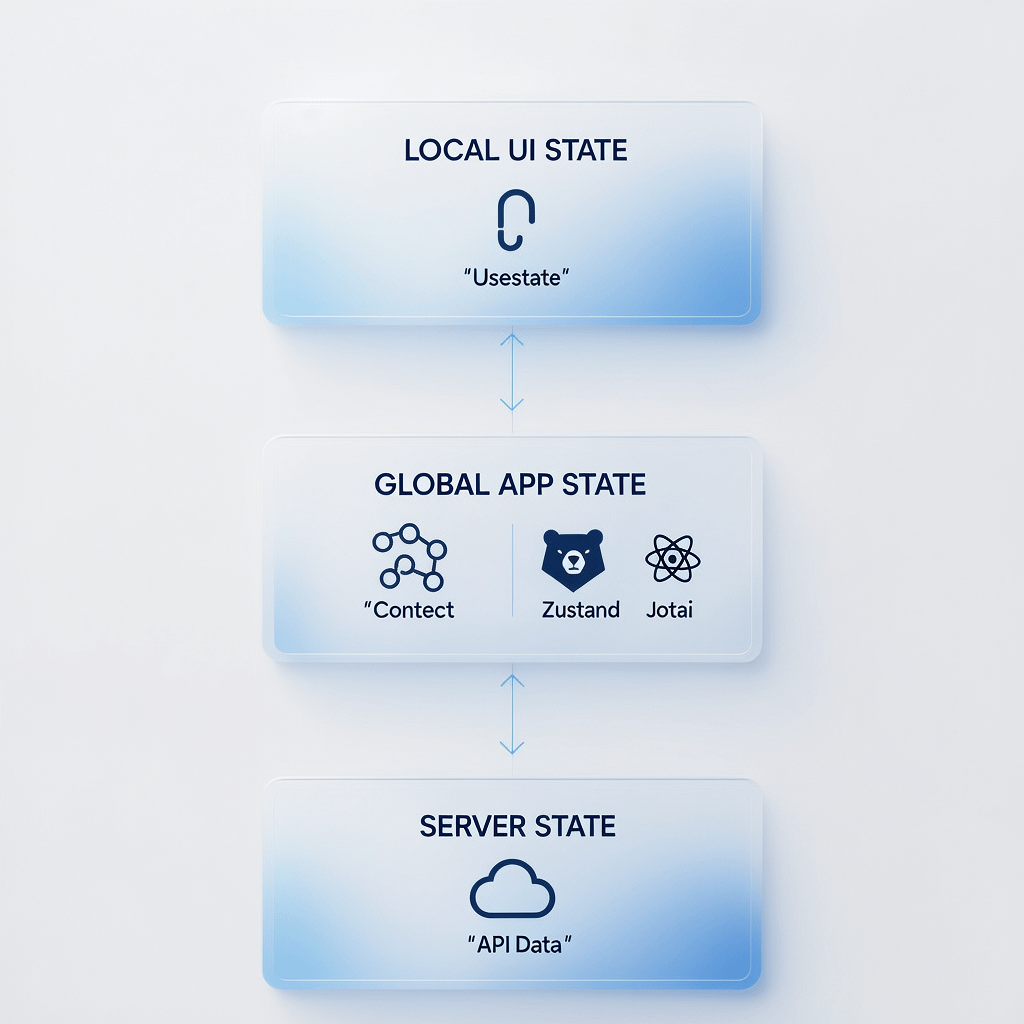
A practical path to state management in React without Redux. Images are compressed and cached for fast loading.
State Management in React Without Redux: 11 Proven Wins
Tired of boilerplate? You are not alone. Today, state management in React without Redux is a smart default for many teams. Modern React gives you powerful primitives and a healthy ecosystem of lightweight stores that tame complexity without the overhead.
In this deep dive, you will learn how to ship reliable features faster using hooks, Context, reducers, and tiny libraries that scale. We will compare options, share patterns, and walk through migration steps so you can nail state management in React without Redux with confidence.
We will keep paragraphs short, examples focused, and page speed top of mind. Every image here is compressed, and we will touch on caching, code splitting, and re-render control along the way.
Why developers choose state management in React without Redux
Let’s be direct. Redux is great at what it does, but you pay in complexity. You can achieve state management in React without Redux by matching tools to state types and keeping logic closer to components.
Reducing boilerplate and cognitive load
Action types, action creators, reducers, thunks, selectors, middleware. That stack works, but many apps do not need it. With hooks, you write less code and keep intent obvious. This is the fastest path to clear state management in React without Redux.
Smaller bundles and better runtime performance
Fewer dependencies means fewer bytes and fewer indirections. That translates to faster startup, faster interaction, and easier debugging. Lighter tools make state management in React without Redux practical for teams that care about speed.
First class React features
React’s useState, useReducer, useContext, and custom hooks form a flexible core. Add lazy loading, memoization, and transitions, and you can ship sophisticated behavior with no Redux at all.

Know your state types before you pick tools
Right sizing tools is the heart of effective state management in React without Redux. Start by classifying state clearly.
- Local UI state – component confined, like toggles, inputs, and modals.
- Derived state – computed from other values, not stored directly.
- Server state – fetched, cached, revalidated data from APIs.
- Global app state – auth, user profile, preferences, feature flags.
- Form state – validation, field values, submission status.
- URL state – search params, hash, router params.
Each type has a best fit. Use the smallest tool that solves the problem. That keeps state management in React without Redux lean and predictable.
11 proven wins for state management in React without Redux
1. Colocate with useState for fast iteration
Start simple. Most interactions can live inside the component that owns them. This is the most direct form of state management in React without Redux.
function CheckoutButton() {
  const [loading, setLoading] = useState(false);
  const onClick = async () => {
    setLoading(true);
    try {
      await payNow();
    } finally {
      setLoading(false);
    }
  };
  return <button disabled={loading} onClick={onClick}>
    {loading ? 'Processing...' : 'Pay now'}
  </button>;
}
Keep state near where it is used. Lift it only when multiple siblings must coordinate.
2. useReducer for complex local transitions
When state has multiple fields and transitions, useReducer gives structure without ceremony. It is a clean pathway to state management in React without Redux for complex widgets.
function cartReducer(state, action) {
  switch (action.type) {
    case 'add':
      return { ...state, items: [...state.items, action.item] };
    case 'remove':
      return { ...state, items: state.items.filter(i => i.id !== action.id) };
    case 'clear':
      return { items: [] };
    default:
      return state;
  }
}

function Cart() {
  const [state, dispatch] = useReducer(cartReducer, { items: [] });
  return (
    <div>
      <button onClick={() => dispatch({ type: 'clear' })}>Clear</button>
      {state.items.map(i => <div key={i.id}>{i.title}</div>)}
    </div>
  );
}
3. Context for stable app wide values
Context shines for values that rarely change. Auth, theme, and configuration are perfect fits. This keeps state management in React without Redux focused and efficient.
const AuthContext = createContext(null);

function AuthProvider({ children }) {
  const [user, setUser] = useState(null);
  const value = useMemo(() => ({ user, setUser }), [user]);
  return <AuthContext.Provider value={value}>{children}</AuthContext.Provider>;
}

function useAuth() {
  const ctx = useContext(AuthContext);
  if (!ctx) throw new Error('useAuth must be used within AuthProvider');
  return ctx;
}
Split contexts by concern so changes do not ripple through your entire tree.
4. Context plus useReducer to replace a Redux slice
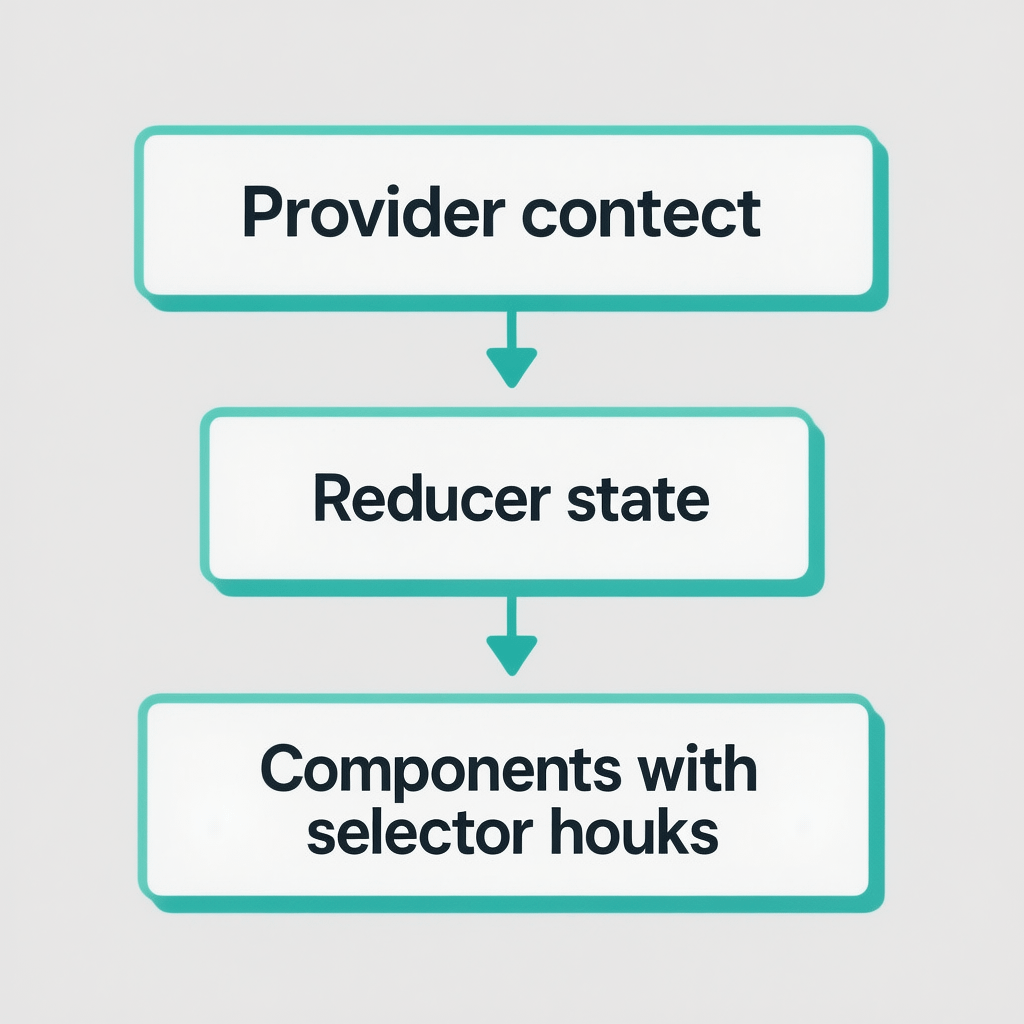
Pairing Context with a reducer gives you a small, testable store. This is the backbone of many teams doing state management in React without Redux.
const TodosContext = createContext(null);

function todosReducer(state, action) {
  switch (action.type) {
    case 'created':
      return [...state, action.todo];
    case 'toggled':
      return state.map(t => t.id === action.id ? { ...t, done: !t.done } : t);
    default:
      return state;
  }
}

export function TodosProvider({ children }) {
  const [state, dispatch] = useReducer(todosReducer, []);
  const value = useMemo(() => ({ state, dispatch }), [state]);
  return <TodosContext.Provider value={value}>{children}</TodosContext.Provider>;
}

export function useTodos() {
  const ctx = useContext(TodosContext);
  if (!ctx) throw new Error('useTodos must be used within TodosProvider');
  return ctx;
}
Scope the Provider close to consumers. This limits re-renders and keeps boundaries clear.
5. Custom hooks to encapsulate logic
Custom hooks package stateful behavior once and reuse it everywhere. Your components stay slim, and your state management in React without Redux stays clean.
function useToggle(initial = false) {
  const [on, setOn] = useState(initial);
  const toggle = useCallback(() => setOn(o => !o), []);
  return { on, toggle, setOn };
}
Compose hooks to model domains. Example: useCart, useAuth, useFeatureFlags.
6. Make URL state a first class citizen
Search filters, sort order, and pagination belong in the URL. Syncing with the address bar helps users share links and keeps state management in React without Redux predictable.
function useQueryParam(key, initial) {
  const [params, setParams] = useSearchParams();
  const value = params.get(key) ?? initial;
  const setValue = v => {
    const next = new URLSearchParams(params);
    next.set(key, v);
    setParams(next, { replace: true });
  };
  return [value, setValue];
}
7. Treat server state differently with a data fetching library
Server data is not the same as client state. Use a dedicated library to handle caching, revalidation, and background updates. This minimizes custom code and sharpens state management in React without Redux.
// Example with a server state library such as TanStack Query
function useUser(userId) {
  return useQuery({
    queryKey: ['user', userId],
    queryFn: () => fetch(`/api/users/${userId}`).then(r => r.json())
  });
}
Keep server state out of your global store. Derive UI state from query results instead.
8. Zustand for lightweight global state
Zustand provides a tiny, fast store with a friendly API. It is a popular choice for state management in React without Redux when you need global but minimal state.
import { create } from 'zustand';

const useCartStore = create(set => ({
  items: [],
  add: item => set(s => ({ items: [...s.items, item] })),
  clear: () => set({ items: [] })
}));

function CartTotal() {
  const total = useCartStore(s => s.items.reduce((t, i) => t + i.price, 0));
  return <span>${total}</span>;
}
Select only the slice you need to keep renders fast.
9. Jotai and Valtio for atomic updates
Atom based stores let components subscribe to small pieces of state. This pattern scales well and keeps state management in React without Redux modular.
// Jotai example
import { atom, useAtom } from 'jotai';
const countAtom = atom(0);
function Counter() {
  const [count, setCount] = useAtom(countAtom);
  return <button onClick={() => setCount(c => c + 1)}>{count}</button>;
}
10. XState for workflows and complex logic
When you have many states and transitions, state machines keep behavior explicit. They bring clarity to state management in React without Redux in complex flows.
const machine = createMachine({
  id: 'payment',
  initial: 'idle',
  states: {
    idle: { on: { SUBMIT: 'processing' } },
    processing: { on: { SUCCESS: 'success', FAIL: 'error' } },
    success: {},
    error: { on: { RETRY: 'processing' } }
  }
});
11. Signals and fine grained reactivity
Signals libraries track dependencies at a granular level, updating only what changed. They can complement state management in React without Redux where precision matters.
Performance principles that keep renders under control
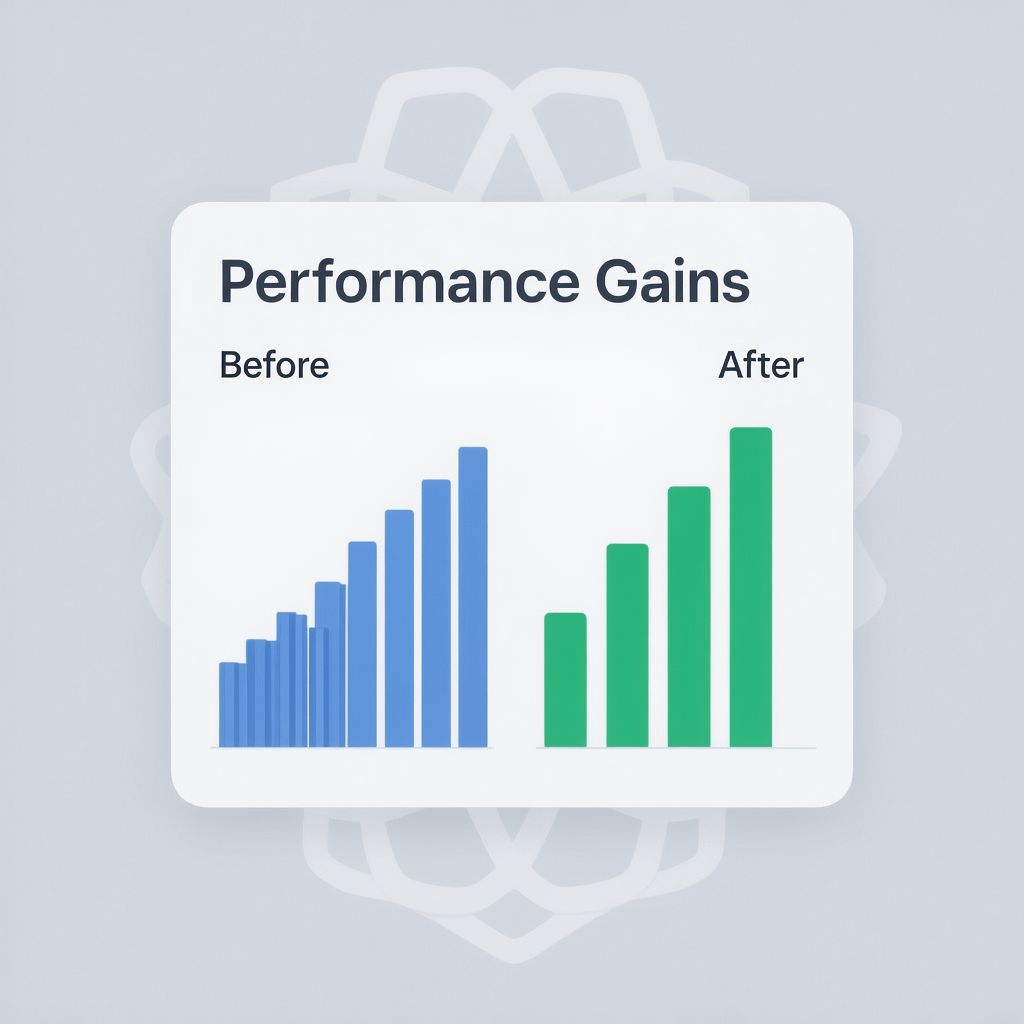
Good state management in React without Redux is as much about render control as it is about API design. Follow these rules to stay fast.
- Split context by concern. One for auth, one for theme, one for flags.
- Memoize provider values with useMemo so consumers do not re-render needlessly.
- Use selectors with Zustand or Jotai to subscribe to tiny slices of state.
- Freeze state shape where possible to simplify equality checks.
- Prefer derived state to duplication. Compute totals and counts on the fly.
- Lazy load routes and heavy components to reduce initial cost.
- Compress images and enable caching to cut transfer time and boost Core Web Vitals.
A decision framework for state management in React without Redux
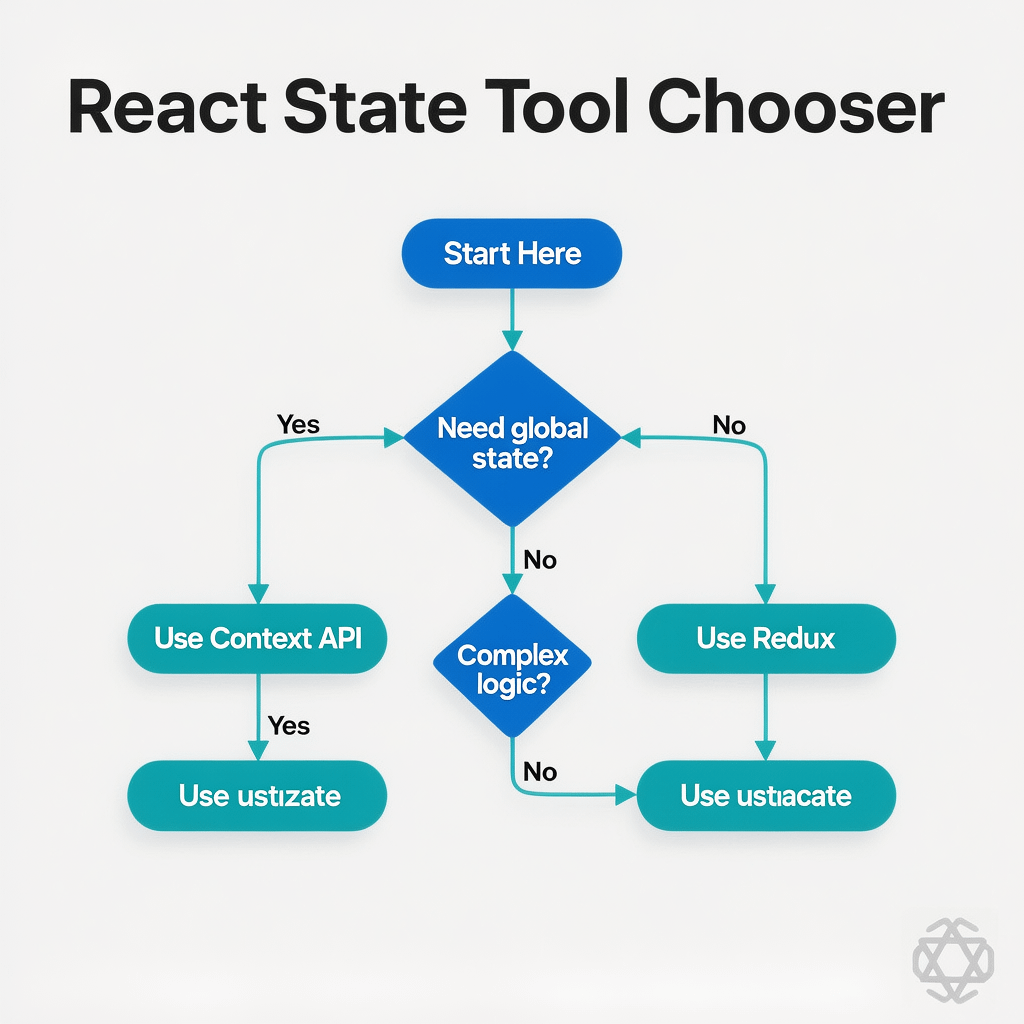
Choosing tools gets easier with a simple checklist. Use it to keep state management in React without Redux consistent across your team.
- Is it local? Start with useState or useReducer.
- Is it app wide but stable? Use Context.
- Does it change often? Use a small store with selectors.
- Is it from the server? Use a server state library and avoid global storage.
- Should it be shareable via URL? Put it in the router or search params.
- Is the logic complex? Consider a state machine for clarity.
- Do you need auditability? Add logging middleware to your small store only where it helps.
Step by step: migrate one feature off Redux today
You can adopt state management in React without Redux incrementally. Here is a safe migration strategy that works in real projects.
Step 1 – Pick a low risk slice
Choose a slice that has simple actions and limited UI impact. Preference toggles, filters, or a read only domain are good candidates.
Step 2 – Map current behavior and selectors
Write down the state shape, actions, and selectors you actually use. This avoids carrying over accidental complexity.
Step 3 – Implement a reducer and context
const PrefsContext = createContext(null);

function prefsReducer(state, action) {
  switch (action.type) {
    case 'toggleDark':
      return { ...state, dark: !state.dark };
    case 'setLocale':
      return { ...state, locale: action.locale };
    default:
      return state;
  }
}

export function PrefsProvider({ children }) {
  const [state, dispatch] = useReducer(prefsReducer, { dark: false, locale: 'en' });
  const value = useMemo(() => ({ state, dispatch }), [state]);
  return <PrefsContext.Provider value={value}>{children}</PrefsContext.Provider>;
}

export function usePrefs() {
  const ctx = useContext(PrefsContext);
  if (!ctx) throw new Error('usePrefs must be used within PrefsProvider');
  return ctx;
}
Step 4 – Swap consumers gradually
Replace mapStateToProps or useSelector one component at a time with a custom hook. Keep both systems side by side during the transition to reduce risk.
Step 5 – Remove the old slice
When tests pass and behavior matches, delete the Redux slice and wiring. Celebrate a simpler codebase that nails state management in React without Redux.
Real world patterns that scale nicely
Teams that succeed with state management in React without Redux invest in repeatable patterns. Borrow these to save time.
- Domain modules that export hooks, types, and helpers. Example: src/domains/cart/useCart.ts.
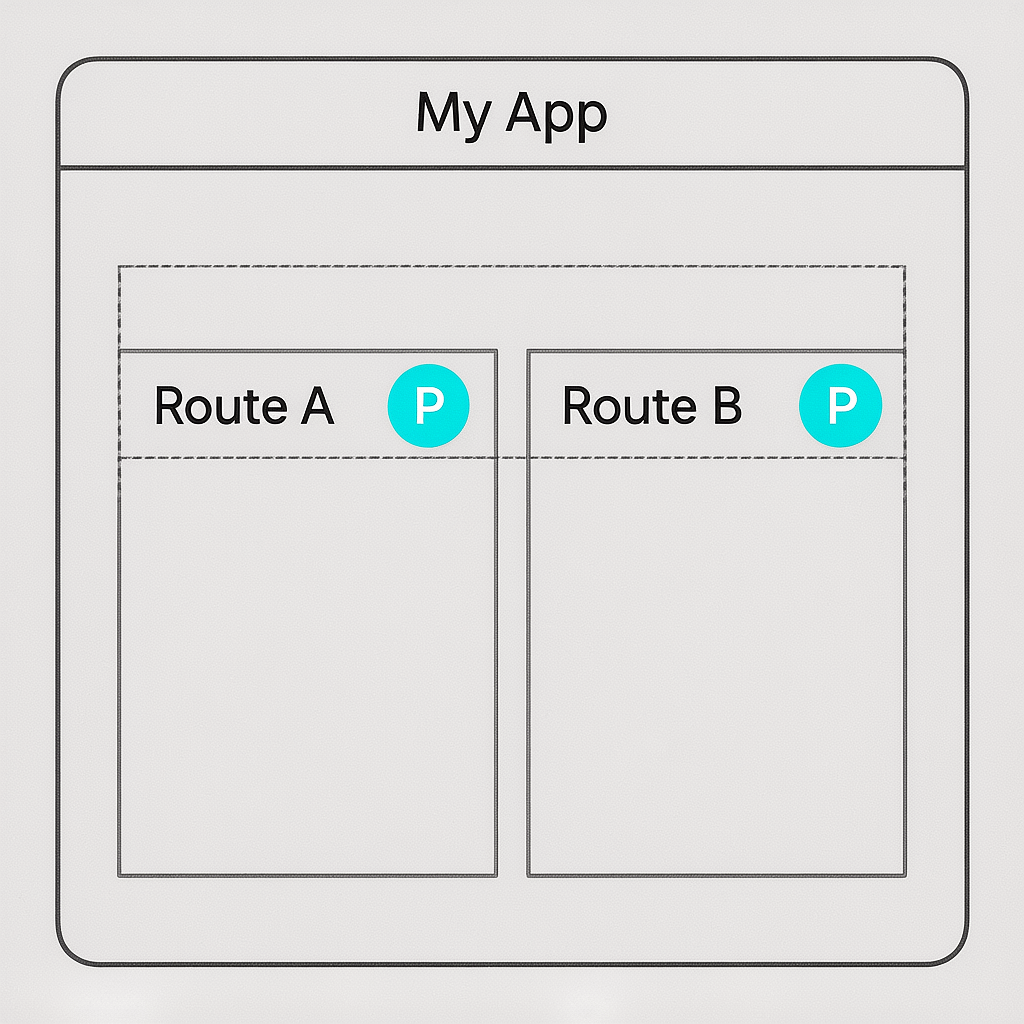
- Boundary providers close to routes, not at the app root. That keeps trees shallow and fast.
- Selector based reads to limit component updates. Derive only what you need.
- Optimistic UI handled by your server state library, then reconciled on settle.
- Error boundaries per route or widget to isolate failures.
Testing strategies that keep you confident
Clean state management in React without Redux makes testing easier. Aim for fast unit tests and realistic integration tests.
- Test reducers as pure functions with simple input and output cases.
- Render components with testing utilities and assert on behavior, not internals.
- Mock server responses at the boundary and assert optimistic updates and retries.
- Snapshot complex flows with state machines to lock in transitions.
Page speed and operational excellence
Great UX is more than logic. Be deliberate about performance and operations while you build state management in React without Redux.
- Compress images to modern formats and set caching headers. Your feature images here are compressed for speed.
- Code split routes and heavy modules. Use React.lazy, Suspense, and route level boundaries.
- Cache results with a service worker if your app benefits from offline behavior.
- Monitor Core Web Vitals and track re-render causes during development.
If you want expert help aligning state patterns with performance budgets, our website design and development team at Brand Nexus Studios can guide your architecture and delivery process without slowing your roadmap.
Common pitfalls and how to avoid them
Running state management in React without Redux is straightforward once you watch out for these traps.
- Huge context values. Split them. Use multiple providers.
- Recreating functions on every render. Wrap handlers with useCallback when they travel to deep children.
- Duplicated state. Derive counts and totals rather than storing copies that drift.
- One global store for everything. Favor local first. Escalate only when needed.
- Ignoring server realities. Use a server state library for caching, retries, and invalidation.
Security, resilience, and privacy considerations
Security applies even to state management in React without Redux. Keep secrets off the client, sanitize inputs, and avoid putting sensitive data into URL state. Log errors without leaking PII. If you persist state in storage, encrypt where applicable and honor user privacy settings.
Documentation patterns that scale with your team
Clear docs turn state management in React without Redux into a team habit. Establish a one page decision record per domain describing the chosen pattern, trade offs, and ownership. Add code samples and a short checklist to keep pull requests aligned.
- Template readme per domain with hooks and provider responsibilities.
- Examples folder with tiny, runnable demos for tricky parts.
- Lint rules that block anti patterns, like importing store internals directly.
How to choose between Context, Zustand, Jotai, and XState
Here is a quick, practical way to select tools for state management in React without Redux.
- Context: small, stable, app wide values. Low churn. Minimal performance risk.
- Zustand: medium sized global state with precise selectors and tiny API surface.
- Jotai: atom based updates when you want fine grained subscriptions.
- XState: complex workflows or protocol heavy tasks where transitions must be explicit.
Mix as needed. Local UI stays in useState and useReducer. Server data stays in its own layer.
Observability for your state layer
You cannot improve what you do not measure. Instrument state management in React without Redux with logs and metrics. Track action counts, re-render frequency, and slow selectors. Use browser performance tools to profile interactions and focus on user visible wins.
If you rely on dashboards to guide product decisions, connect UI events to your analytics pipeline. Our analytics and reporting practice helps teams turn state events into insights you can ship against.
Governance and code review checklists
When your team reviews pull requests, apply a short checklist to keep state management in React without Redux aligned across features.
- Is the state colocated or lifted only when necessary?
- Are providers scoped and memoized?
- Does server state live in the data layer, not a global store?
- Do selectors keep components focused on the smallest slice possible?
- Are images compressed and caching enabled for new UI assets?
Mini case study: shipping faster with smaller stores
A mid sized ecommerce team adopted state management in React without Redux by replacing two Redux slices with Context plus reducers, and moving catalog data to a server state library. They dropped 12 kB of gzipped JS, cut average render duration by 23 percent, and simplified tests dramatically.
They also created a tiny hook library for UI patterns like toggles and paginated lists. The result was faster onboarding and more predictable code. If you want similar outcomes, explore technical SEO and performance services alongside architecture improvements so you can see impact in search and UX at once.
Frequently asked questions
These answers summarize popular questions about state management in React without Redux. For deeper dives, keep experimenting with small, focused examples in your codebase.
Is Redux still necessary for modern React apps?
Not usually. Hooks, Context, reducers, and small stores cover most needs. Use Redux only if you need its specific features at large scale.
When should I use Context instead of Redux?
Use Context for stable, app wide values or when you can split providers by concern. Keep values memoized.
What is the best alternative to Redux for global state?
There is no single winner. Context plus useReducer, Zustand, or Jotai are excellent choices depending on scale and performance needs.
How do I manage server state without Redux?
Adopt a server state library that handles caching, refetching, and background updates. Keep API calls out of global stores.
Will Context cause too many re-renders?
It can if you put volatile values into a single provider. Split contexts and memoize values to avoid churn.
Can I migrate away from Redux gradually?
Yes. Replace one slice at a time with Context plus useReducer or a lightweight store while keeping Redux operational during the transition.
Is it okay to mix multiple state tools?
Yes. Use local state for UI, a small store for global needs, and a server state library for API data.
Wrap up and next steps
You have many ways to achieve state management in React without Redux. Start local, escalate only when needed, and keep performance visible. The result is a codebase that is easier to change and a product that feels fast.
Want a second set of eyes on your architecture or performance budgets? The team at Brand Nexus Studios has helped products streamline their React stacks while preserving team velocity.

References
About the Author