

Your practical companion to ES6 array methods, with compressed imagery for page speed.
vanilla JavaScript ES6 array methods guide: 10 quick wins
By Morne de Heer, Published by Brand Nexus Studios
Here is your no-nonsense vanilla JavaScript ES6 array methods guide, built for speed, clarity, and real work. In a few minutes, you will lock in patterns that make code easier to read, easier to test, and much faster to ship.
We open with quick wins, then dive deeper into map, filter, reduce, find, includes, some, every, flat, flatMap, sort, and more. This vanilla JavaScript ES6 array methods guide uses small examples and repeatable recipes you can paste into production today.
If you care about maintainability, immutability, and performance, this vanilla JavaScript ES6 array methods guide will help you write code that is future friendly and easy for teammates to follow.
Your vanilla JavaScript ES6 array methods guide at a glance
Start with purpose. Do you want to transform, filter, find, validate, flatten, or aggregate? This vanilla JavaScript ES6 array methods guide maps each goal to the best method with minimal ceremony.
- Transform values 1-to-1: map
- Filter values: filter
- Find one value: find or findIndex
- Existence checks: includes
- Validate arrays: some and every
- Aggregate many into one: reduce
- Flatten or transform then flatten: flat, flatMap
- Create arrays cleanly: Array.from, Array.of
- Reorder data: sort, reverse
- Fill or copy sections: fill, copyWithin
Throughout this vanilla JavaScript ES6 array methods guide, you will see idioms that keep your code concise and intention revealing.
Quick wins you can use right now
Hit the ground running with ten copy ready patterns. Each is small, focused, and battle tested. This vanilla JavaScript ES6 array methods guide puts speed first.
1. Transform safely with map
const prices = [5, 9, 15];
const withTax = prices.map(p => p * 1.15);
// [5.75, 10.35, 17.25]
map is pure and predictable. In this vanilla JavaScript ES6 array methods guide, we use map whenever we want a new array that mirrors the old one item by item.
2. Filter noise with filter
const users = [{id:1, active:true}, {id:2, active:false}];
const active = users.filter(u => u.active);
// [{id:1, active:true}]
filter removes what you do not need, cleanly. This vanilla JavaScript ES6 array methods guide leans on filter to express intention in one line.
3. Find the first match with find
const post = [{id:1}, {id:2}].find(p => p.id === 2);
// {id:2}
find returns one value or undefined. It reads like English, which is a recurring theme in this vanilla JavaScript ES6 array methods guide.
4. Validate fast with some
const ok = [2, 4, 7].some(n => n % 2 !== 0);
// true
some short circuits on the first match. In this vanilla JavaScript ES6 array methods guide, you will see it used for permissions, form validation, and feature flags.
5. Confirm all pass with every
const allEven = [2, 4, 8].every(n => n % 2 === 0);
// true
every does the opposite of some. You will use both often after reading this vanilla JavaScript ES6 array methods guide.
6. Existence checks with includes
['pending', 'done'].includes('done'); // true
[NaN].includes(NaN); // true
includes is clearer than indexOf for presence checks, a staple in this vanilla JavaScript ES6 array methods guide.
7. Flatten one level with flat
const nested = [1, [2, 3], 4];
const flatOnce = nested.flat(); // [1, 2, 3, 4]
flat turns nested lists into a clean surface. You will see more flattening recipes later in this vanilla JavaScript ES6 array methods guide.
8. Transform then flatten with flatMap
const words = ['hi', 'sun'];
const chars = words.flatMap(w => w.split(''));
// ['h','i','s','u','n']
flatMap is map followed by flat of depth 1. This vanilla JavaScript ES6 array methods guide uses it for expansions and conditional removals.
9. Summarize with reduce
const total = [5, 10, 15].reduce((sum, n) => sum + n, 0);
// 30
reduce folds many values into one. This vanilla JavaScript ES6 array methods guide shows patterns for grouping, counting, and indexing.
10. Create arrays with intent
Array.of(3) // [3]
Array.from('abc') // ['a','b','c']
Array.from({length:3}, (_, i) => i) // [0,1,2]
Array.of and Array.from remove ambiguity. This vanilla JavaScript ES6 array methods guide uses them to avoid gotchas with new Array.
Transforming data with map and flatMap
map is your go to for 1-to-1 transformations. Use it to compute taxes, normalize shapes, or strip fields. This vanilla JavaScript ES6 array methods guide keeps transformations pure and small.
const rows = [
  { id: 1, name: 'Ana', roles: ['admin', 'editor'] },
  { id: 2, name: 'Ben', roles: ['viewer'] }
];

const names = rows.map(r => r.name);
const roleCounts = rows.map(r => ({ id: r.id, roleCount: r.roles.length }));
flatMap shines when the transform may expand or collapse output. This vanilla JavaScript ES6 array methods guide uses flatMap to avoid nested arrays and post-processing.
// Expand roles into a flat list of user-role pairs
const userRoles = rows.flatMap(r => r.roles.map(role => ({ id: r.id, role })));
Here, flatMap avoids calling map and then flat. That saves a pass and reads cleaner, two priorities in this vanilla JavaScript ES6 array methods guide.
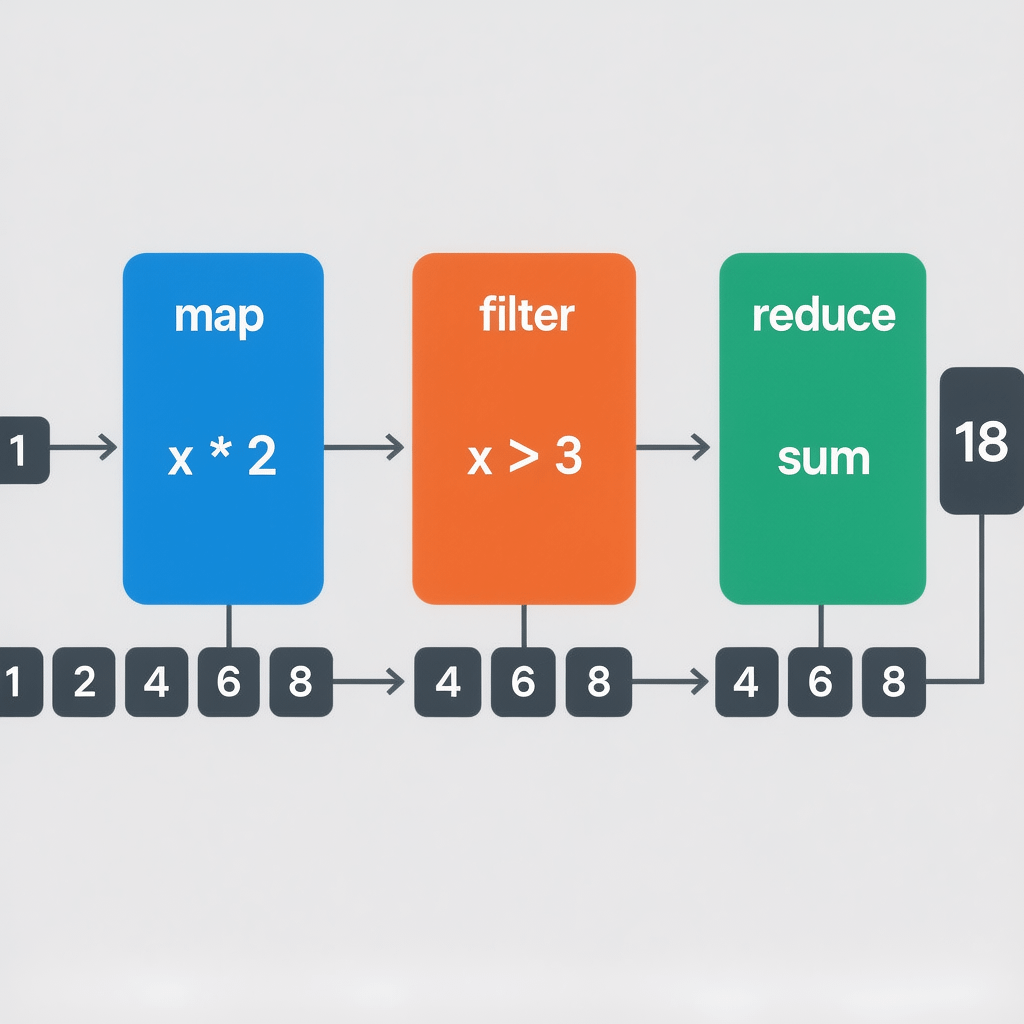
Filtering and validating with filter, some, and every
filter narrows results down. some and every validate conditions. Together they model most business rules. This vanilla JavaScript ES6 array methods guide shows the trio in action.
// Filter items in stock
const products = [
  { sku: 'A', stock: 5 },
  { sku: 'B', stock: 0 }
];
const inStock = products.filter(p => p.stock > 0);

// Validate at least one discounted item
const hasDiscount = products.some(p => p.stock > 0 && p.sku === 'A');

// Validate every product has a sku
const valid = products.every(p => Boolean(p.sku));
When performance matters, remember that some and every short circuit. The first true or false decides the outcome. This vanilla JavaScript ES6 array methods guide taps into that for fast validations.
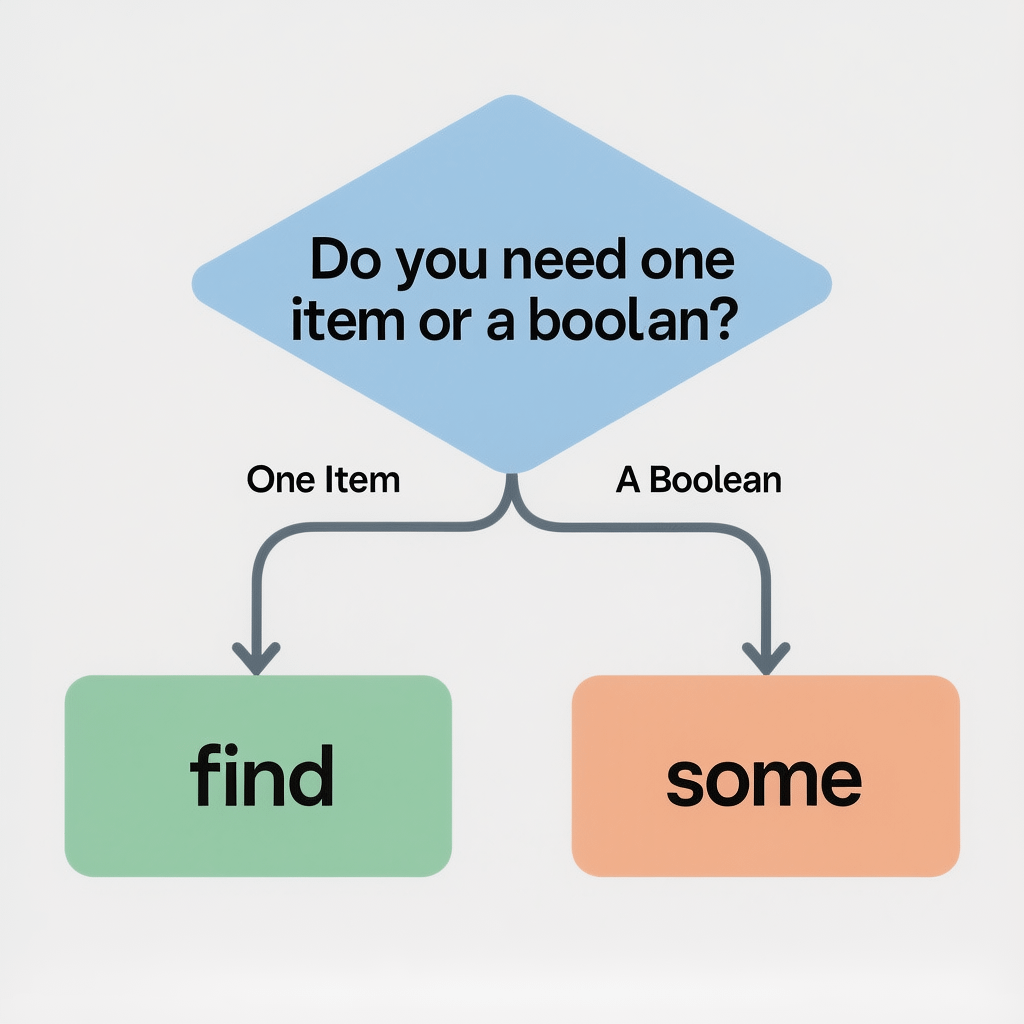
Finding values with find, findIndex, and includes
This vanilla JavaScript ES6 array methods guide prefers find over manual loops. It says what you mean and returns what you need.
const user = [{id:1},{id:2}].find(u => u.id === 2); // {id:2}
const idx = [{id:1},{id:2}].findIndex(u => u.id === 2); // 1
['todo','done'].includes('done'); // true
includes handles NaN and reads well for status checks or feature lists. As you practice, this vanilla JavaScript ES6 array methods guide will help you favor clarity.
Aggregations with reduce
reduce can be intimidating until you keep reducers tiny. This vanilla JavaScript ES6 array methods guide leans on named helper functions to make reducers readable.
const sum = (a, b) => a + b;
const total = [1,2,3,4].reduce(sum, 0); // 10

// Group by key
const byCategory = items => items.reduce((acc, item) => {
  const key = item.category ?? 'uncategorized';
  (acc[key] ||= []).push(item);
  return acc;
}, {});
For advanced reducers, compose. This vanilla JavaScript ES6 array methods guide shows how to build indices and frequency maps without losing clarity.
// Frequency map
const frequencies = words => words.reduce((acc, w) => {
  acc[w] = (acc[w] || 0) + 1;
  return acc;
}, {});
Think of reduce as the Swiss army knife that ends with a single result. Use it to power reports, charts, and summaries as described in this vanilla JavaScript ES6 array methods guide.
Sorting, reversing, and stable order
sort and reverse mutate the array. Copy first if you need immutability. This vanilla JavaScript ES6 array methods guide includes safe patterns.
const byPriceAsc = [...products].sort((a, b) => a.price - b.price);
const newestFirst = [...posts].sort((a, b) => b.date.localeCompare(a.date));
const reversed = [...arr].reverse();
When comparing strings, localeCompare gives predictable results across locales. This vanilla JavaScript ES6 array methods guide favors stable, explicit comparators.
Flattening with flat and flatMap
Nesting creeps in fast. flatten it. This vanilla JavaScript ES6 array methods guide uses flat to control depth and flatMap to combine transform plus flatten.
const deep = [1,[2,[3,[4]]]];
deep.flat(2); // [1, 2, 3, [4]]
// Remove nullables then flatten in one pass
const cleaned = items.flatMap(x => x == null ? [] : [x]);
flatMap is perfect for optional expansions. This vanilla JavaScript ES6 array methods guide applies it to search indices, tag expansions, and composite keys.

Creating arrays with Array.from and Array.of
ES6 gave us Array.from and Array.of to remove new Array weirdness. This vanilla JavaScript ES6 array methods guide shows how to generate ranges and normalize iterables.
// Range generator
const range = (n, start = 0) => Array.from({length:n}, (_, i) => start + i);
range(5); // [0,1,2,3,4]

// From NodeList to Array
const buttons = Array.from(document.querySelectorAll('button'));
Array.of always creates an array from the exact arguments, so Array.of(3) is [3], not a sparse array. This vanilla JavaScript ES6 array methods guide keeps code intention explicit.
Reusing slices with slice, splice, fill, and copyWithin
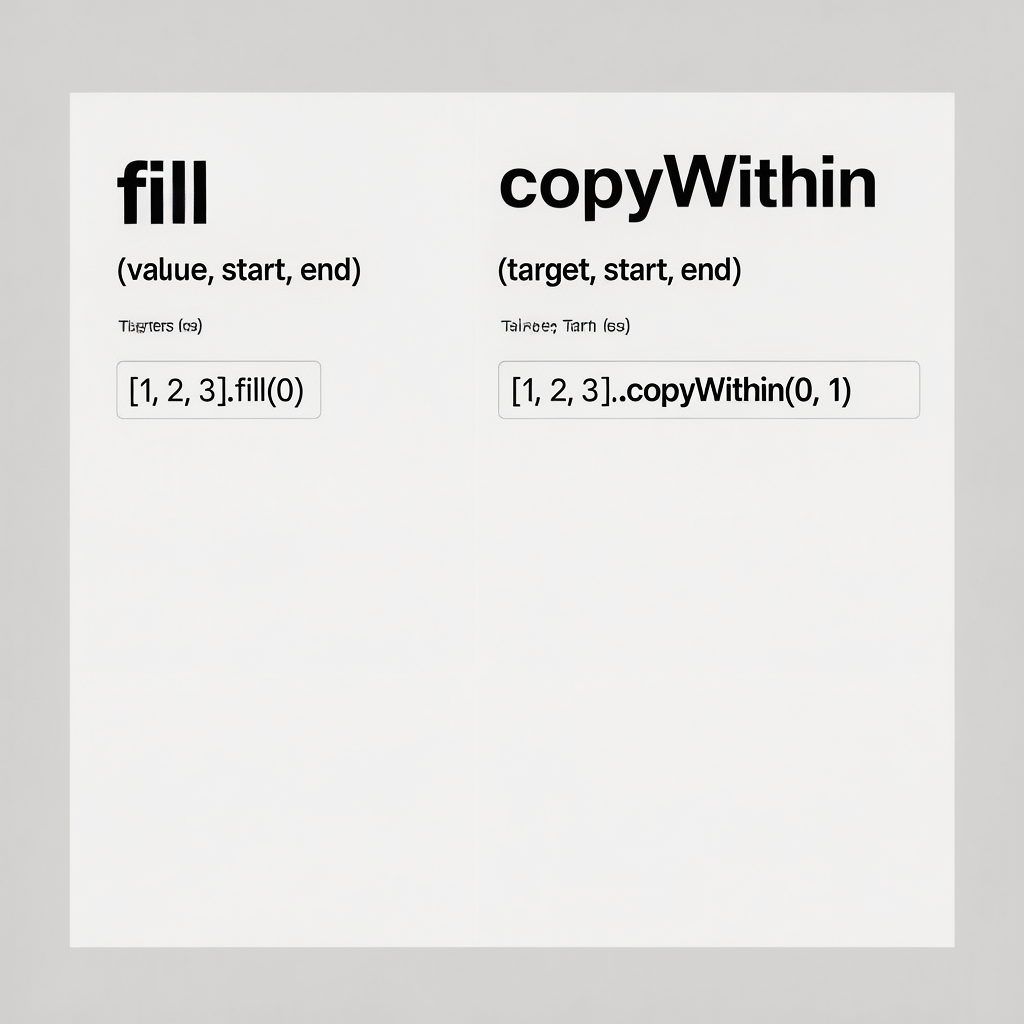
slice is non mutating. splice mutates. fill and copyWithin help when you need structured duplication. This vanilla JavaScript ES6 array methods guide keeps these powers in a safe box.
const clone = arr.slice(); // non mutating copy
const middle = arr.slice(2, 5); // [2..4]

// Fill range
const zeros = new Array(5).fill(0); // [0,0,0,0,0]

// Copy a section within the array
[1,2,3,4,5].copyWithin(0, 3); // [4,5,3,4,5]
Use copyWithin sparingly. This vanilla JavaScript ES6 array methods guide recommends clear transforms over clever tricks.
Iteration helpers: keys, values, and entries
Need indexes or pairs without manual loops? keys, values, and entries expose iterators that pair nicely with for…of. This vanilla JavaScript ES6 array methods guide demonstrates the trio.
for (const [i, val] of ['a','b'].entries()) {
  console.log(i, val);
}
// 0 'a', 1 'b'
entries keeps indexing robust and readable. You will use it often after this vanilla JavaScript ES6 array methods guide sinks in.
Performance basics you should not ignore
Performance is often about doing less. This vanilla JavaScript ES6 array methods guide favors single pass pipelines and short circuit logic.
- Prefer a single pass with reduce when you need multiple aggregates.
- Short circuit with some and every for early outs.
- Avoid extra array copies inside hot loops.
- Measure with the browser Performance tools before tuning.
If you are building a fast front end that converts, expert website design and development helps. This vanilla JavaScript ES6 array methods guide aligns with a performance first mindset that scales.

Immutability and side effects
Pure functions reduce bugs. This vanilla JavaScript ES6 array methods guide prefers map, filter, and reduce to express intent without mutation.
// Immutable update example
const setActive = (users, id) =>
  users.map(u => u.id === id ? { ...u, active: true } : u);
Mutating methods like sort, reverse, and splice are fine when scoped and explicit. This vanilla JavaScript ES6 array methods guide shows you how to copy before you change.
Error handling and defensive patterns
Arrays can hide edge cases. This vanilla JavaScript ES6 array methods guide uses guards to keep pipelines stable.
// Guard against nullish lists
const toNames = list => (list ?? []).map(x => x.name ?? 'Unknown');

// Narrow item shape
const pick = (obj, keys) => keys.reduce((o, k) => (o[k] = obj[k], o), {});
By normalizing input and using defaults, your pipeline seldom breaks. This vanilla JavaScript ES6 array methods guide is pragmatic about real data.
Async workflows with arrays and Promise.all
Run network tasks in parallel by mapping to promises and awaiting Promise.all. This vanilla JavaScript ES6 array methods guide keeps the flow compact and readable.
const urls = ['1.json','2.json','3.json'];
const fetchJson = url => fetch(url).then(r => r.json());

const results = await Promise.all(urls.map(fetchJson));
When APIs must be rate limited, chunk work. This vanilla JavaScript ES6 array methods guide gives you a simple batching helper.
const chunk = (arr, size) => Array.from({length: Math.ceil(arr.length / size)},
  (_, i) => arr.slice(i*size, i*size + size)
);

for (const group of chunk(urls, 2)) {
  const batch = await Promise.all(group.map(fetchJson));
  // process batch
}
Parallel where safe, serial where necessary. That balance anchors this vanilla JavaScript ES6 array methods guide.
Real world recipes that ship
These small, composable snippets are taken from production. This vanilla JavaScript ES6 array methods guide focuses on everyday wins.
Deduplicate by key
const uniqueBy = (arr, key) => {
  const seen = new Set();
  return arr.filter(x => (v => !seen.has(v) && (seen.add(v), true))(x[key]));
};
Group and sort within groups
const groupBy = (arr, fn) => arr.reduce((acc, x) => {
  const k = fn(x);
  (acc[k] ||= []).push(x);
  return acc;
}, {});

const grouped = groupBy(posts, p => p.category);
const sortedGroups = Object.fromEntries(
  Object.entries(grouped).map(([k, v]) => [k, [...v].sort((a,b) => b.date.localeCompare(a.date))])
);
Index by id for O(1) lookups
const indexBy = (arr, key) => arr.reduce((acc, x) => (acc[x[key]] = x, acc), {});
const byId = indexBy(users, 'id'); // byId[42] => user
Pipeline composition with array methods
const pipe = (...fns) => x => fns.reduce((v, f) => f(v), x);
const compact = xs => xs.filter(Boolean);
const toUpper = xs => xs.map(s => s.toUpperCase());

const cleanAndShout = pipe(compact, toUpper);
cleanAndShout(['hi', '', null, 'js']); // ['HI','JS']
Reusable pipelines keep logic consistent. This vanilla JavaScript ES6 array methods guide normalizes this practice across teams.
Debugging and readability tips
Readable pipelines make bugs obvious. This vanilla JavaScript ES6 array methods guide keeps names specific and steps short.
- Name your mapping and filtering functions if they are more than one expression.
- Inline early returns instead of nested conditionals.
- Log shape and length at pipeline boundaries.
- Add types with JSDoc for better editor hints.
/** @param {{price:number}[]} items */
const toTotals = items => items
  .filter(hasPrice)
  .map(withTax)
  .reduce(sum, 0);
Clarity scales. That idea sits at the center of this vanilla JavaScript ES6 array methods guide.
When to use plain loops
Array methods are great, but not mandatory. This vanilla JavaScript ES6 array methods guide is pragmatic about hot loops and micro optimizations.
- Use for loops in tight, performance critical paths after benchmarking.
- Use array methods for clarity in most app code.
- Profile before changing style for speed alone.
Many teams strike a balance. As this vanilla JavaScript ES6 array methods guide shows, readability wins until proven otherwise.
Data fetching, caching, and page speed
Efficient arrays help tame payloads, but front end speed also depends on caching, compression, and smart rendering. This vanilla JavaScript ES6 array methods guide touches the basics.
- Compress images with modern formats and quality tuning.
- Use HTTP caching headers and a CDN to keep repeat visits instant.
- Defer non critical scripts and use code splitting.
- Precompute derived arrays server side when possible.
For deeper help with measurement and dashboards, connect with analytics and reporting experts who watch the right metrics. This vanilla JavaScript ES6 array methods guide pairs neatly with good observability.

Team conventions and code reviews
Consistency reduces friction. This vanilla JavaScript ES6 array methods guide encourages lightweight team rules that keep pull requests smooth.
- Prefer map, filter, reduce for pure transforms.
- Copy before mutating with sort, reverse, or splice.
- Use includes for existence checks over indexOf.
- Document tricky reducers with examples right above the code.
Good conventions free your brain for product work. This vanilla JavaScript ES6 array methods guide helps align a team around the same simple patterns.
If you want a strategy partner for performance and UX at the platform level, SEO services and site health audits can expose low hanging fruit. That complements the techniques in this vanilla JavaScript ES6 array methods guide.
Testing arrays with confidence
Write small tests that lock in behavior. This vanilla JavaScript ES6 array methods guide favors input-output tests over mocking.
// Example with Jest
test('groups by category', () => {
  const items = [{c:'a'},{c:'b'},{c:'a'}];
  const grouped = items.reduce((acc, x) => ((acc[x.c] ||= []).push(x), acc), {});
  expect(Object.keys(grouped)).toEqual(['a','b']);
  expect(grouped.a).toHaveLength(2);
});
Tests are the fastest form of documentation. As this vanilla JavaScript ES6 array methods guide shows, simple inputs lead to rock solid outputs.
Accessibility and data shaping
Accessible UIs often boil down to clean data and simple lists. This vanilla JavaScript ES6 array methods guide turns messy data into predictable arrays that render well with semantic HTML.
const articles = raw
  .filter(a => a.published)
  .map(a => ({ title: a.title.trim(), url: a.url, tags: a.tags ?? [] }));
When your arrays are tidy, your markup is tidy. That reduces cognitive load and helps assistive tech. The spirit of this vanilla JavaScript ES6 array methods guide is to keep the pipeline honest.
Memory, big lists, and virtual scrolling
For very large arrays, render smart. This vanilla JavaScript ES6 array methods guide suggests shaping data on the server and streaming in chunks.
- Paginate or window lists instead of rendering thousands at once.
- Use generators or async iterators for streams.
- Summarize on the server to reduce client work.
Simple choices upstream make your client code trivial. That theme runs through this vanilla JavaScript ES6 array methods guide.
Version quirks and compatibility notes
Most modern browsers support the methods in this vanilla JavaScript ES6 array methods guide. For older environments, add polyfills for includes, flat, and flatMap as needed.
// Example polyfill shim approach
if (!Array.prototype.includes) {
  Array.prototype.includes = function(search, fromIndex) {
    return this.indexOf(search, fromIndex) !== -1;
  };
}
Keep builds lean by targeting only what your users need. This vanilla JavaScript ES6 array methods guide stays focused on the 80 percent case while noting edge cases.
Putting it all together
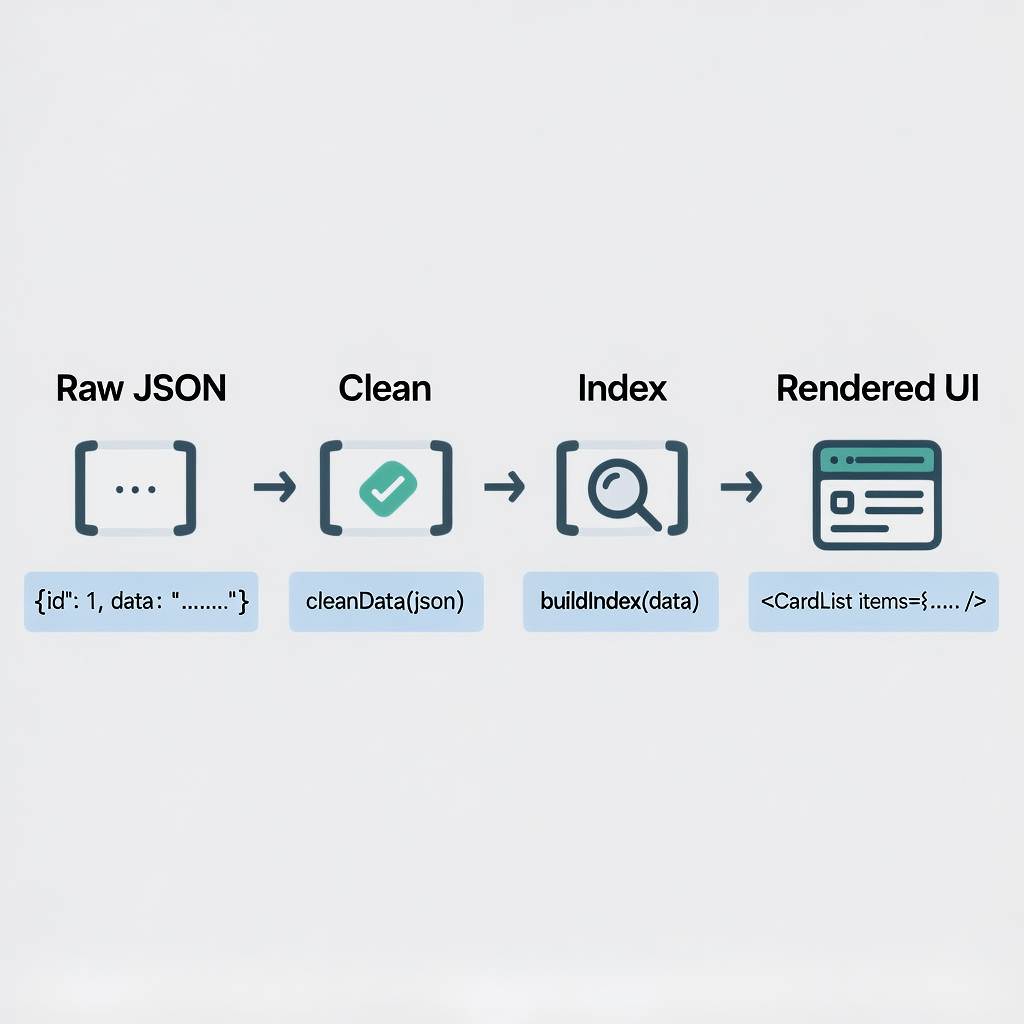
Let us build a short pipeline that cleans data, builds an index, and renders. This vanilla JavaScript ES6 array methods guide favors intention revealing names.
const clean = posts => posts
  .filter(p => p.published)
  .map(p => ({ id: p.id, t: p.title.trim(), tags: (p.tags ?? []).map(s => s.toLowerCase()) }));

const indexTags = posts => posts.flatMap(p => p.tags.map(tag => [tag, p.id]));
const byTag = pairs => pairs.reduce((acc, [tag, id]) => ((acc[tag] ||= []).push(id), acc), {});
const unique = arr => Array.from(new Set(arr));

const pipeline = data => {
  const ready = clean(data);
  const tags = byTag(indexTags(ready));
  const allIds = unique(ready.map(p => p.id));
  return { ready, tags, allIds };
};
This pattern scales across features. With the discipline in this vanilla JavaScript ES6 array methods guide, teams move fast without chaos.
FAQs
Answers to common questions that come up while applying this vanilla JavaScript ES6 array methods guide in real projects.
What is the difference between map and forEach?
map returns a new array with transformed values, while forEach is for side effects and returns undefined. Prefer map for pure transforms.
Is includes faster than indexOf?
They are similar in speed for typical arrays. includes is cleaner and handles NaN, so it is the default choice unless benchmarks say otherwise.
When should I use reduce?
Use reduce to compute a single result from many values, like totals, counts, or grouped structures. Keep reducers simple.
What is the difference between flat and flatMap?
flat flattens arrays by depth. flatMap maps then flattens one level in a single pass.
Does sort mutate the original array?
Yes. Copy first if you need immutability, for example […arr].sort(…).
How do I handle async operations with array methods?
Map to promises, then await Promise.all. For rate limits, process in chunks.
Should I prefer some or every for validations?
Use some to check if any element matches. Use every to ensure all match. Both short circuit for speed.
References
About the Author