

A professional digital marketer analyzing keyword data on multiple screens with AI-powered SEO tools, representing the future of strategic search optimization.
Mastering Keyword Research: 5 Proven Strategies for 2025
Mastering Keyword Research: 5 Proven Strategies for 2025
Published on July 3, 2025 | By Brand Nexus Studios

If you’ve ever launched a blog post, product page, or campaign only to hear crickets – no clicks, no shares, no conversions – you’re not alone. And more often than not, the culprit isn’t bad content or poor design. It’s this: you didn’t master keyword research before hitting publish.
At Brand Nexus Studios, we’ve helped dozens of businesses – from startups to established brands – turn invisible websites into top-ranking authorities. And every single success story starts the same way: with mastering keyword research.
But here’s the thing – keyword research in 2025 isn’t what it was five years ago. Gone are the days of simply plugging a term into a tool and writing around it. Today’s search landscape is smarter, faster, and far more competitive. AI-driven algorithms, zero-click results, and hyper-personalized SERPs mean that if your keyword strategy isn’t sharp, you won’t just lose rankings – you’ll lose relevance.
So how do you stay ahead? How do you ensure your content doesn’t just exist – but performs?
In this deep dive, we’ll walk you through five proven strategies for mastering keyword research in 2025. These aren’t theoretical ideas – they’re tactics we use daily with our clients at Brand Nexus Studios to dominate search results, capture high-intent traffic, and build sustainable organic growth.
Why Mastering Keyword Research Is Non-Negotiable in 2025
Let’s get real for a second. You could have the most beautiful website, the most compelling copy, and the best product on the market – but if no one can find you, does it matter?
Google processes over 8.5 billion searches per day. That’s 8.5 billion opportunities for visibility. But only the top 10 results get 95% of the clicks. And guess what determines who makes that list?
Keyword research.
It’s the foundation of every successful SEO campaign. Without it, you’re guessing. With it, you’re strategizing.
But “keyword research” today isn’t just about volume and competition. It’s about understanding intent, predicting trends, and aligning your content with what real people are searching for – often before they even know how to phrase it.
That’s why mastering keyword research is no longer optional. It’s the difference between being seen and being ignored.
Strategy #1: Shift from Keywords to Search Intent Clusters
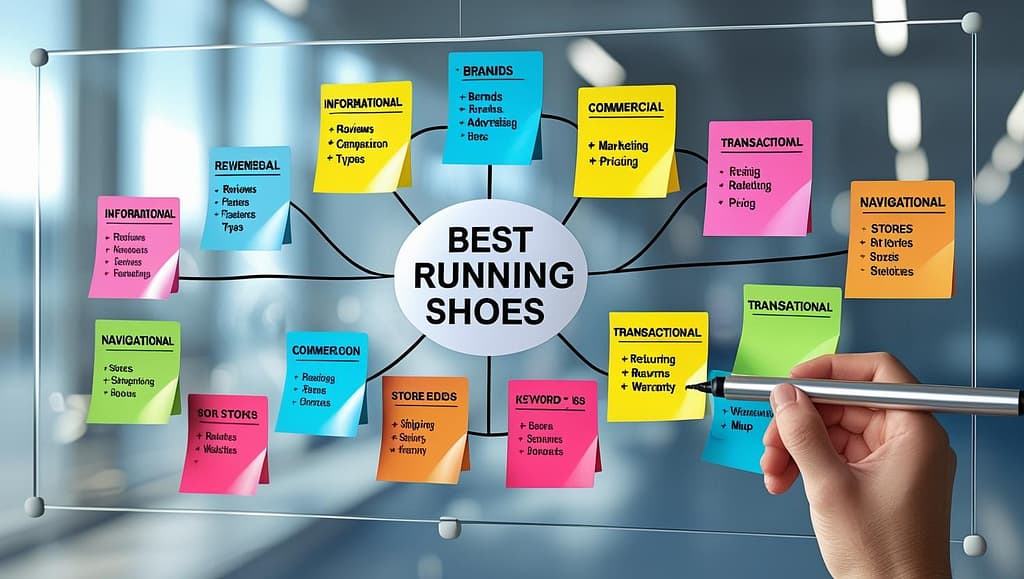
Back in the day, you’d pick a keyword like “best running shoes” and write one article targeting it. Simple. Linear. And increasingly ineffective.
Why? Because Google doesn’t just match keywords anymore – it matches intent.
And users searching for “best running shoes” might actually want:
- Reviews of top models
- Comparison charts
- Buying guides for beginners
- Shoes for flat feet
- Budget-friendly options under $100
Each of these represents a different search intent. If you only write one generic article, you’ll only satisfy one type of user – and Google knows it.
So here’s how we do it at Brand Nexus Studios: we build keyword clusters based on intent.
For example, instead of targeting “best running shoes” alone, we create a content hub that includes:
- Informational: “How to Choose the Best Running Shoes for Your Foot Type”
- Commercial: “Top 10 Running Shoes for Long-Distance Runners in 2025”
- Transactional: “Where to Buy Asics Gel-Kayano 30 at the Best Price”
- Navigational: “Asics Official Store vs. Amazon: Which Is Better?”
This approach does two things:
- It satisfies multiple user intents, increasing dwell time and reducing bounce rates.
- It signals to Google that your site is a comprehensive resource, boosting topical authority.
Tools like Ahrefs and SEMrush now offer intent classification features. Use them. But don’t rely on automation alone. At Brand Nexus Studios, we manually audit search results to see what types of content rank—and why.
Strategy #2: Leverage AI Without Losing the Human Touch
AI tools like ChatGPT, Jasper, and SurferSEO are fantastic for brainstorming keywords and generating content outlines. But here’s the trap: using them as a crutch.
Google’s latest updates – like Helpful Content and MUM – reward content that shows real expertise, experience, and depth. AI alone can’t replicate that.
So how do we use AI at Brand Nexus Studios?
We treat it like a junior researcher. It gathers data, suggests angles, and speeds up ideation. But the final strategy? That comes from human insight.
For example, when working with a client in the eco-friendly fashion space, our AI tool suggested keywords like “sustainable clothing brands” and “organic cotton t-shirts.” Solid, but generic.
Our team dug deeper. We looked at Reddit threads, customer reviews, and niche blogs. We discovered that people were actually searching for things like:
- “Clothes that don’t pill after one wash”
- “Ethical brands that ship fast”
- “Outfits for job interviews that align with my values”
These weren’t in any keyword tool. But they were gold.
So our advice? Use AI to scale your research – but always validate with real human behavior. That’s how you go from good keywords to profitable ones.

Strategy #3: Target Zero-Click Opportunities Strategically
Did you know that over 50% of Google searches end without a click?
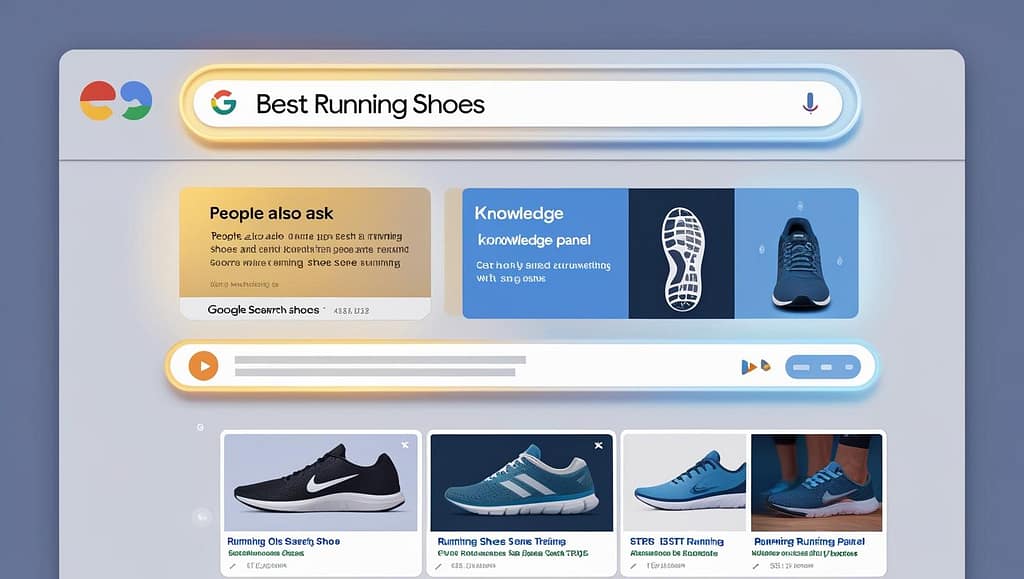
That’s right – half the time, users get their answer directly from the SERP via featured snippets, knowledge panels, or “People Also Ask” boxes.
This is a problem if you’re only optimizing for traditional organic clicks. But it’s an opportunity if you’re mastering keyword research with SERP features in mind.
Here’s how we do it:
Optimize for Featured Snippets
These “position zero” results get more clicks than #1. To win them:
- Answer questions directly in 40–60 words
- Use structured headings (H2, H3)
- Format answers as lists or tables when possible
- Include the keyword in the first sentence
For example, if the query is “how to store winter tires,” we structure the answer like this:
How to store winter tires: Clean them thoroughly, remove debris, and store in a cool, dry place away from sunlight. Use tire bags or wrap them in plastic to prevent oxidation. Keep them upright or stacked – never hung.
Simple. Clear. Snippet-ready.
Dominate “People Also Ask” (PAA)
PAA boxes are like free real estate. Each answer can lead to more impressions – even if users don’t click through.
We use tools like AlsoAsked.com to map out entire PAA trees. Then we structure our content to answer every related question in order.
Pro tip: Use collapsible FAQs on your page. Google loves them, and they increase engagement.
Strategy #4: Prioritize E-A-T and Topical Authority
Google doesn’t just rank pages – it ranks people. Or more precisely, it ranks websites that demonstrate Expertise, Authoritativeness, and Trustworthiness (E-A-T).
This is especially true for YMYL (Your Money Your Life) topics like health, finance, and legal advice. But it’s increasingly relevant for e-commerce, SaaS, and B2B niches too.
So how does this tie into mastering keyword research?
Simple: you need to target keywords that allow you to showcase your authority.
For example, instead of just targeting “best CRM software,” go after:
- “How to choose a CRM for a 10-person sales team”
- “CRM integration challenges with legacy systems”
- “Why Salesforce might not be right for startups”
These keywords attract users with deeper questions – users who value expertise. And when you answer them well, Google rewards you with higher rankings and better visibility.
At Brand Nexus Studios, we help clients build topical authority by:
- Creating pillar content that covers a topic comprehensively
- Linking supporting articles back to the pillar
- Featuring expert contributors and citing reputable sources
- Updating content regularly to reflect new industry developments
This isn’t just SEO – it’s thought leadership.

Strategy #5: Embrace Sustainable SEO and Green Keyword Optimization
This one might surprise you – but it’s real.
Search engines are starting to factor in website sustainability. A faster, leaner, more energy-efficient site isn’t just better for users – it’s better for the planet.
And Google is watching.
While there’s no official “green ranking factor” yet, evidence suggests that sustainable practices improve Core Web Vitals, reduce bounce rates, and enhance brand perception – all of which impact SEO.
So how does this connect to mastering keyword research?
By targeting keywords related to sustainability, eco-friendliness, and ethical practices – especially if they align with your brand values.
For example, a fashion brand might target:
- “Carbon-neutral clothing brands”
- “How to reduce fashion waste at home”
- “Are sustainable jeans worth the price?”
But it’s not just about the keywords. It’s about backing them up with real action:
- Use green hosting (we recommend GreenGeeks or Kinsta)
- Optimize images and code to reduce data transfer
- Implement lazy loading and efficient caching
When your site is fast, clean, and responsible, users stay longer—and Google notices.

Putting It All Together: Your 2025 Keyword Research Checklist
So, how do you actually master keyword research in practice?
Here’s the step-by-step checklist we use at Brand Nexus Studios:
- Define your audience: Who are they? What problems do they have? What language do they use?
- Brainstorm seed keywords: Start broad, then narrow down using tools and human insight.
- Analyze search intent: Are they looking to learn, compare, buy, or navigate?
- Build keyword clusters: Group related terms into content hubs.
- Check competition and opportunity: Use tools to assess difficulty and volume.
- Map to SERP features: Can you target a snippet, PAA, or video carousel?
- Evaluate E-A-T potential: Does this keyword let you showcase expertise?
- Consider sustainability: Is there a green angle that aligns with your brand?
- Create and optimize content: Write for humans first, search engines second.
- Monitor and refine: Track rankings, traffic, and conversions. Adjust quarterly.
This isn’t a one-time task. It’s a cycle. And the more you repeat it, the smarter your strategy becomes.
Final Thoughts: Mastering Keyword Research Is a Competitive Advantage
Let’s be honest – SEO is crowded. Everyone’s trying to rank. Everyone’s publishing content.
But here’s what separates the winners from the also-rans: they master keyword research before they write a single word.
They don’t guess. They don’t copy competitors. They don’t rely on AI alone.
They strategize. They analyze. They adapt.
And that’s exactly what we help our clients do at Brand Nexus Studios.
If you’re tired of creating content that goes nowhere, it’s time to rethink your approach. Start with your keywords. Build from there.
Because in 2025, mastering keyword research isn’t just about SEO.
It’s about survival.
About Brand Nexus Studios: We’re a digital marketing agency specializing in SEO, content strategy, and brand development. Our data-driven approach helps businesses grow online with sustainable, future-proof strategies. Learn more at www.brandnexusstudios.co.za.
About the Author




Great breakdown of how keyword research is evolving. I especially appreciate the point aboutBlog comment creation tips shifting from single keywords to search intent clusters—too many marketers still chase volume over relevance. I’ve also seen that optimizing for PAA boxes complements featured snippets nicely, since both signal topical authority to Google.
That’s an awesome breakdown! You’ve totally nailed it. The shift from chasing single keywords to building out intent clusters is probably the biggest game-changer for 2025. You get so much more power out of your content that way.
And you’re spot on about PAA boxes and featured snippets. They aren’t just traffic sources; they’re direct signals of topical authority to Google. Appreciate you adding that valuable insight – it’s exactly what separates the top marketers from the rest.
I love how you emphasized moving from individual keywords to search intent clusters! It makes SEO feel more like a holistic strategy rather than just a tactical one.