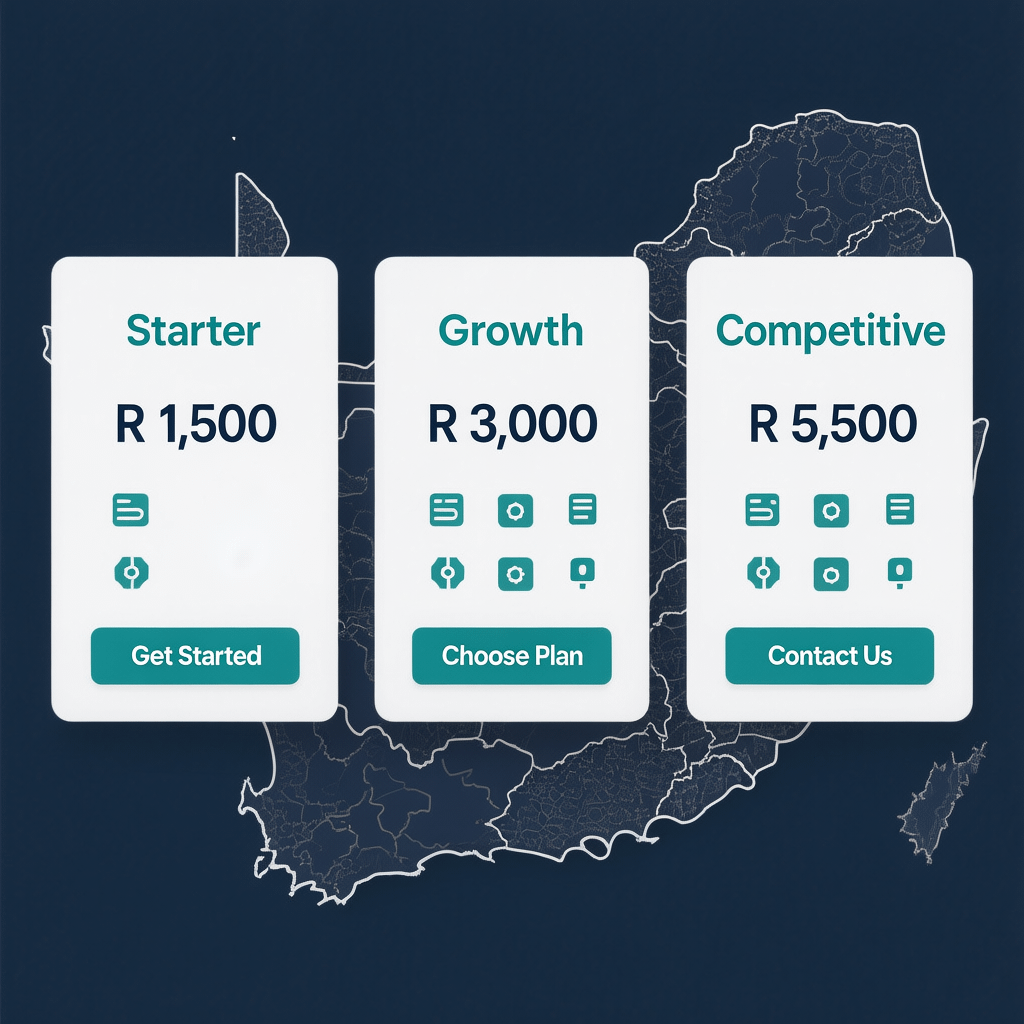

A clear view of the real cost to build a website helps you budget with confidence and avoid overpaying.
Cost To Build A Website: 7 Shocking Price Truths
By Morne de Heer | Published by Brand Nexus Studios
If you have asked three people about the cost to build a website, you probably received five different answers. The range can feel wild, from a few dollars per month to tens of thousands upfront.
In this guide, we will unpack the real cost to build a website in practical language. You will see what drives prices up or down, where quotes hide crucial details, and how to estimate a realistic budget for your business.
By the end, you will know how to compare proposals on more than just a headline price. You will understand which parts of the cost to build a website are non negotiable, which are optional, and where smart decisions can save you serious money without sacrificing results.
1. What Really Drives the Cost To Build A Website
When people debate the cost to build a website, they often jump straight to platform choices or hourly rates. Those matter, but they sit on top of a deeper question: what exactly are you trying to build and why.
Project scope and complexity
Scope is the single biggest driver of the cost to build a website. A five page brochure site with a simple contact form has a completely different workload to a multilingual e commerce store with custom product logic.
Key scope factors include:
- Number of page templates and unique layouts
- Level of custom design versus off the shelf themes
- Needed integrations, such as CRM, booking systems, or payment gateways
- Content volume, such as blog archives or product catalogs
- Special functionality such as membership areas or user dashboards
As each of these grows, the cost to build a website typically rises in a step change, not a smooth line. One extra complex feature can add many hours.
Website type and business model
The business model behind your site also shapes the cost to build a website. An informational site for a consultant is very different from a subscription platform that needs secure recurring billing.
Common website types include:
- Brand brochure sites for credibility
- Lead generation sites with landing pages and funnels
- Online stores selling physical or digital products
- Content heavy blogs or media sites
- Portals, directories, and marketplaces
Each type has typical feature sets that influence overall website cost. Knowing where you fit will help you sanity check quotes.
Design quality and brand experience
Visual design can be a major part of the cost to build a website, especially if you want a distinctive brand experience. Custom UX, animations, illustration systems, and interaction design all require time from specialists.
A pre built theme with minor tweaks might keep initial spend low. A deeply custom design and UX process might be worth the higher cost if your website is a primary sales channel or a core part of your brand.
Platform and technology stack
The tech stack you choose will affect both the initial cost to build a website and the long term cost of ownership. WordPress, Shopify, Webflow, and fully custom stacks each have trade offs.
Factors to weigh include:
- Licensing or subscription fees
- Availability and rates of skilled developers
- Plugin and integration ecosystems
- Performance, security, and scalability needs
Often the cheapest platform to start with is not the cheapest over three to five years. A slightly higher cost to build a website now can save expensive rebuilds later.
Who actually builds the site
Whether you handle the build yourself, work with a freelancer, or partner with an agency will dramatically change the cost to build a website. You pay not only for hours, but also for process, expertise, and risk reduction.
We will compare these options in detail later, but at a high level:
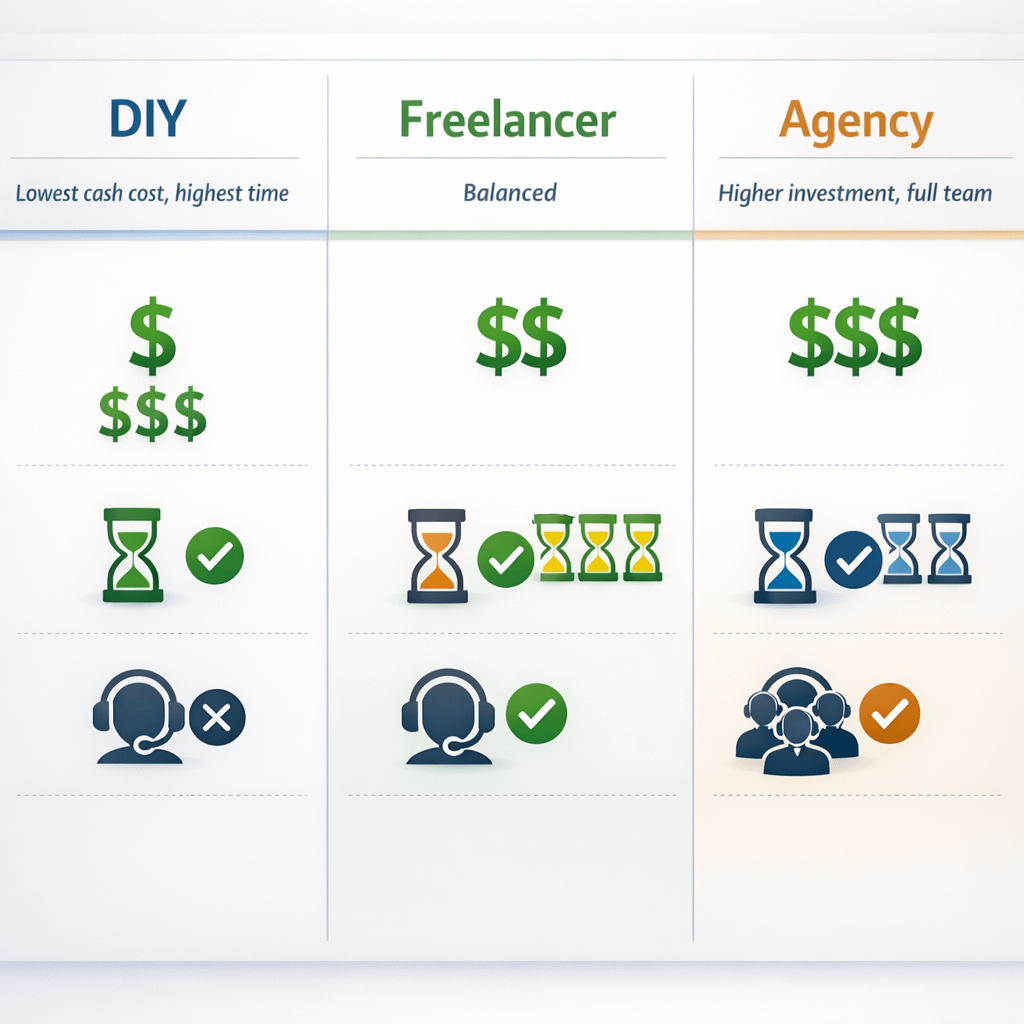
- DIY usually has the lowest cash outlay but the highest time cost and risk.
- Freelancers sit in the middle for both price and support.
- Agencies have higher upfront cost but provide a full team and ongoing strategy.
Content, copywriting, and SEO
Many people forget that writing clear copy, sourcing images, and optimizing pages for search are core parts of the cost to build a website. A beautiful layout with weak messaging will not convert visitors into leads.
Investing in quality content and basic SEO setup helps your website earn its keep. It can also reduce the future cost of rebuilding pages that never performed.
Regulatory, security, and accessibility needs
If you operate in regulated industries or serve global audiences, compliance and accessibility work can be a meaningful part of the cost to build a website. Tasks like cookie management, privacy policy integration, and accessibility reviews all add time.
Ignoring these can lead to legal and reputational costs far greater than the modest effort required up front.
2. Average Cost To Build A Website by Type
Now let us look at typical ranges for the cost to build a website, grouped by common project types. These numbers are broad guidelines, not fixed rules, but they give you a useful starting point.
Simple brochure or starter website
For a small service business that needs a professional presence, the cost to build a website usually falls on the lower end of the spectrum.
Typical scope includes:
- Home, about, services, contact, and perhaps a blog page
- A clean design built on a quality theme or light custom layout
- Basic contact form, map, and social links
- On page SEO basics and analytics setup
Average price range to hire a professional team: roughly $1,500 to $5,000. DIY with a website builder might cost $200 to $800 per year, excluding your time.
Lead generation website or authority site
If your site is intended to capture leads and nurture them, the cost to build a website increases along with the strategic work behind it.
Common extras include:
- Multiple landing page templates for campaigns
- Downloadable resources like ebooks or checklists
- Email marketing integrations and automated follow ups
- More advanced SEO research and content planning
Expect the cost to build a website at this level to land somewhere between $3,000 and $12,000 with a serious freelancer or agency, depending on depth and ongoing support.
E commerce store
Online stores add complexity that pushes up the cost to build a website. Product management, inventory, payment processing, and shipping rules all introduce moving parts.
Key cost drivers for online stores include:
- Number of products and variations
- Required payment methods and currencies
- Shipping and tax logic
- Product filters, search, and merchandising
- Integrations with inventory or accounting systems
On popular platforms such as WooCommerce or Shopify, a basic but solid store might cost from $3,000 to $10,000. More advanced or custom shops often push the cost to build a website into the $10,000 to $50,000 range and above.
Membership, learning, or community platform
Sites that manage user accounts, protected content, or learning modules bring additional technical challenges. Unsurprisingly, this raises the cost to build a website because more planning, testing, and security work is required.
Scope here might include:
- User registration and profiles
- Course catalogs, lessons, and quizzes
- Subscription billing and access control
- Community forums or chat
A modest membership site built on proven plugins can start around $5,000. Custom platforms with unique functionality can easily exceed $30,000 as the cost to build a website in this category.
Custom web applications and portals
When your idea falls outside typical patterns, such as a marketplace, booking engine, or custom SaaS tool, you are now in true web application territory. Here, the cost to build a website is more like software development.
Even simple versions can start in the $20,000 to $50,000 range, with serious products going much higher. In this space, there is little point chasing the lowest possible cost to build a website. Robust planning and architecture pay off more than bargain hunting.
3. DIY vs Freelancer vs Agency: Which Is Best for Your Budget
Once you understand your project type, the next big question is who should build it. The answer dramatically alters the cost to build a website and the risk profile you accept.
DIY website builders
DIY platforms like Wix, Squarespace, or hosted WordPress packages promise low monthly fees and quick launches. They can indeed keep your visible cost to build a website low, especially for very simple projects.
However, you should account for:
- The value of your own time spent learning and tweaking
- Limitations in design flexibility and performance
- Challenges integrating advanced marketing and analytics
- Migration costs if you outgrow the platform
If cash is very tight and your needs are basic, DIY can be a smart first step. Just remember that the total cost to build a website includes your time and the cost of future changes.
Freelance designers and developers
Freelancers occupy the middle ground for the cost to build a website. Rates vary widely based on location and experience, but you often gain more control and flexibility compared to rigid DIY tools.
Pros of freelancers:
- Lower rates than agencies in many cases
- Direct communication with the person doing the work
- Ability to hand pick specialists for design or development
Risks and trade offs:
- Limited capacity if your project needs many skills at once
- Availability issues for urgent fixes or long term support
- Inconsistent processes that affect timelines and quality
For small to medium projects, a reliable freelancer can strike a good balance between the cost to build a website and the level of expertise you need, as long as you are comfortable managing the project.
Agencies and specialist studios
A professional agency usually carries the highest sticker cost to build a website. In exchange, you get a structured process, a team of specialists, and long term support options.
Typical agency contributions include:
- Discovery workshops to clarify goals and audience
- Dedicated UX and UI designers
- Experienced developers and QA testers
- SEO, analytics, and conversion optimization specialists
- Project management and clear communication
For businesses where the website is a core revenue driver, this higher cost to build a website often provides better value over time. Agencies like specialist website design and development providers bring refined processes that reduce risk and accelerate results.
4. Breaking Down the Cost To Build A Website: One Time vs Ongoing
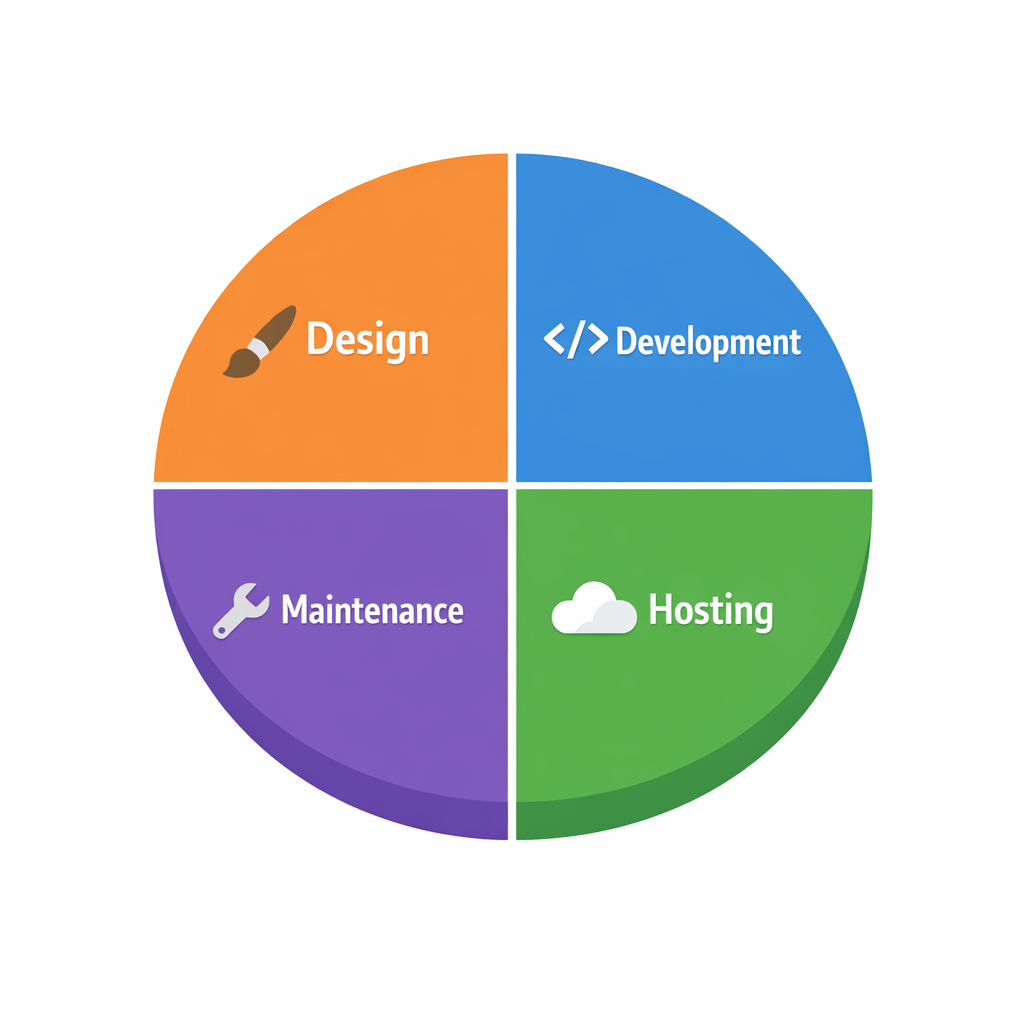
Many people focus only on the launch quote, but the cost to build a website also includes ongoing expenses that keep it fast, secure, and effective.
One time setup costs
These are typically included in your initial cost to build a website and cover everything required to go from concept to launch.
- Strategy and discovery workshops
- UX wireframes and visual design
- Front end and back end development
- Content migration and page building
- Testing, QA, and launch support
Ask for a clear breakdown of these items in any quote. It is easier to compare the true cost to build a website when you can see how each provider allocates effort.
Hosting, domain, and infrastructure
You will need a domain name and hosting regardless of who builds your site. These are recurring costs that should be factored into the long term cost to build a website.
- Domains: often $10 to $30 per year
- Shared hosting: from $5 to $25 per month
- Managed WordPress or premium hosting: $25 to $100+ per month
- Content delivery networks and advanced caching: variable, sometimes bundled
Smart hosting choices help keep your website fast. Compressed images and proper caching configurations significantly cut load times, which improves user experience and can lower the effective cost to build a website by boosting conversions.
Maintenance, updates, and security
Software updates, backups, and security hardening are not optional. They are part of the real cost to build a website that stays safe and dependable.
Ongoing maintenance plans often include:
- Core and plugin updates
- Daily or weekly backups
- Security monitoring and malware scans
- Small content or layout tweaks
Depending on support level, you might budget $50 to $300 per month for these services. Skipping them can lead to outages or hacks that cost far more than preventive care.
Marketing, SEO, and analytics
Once the build is finished, the next phase of the cost to build a website is getting qualified traffic and measuring performance. Here, you might invest in SEO, paid ads, social media marketing, and email campaigns.
Even modest ongoing marketing and analytics work, such as professional SEO support or structured reporting, will affect your overall digital budget. The key is viewing these as revenue generating investments, not only as costs.
5. How To Estimate Your Own Cost To Build A Website
Instead of guessing or copying what someone else paid, you can use a simple process to estimate the cost to build a website that fits your exact situation.
Step 1: Clarify goals and success metrics
Start by writing down what your website must achieve in the next 12 to 24 months. Lead volume, sales targets, or booking numbers provide a benchmark to weigh against the cost to build a website.
If your site only needs to support existing offline sales, you can keep things leaner. If it has to carry most of your revenue, your budget should be higher.
Step 2: Map your core pages and features
List every key page and functional requirement. This becomes your initial scope and directly affects the cost to build a website.
Include:
- Core marketing pages, such as home, services, and about
- Blog or resource sections, with estimated article count
- Interactive features like calculators, quizzes, or forms
- E commerce, memberships, bookings, or integrations
Group these into must have, nice to have, and future ideas. The first group will drive your initial cost to build a website. The rest can be phased in later as budget allows.
Step 3: Choose your build approach
Decide whether you will go DIY, hire a freelancer, or work with an agency. Use realistic ranges for each path when estimating the cost to build a website.
As a rough rule of thumb:
- DIY: budget $200 to $800 per year in platform fees and a substantial time commitment.
- Freelancer: for small to medium sites, expect $1,500 to $10,000.
- Agency: for higher stakes or complex sites, $3,000 to $50,000 and beyond, depending on scope.
Remember that a higher initial cost to build a website may be justified if it shortens time to ROI or avoids major rework later.
Step 4: Include content and media costs
Estimate how much content you need and who will create it. Copywriting, photography, and video often add a meaningful slice to the cost to build a website.
Questions to ask:
- Who will write persuasive copy for each page
- Whether you will use stock photos, custom photography, or both
- What graphics, diagrams, or downloads are required
Being honest about content needs prevents last minute budget shocks that inflate the real cost to build a website.
Step 5: Layer in ongoing expenses and a buffer
Add hosting, maintenance, and basic marketing to your estimate. Then include a 10 to 20 percent buffer for scope creep and updates once you see the design in action.
This gives you a realistic total cost to build a website over at least the first year, instead of fixating only on the launch invoice.
If you want expert guidance through this process, a focused partner such as structured digital packages for websites and marketing can help you align features, timelines, and investment levels.
6. How To Reduce the Cost To Build A Website Without Killing Quality
You do not have to overspend to get a solid result. There are practical ways to bring down the cost to build a website while still launching something credible and effective.
Prioritize an MVP over a dream list
Scope creep is a silent driver of website cost. Start with a minimum viable product that covers your highest impact pages and features. You can add lower priority elements after launch, once you have revenue coming in.
Use proven templates intelligently
Custom design is valuable, but you do not need to reinvent the wheel. Using a well supported theme or design system as a base often trims the cost to build a website without making it feel generic.
The key is thoughtful customization of layouts, typography, and imagery, rather than blindly accepting default styles.
Prepare your content in advance
Delays in copy and images are a major hidden drag on timelines and the effective cost to build a website. When your team delivers content late or in poor shape, designers and developers must revisit work multiple times.
Having at least draft copy ready before design starts keeps momentum high and reduces change requests.
Be decisive and limit revision cycles
Unclear feedback creates expensive rework. Assign a single decision maker on your side, collect input internally, and provide consolidated notes. This approach keeps the cost to build a website predictable and avoids paying for endless tweaks.
Leverage existing tools and integrations
Building every feature from scratch is rarely necessary. Third party tools for forms, bookings, newsletters, or chat can shrink the cost to build a website by offloading heavy functionality that others maintain.
Phase advanced features over time
If your wish list includes complex personalization, automation, or custom dashboards, consider phasing these in after launch. Getting a clean, fast core site live often delivers better ROI than inflating the initial cost to build a website with low priority features.
7. Warning Signs You Are Overpaying for Website Development
Not every high quote is unreasonable. Complex work costs money. Still, there are red flags that suggest the cost to build a website you are being offered does not match the value provided.
Vague scope and missing deliverables
If a proposal lists a single lump sum cost to build a website without detailing deliverables, timelines, and responsibilities, proceed cautiously. Lack of clarity now often leads to disputes later.
Heavy jargon, light business outcomes
Be wary when a provider leans on buzzwords instead of explaining how the cost to build a website connects to leads, sales, or efficiency. Clear business logic matters more than fancy tech labels.
No talk of performance, security, or maintenance
A quote that includes design and build but ignores hosting, performance, security, and maintenance is incomplete. Over a few years, those omissions can double the effective cost to build a website.
Pressure to sign immediately
If someone pushes you to accept a high quote on the spot, that is a sign to slow down. A trustworthy partner will happily walk you through how each line item contributes to the cost to build a website and your long term results.
8. Realistic Budget Scenarios for Different Stages of Business
To make all of this more concrete, let us map the cost to build a website onto a few typical business situations. Treat these as starting points, not rigid rules.
Solo professional or side hustle
If you are a solo consultant or testing a side project, your immediate goal is credibility and clarity, not elaborate automation. Here, a lean cost to build a website is often wise.
Budget idea:
- DIY or semi DIY on a solid theme
- Spend a little extra on a logo and brand basics
- Invest in clear copy for your home and services pages
Total cost to build a website might sit between $300 and $2,500, depending on how much help you bring in.
Growing small business
For an established small business, your website should actively support sales. The cost to build a website that fulfills this role will naturally be higher, but still manageable.
Budget idea:
- Professional design aligned with your brand
- Conversion focused layouts and lead magnet setup
- Basic SEO and analytics configuration
- A maintenance plan so you are not stuck handling updates
Here, a realistic cost to build a website often sits in the $3,000 to $12,000 band, plus ongoing hosting and support.
Scaling or digital first company
For companies that sell primarily online or operate at scale, the website is infrastructure, not a brochure. The cost to build a website becomes a capital investment with clear ROI expectations.
Budget idea:
- In depth discovery and customer research
- Custom UX, testing, and conversion optimization
- Integrations with CRM, marketing automation, and analytics
- Ongoing optimization, content production, and technical SEO
At this level, it is common for the cost to build a website to range from $20,000 upward. Partnering with a strategic studio such as a full service digital marketing and web team makes more sense than stringing together piecemeal providers.
FAQs: Understanding the Cost To Build A Website
What is the average cost to build a website for a small business?
For a typical small business, the average cost to build a website through a professional is usually between $1,500 and $8,000. Simpler sites on existing themes sit nearer the bottom of that range. Custom design, additional features, and content creation push it higher.
How much does it cost to build a website with e commerce features?
The cost to build a website with e commerce functionality usually falls between $3,000 and $30,000 or more. A small catalog on a standard platform is relatively affordable, while complex stores with custom shipping rules, product configurators, or international tax rules cost much more.
Is it cheaper to use a website builder like Wix or WordPress?
Website builders keep the upfront cost to build a website low, since you pay a monthly fee in the $15 to $40 range and handle most tasks yourself. WordPress can also be cost effective, especially with a good theme, but remember to factor in hosting, premium plugins, and possible developer support.
What ongoing costs should I expect after my website is built?
Beyond the initial cost to build a website, plan for domain renewals, hosting, maintenance, backups, security, and occasional design or content updates. Add marketing costs such as SEO or email campaigns if you want traffic and conversions to grow.
How can I lower the cost to build a website without cutting quality?
You can reduce the cost to build a website by limiting your initial scope, using proven templates, preparing content early, and avoiding excessive revision rounds. Focus spending on elements that directly influence clarity, credibility, and conversion.
Should I hire a freelancer or an agency to build my website?
If your project is simple and budget is tight, a good freelancer can keep the cost to build a website down while still delivering a professional product. For more complex, high value sites, an agency with a full team often pays off through better planning, execution, and long term support.
How do I know if I am overpaying for a website?
You might be overpaying if a provider cannot explain the breakdown of the cost to build a website, avoids defining scope, or ignores performance, security, and ongoing support. Ask for clarity, compare at least three detailed proposals, and look for proof of past results.
Final Thoughts: Treat Website Cost as an Investment, Not a Guess
When you understand what truly shapes the cost to build a website, the decision becomes far less stressful. Instead of chasing the lowest quote or the flashiest presentation, you can align scope, quality, and budget with the role your site plays in your business.
If you want help planning a site that fits your goals and budget, you can reach out to a specialist team for strategy, design, hosting, and ongoing care. The right partner will show you how each part of the cost to build a website connects to real world outcomes, not just code and pixels.
Ready to map out your next website with clear numbers and zero fluff? Share your questions in the comments, send this guide to a colleague, or email info@brandnexusstudios.co.za to explore how Brand Nexus Studios can support your next build and ongoing digital growth.
References
About the Author