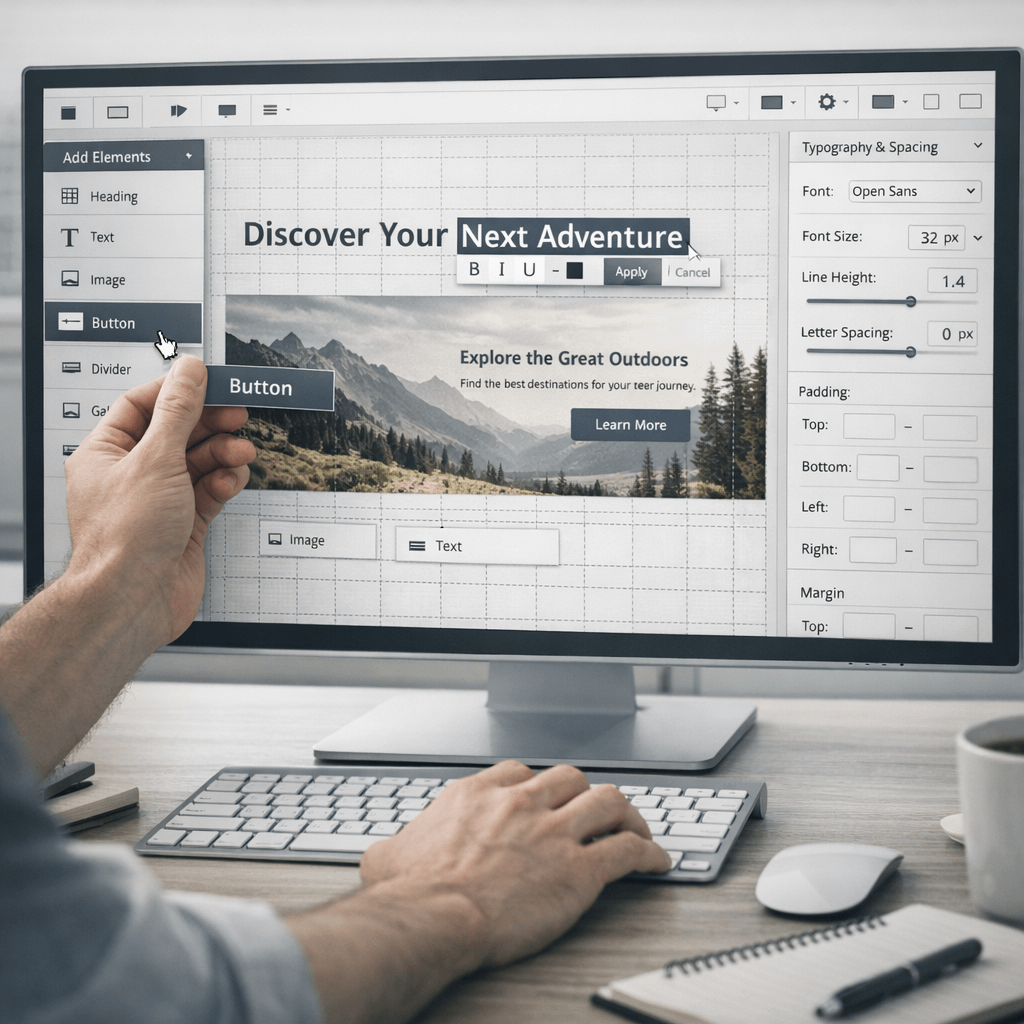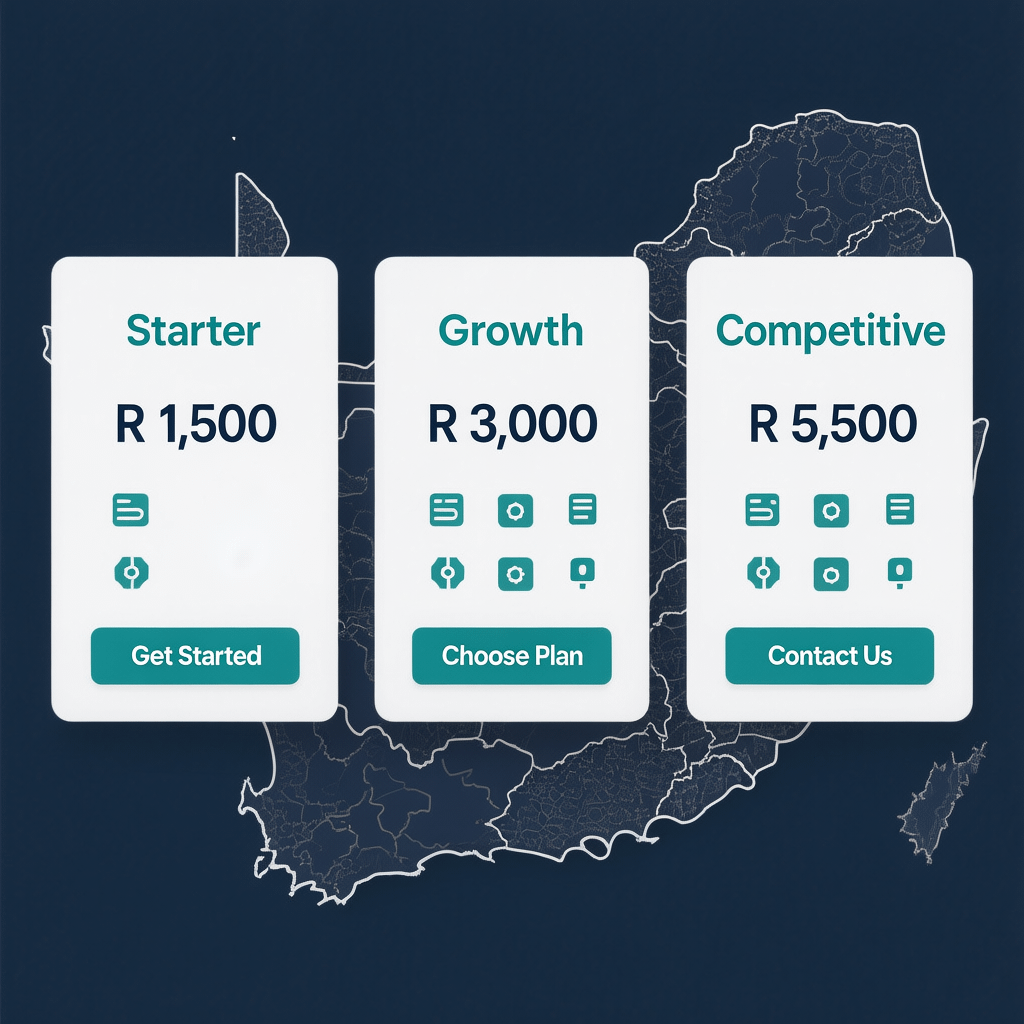

Small business owners are leveraging AI marketing tools to compete with bigger brands - without breaking the bank.
Affordable AI-Integrated Marketing for Small Business: 10 Proven Strategies
By Morne de Heer, Published by Brand Nexus Studios
Published: July 12, 2025
Here is the reality most small business owners face every single day. You are stretched thin. Your budget is tight. Your competitor down the street just launched a slick campaign that looks like it cost a fortune. And you are wondering how you will ever keep up.
The good news? Affordable AI-integrated marketing for small business is no longer a futuristic concept reserved for corporations with six-figure budgets. It is here, it is accessible, and it is transforming how smaller companies attract customers, nurture leads, and drive revenue.
Artificial intelligence has democratized marketing. Tools that once demanded enterprise-level investment now come with free tiers and budget-friendly plans that fit comfortably into a small business budget. From AI-powered email campaigns to intelligent chatbots and predictive analytics, the playing field has never been more level.
In this comprehensive guide, you will discover 10 proven strategies for integrating AI into your marketing without overspending. Whether you run a local bakery, an online boutique, or a growing consulting firm, these actionable approaches will help you automate smarter, connect deeper, and grow faster. Let us dive in.
Why AI Marketing Matters for Small Businesses in 2025
Think about the marketing tasks that eat up most of your week. Writing social media posts. Responding to customer inquiries. Segmenting your email list. Analyzing which ads performed well. Now imagine a tireless assistant handling the heavy lifting while you focus on running your business.
That is exactly what AI marketing delivers. And the shift is happening fast. According to recent industry data, over 60% of small businesses have already adopted at least one AI tool in their marketing operations. The businesses that have not started risk falling behind.
But this is not about chasing trends. It is about solving real problems with intelligent technology. Here is why AI marketing matters specifically for small businesses right now.
Budget Efficiency That Actually Scales
Small businesses operate on thin margins. Every dollar spent on marketing needs to pull its weight. AI tools excel at stretching limited budgets by automating repetitive tasks, reducing human error, and targeting the right audience segments with surgical precision.
Instead of spending hours manually scheduling posts or guessing which email subject line will perform better, AI handles the analysis and execution. You save time, reduce costs, and reinvest those savings into growth.
Competing With Larger Brands
Enterprise companies have entire teams dedicated to data analysis, campaign optimization, and content production. AI bridges that gap by giving solo entrepreneurs and small teams access to similar capabilities at a fraction of the cost.
A well-chosen AI marketing stack can make a five-person company look and perform like a fifty-person operation. That is the kind of leverage that changes trajectories.
Personalization at Scale
Today’s customers expect personalized experiences. They want emails that speak to their needs, ads that reflect their interests, and recommendations that feel curated. Delivering this level of personalization manually is nearly impossible for a small team.
AI makes it effortless. Machine learning algorithms analyze customer behavior, segment audiences automatically, and deliver hyper-relevant content at every touchpoint. The result is better engagement, higher conversion rates, and stronger customer loyalty.
Understanding the Affordable AI Marketing Landscape
Before jumping into strategies, it helps to understand what “affordable” truly means in the context of AI marketing. The landscape has shifted dramatically over the past two years, and the options available to small businesses today are genuinely impressive.
Free and Freemium AI Tools
Many of the most powerful AI marketing tools offer generous free plans. These are not stripped-down demos. They are functional tools that can drive real results for businesses just getting started with AI integration.
- Content creation: ChatGPT, Google Gemini, and other AI assistants offer free tiers for brainstorming, drafting, and editing marketing content.
- Design: Canva includes AI-powered design suggestions, background removal, and Magic Write features in its free plan.
- Email marketing: Mailchimp and Brevo offer free plans with basic AI features for subject line optimization and send-time prediction.
- Social media: Buffer and Later provide free scheduling plans with AI-driven best-time-to-post recommendations.
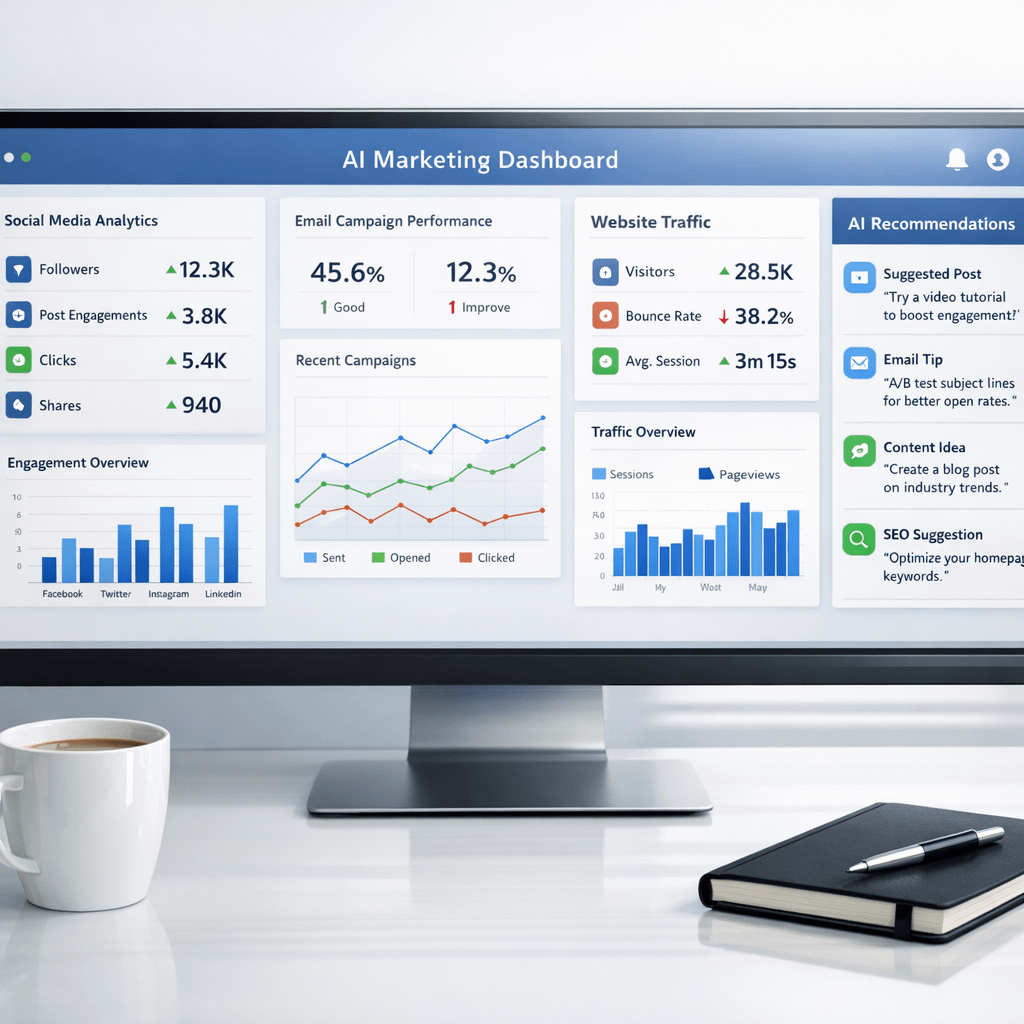
- Analytics: Google Analytics 4 includes AI-powered insights and predictive metrics at no cost.
Budget-Friendly Paid Plans
When you are ready to level up, paid AI marketing tools rarely demand massive investment. Most offer monthly subscriptions ranging from $10 to $100, with no long-term contracts required. This flexibility makes it easy to test tools, measure ROI, and adjust your stack as your business evolves.
The key is choosing tools that integrate well with each other. A connected stack eliminates data silos, reduces manual work, and creates smoother workflows across your entire marketing operation.
The Total Cost of an AI Marketing Stack
A practical, fully functional AI marketing stack for a small business typically costs between $50 and $300 per month. Compare that to hiring even a part-time marketing assistant, and the value becomes clear. You get 24/7 automation, data-driven decisions, and scalable campaigns for less than the cost of a daily coffee run.
Strategy 1: AI-Powered Content Creation That Saves Hours
Content is still king. But creating consistent, high-quality content is one of the biggest challenges small businesses face. AI content tools have matured to the point where they can dramatically accelerate your production process without sacrificing quality.
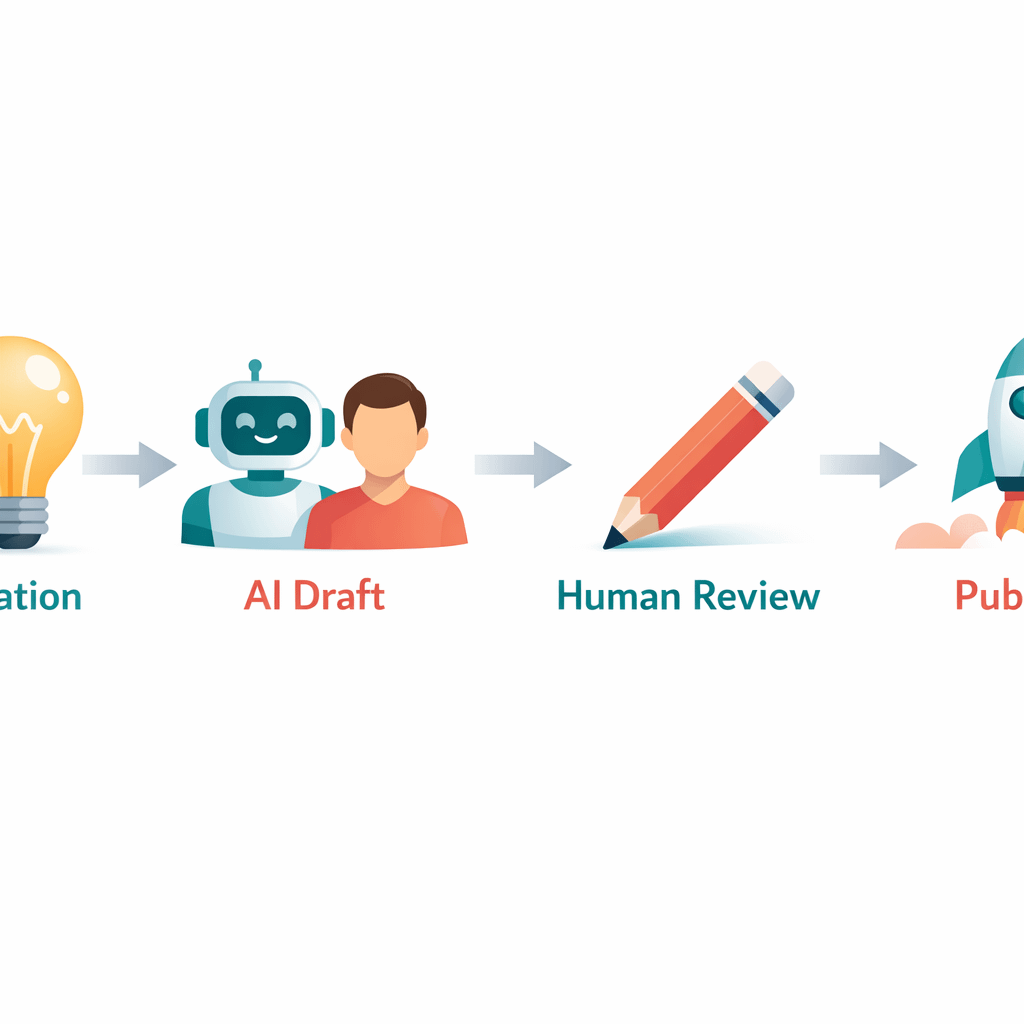
The trick is using AI as a creative partner, not a replacement. Let AI handle first drafts, outlines, and idea generation while you add your unique brand voice, personal stories, and expert insights.
How to Use AI for Content Creation Effectively
- Blog post outlines and drafts: Feed your target keyword and audience details into an AI writing tool. Review the output, inject your expertise, and polish the final piece.
- Social media captions: Generate multiple caption variations in seconds. Test different tones and CTAs to find what resonates with your audience.
- Product descriptions: AI can produce consistent, persuasive product copy at scale, especially useful for e-commerce businesses with large catalogs.
- Video scripts: Outline video content quickly and ensure your messaging stays focused and engaging.
The time savings alone make AI content tools worthwhile. Many small business owners report cutting their content creation time by 50% to 70% while maintaining or improving quality. That freed-up time goes directly back into serving customers and growing the business.
Best Practices to Maintain Authenticity
AI-generated content needs a human touch before it goes live. Always review outputs for accuracy, tone, and brand alignment. Add real examples from your business. Include customer stories. Reference local details if you serve a specific area.
Search engines and readers alike reward authentic, helpful content. AI gives you the foundation and the speed. You provide the soul and the substance.
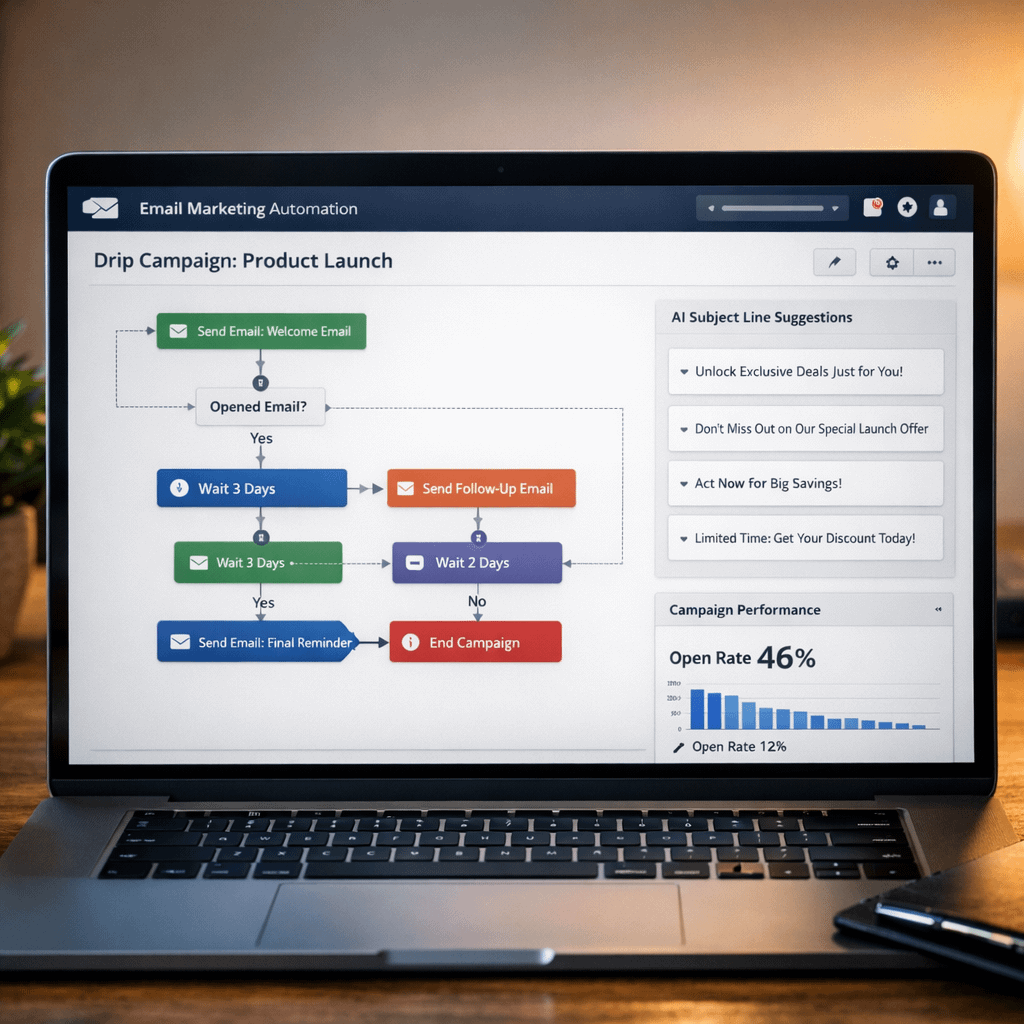
Strategy 2: Smart Email Marketing Automation
Email marketing remains one of the highest-ROI channels for small businesses. When you layer AI on top of your email strategy, the results amplify significantly.
AI-powered email platforms do not just send messages on a schedule. They analyze subscriber behavior, predict optimal send times, generate subject lines that boost open rates, and segment your audience automatically based on engagement patterns.
AI Email Features Worth Using
- Predictive send-time optimization: AI determines when each subscriber is most likely to open their email and schedules delivery accordingly.
- Subject line scoring: AI evaluates subject lines and predicts their performance before you hit send.
- Dynamic content blocks: Serve different content to different audience segments within the same email campaign.
- Automated drip sequences: Set up nurture sequences that adapt based on subscriber actions, such as clicks, opens, and purchases.
- Churn prediction: AI identifies subscribers likely to disengage, allowing you to send targeted re-engagement campaigns before they leave.
Platforms like Mailchimp, ActiveCampaign, and Brevo offer these features at price points accessible to small businesses. Some even include AI features in their free tiers, making it possible to get started with zero investment. If you want to explore how email marketing fits into a broader digital strategy, the team at Brand Nexus Studios’ email marketing services can help you build campaigns that convert.
Strategy 3: AI Chatbots for 24/7 Customer Engagement
Every small business has experienced this scenario. A potential customer visits your website at 10 PM, has a question about your service, finds no way to get an immediate answer, and leaves. That lost opportunity might never return.
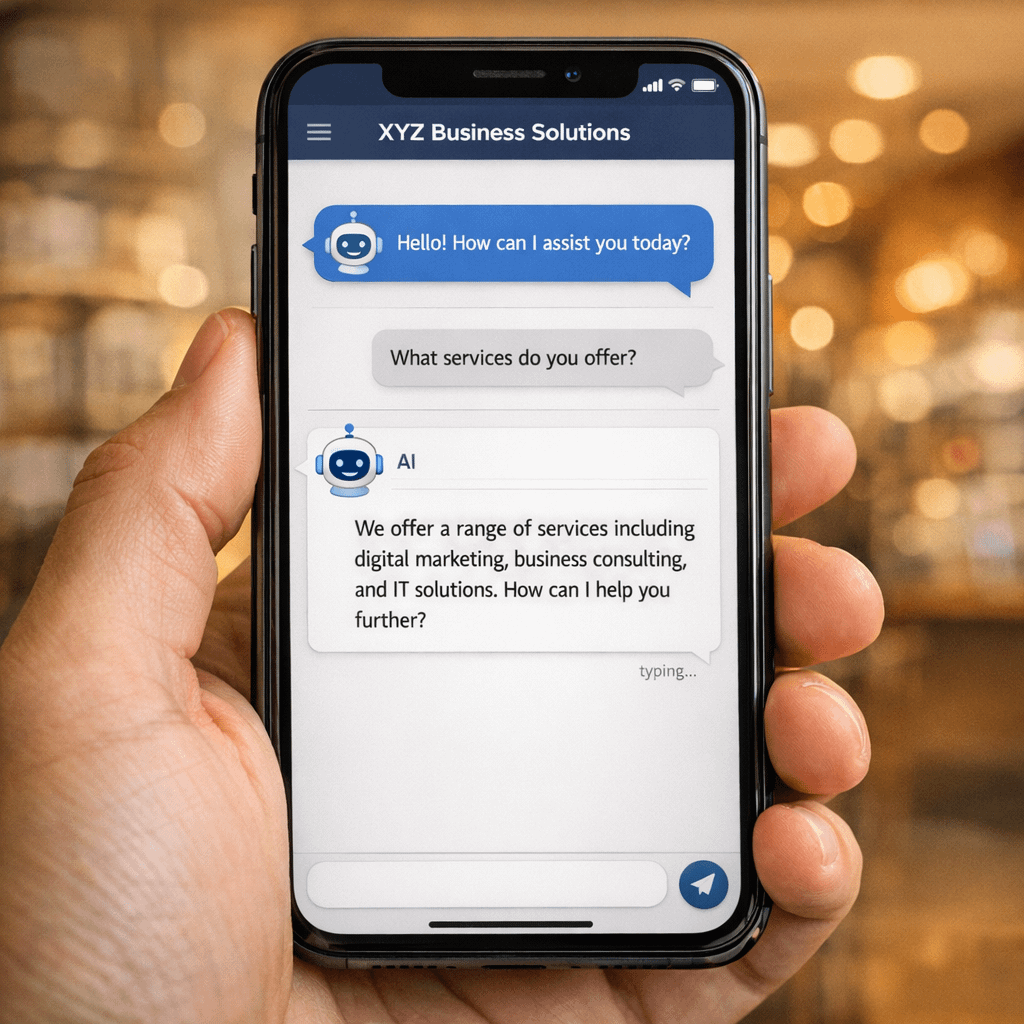
AI chatbots solve this problem elegantly. Modern chatbot platforms powered by natural language processing can handle common inquiries, qualify leads, book appointments, and even process simple transactions around the clock.
Affordable Chatbot Options
You do not need a custom-built solution. Several platforms offer plug-and-play AI chatbots designed specifically for small business websites.
- Tidio: Free plan available with AI-powered chatbot features and live chat integration.
- Drift: Conversational marketing platform with AI chatbot capabilities for lead qualification.
- ManyChat: Specializes in social media chatbots for Facebook Messenger and Instagram DMs.
- Intercom Fin: AI-powered customer support bot that learns from your knowledge base.
Setting Up Your First Chatbot
Start simple. Map out the 10 most common questions your customers ask. Program your chatbot with clear, helpful answers. Set up a handoff to a human agent for complex inquiries. Then monitor conversations and refine responses over time.
Most small businesses can have a functional chatbot running within a single afternoon. The impact on lead capture and customer satisfaction is often immediate and measurable.
Strategy 4: AI-Driven Social Media Management
Managing social media accounts consistently is a time-consuming challenge for small business owners who wear multiple hats. AI-driven social media tools take the guesswork and grind out of the equation.
These platforms do more than schedule posts. They analyze your audience’s behavior, suggest optimal posting times, recommend content topics based on trending conversations, and even generate post copy and visuals.
Key AI Social Media Capabilities
- Auto-scheduling: AI analyzes when your followers are most active and schedules posts to maximize reach.
- Content suggestions: Based on your industry and audience engagement history, AI tools recommend topics and formats likely to perform well.
- Hashtag optimization: AI identifies the most effective hashtags for each post, balancing reach and competition.
- Sentiment analysis: Monitor how your audience feels about your brand by analyzing comments, mentions, and reviews.
- Performance prediction: Some tools predict how well a post will perform before you publish it, letting you adjust content for better results.
Platforms like Buffer, Hootsuite, and Sprout Social offer AI features at various price points. For small businesses looking to build a cohesive social strategy, social media marketing services from Brand Nexus Studios provide expert guidance tailored to your goals.
Creating a Sustainable Social Media Workflow
The best approach is batching. Spend one or two focused sessions per week creating content with AI assistance. Let the scheduling tools handle distribution throughout the week. Reserve a few minutes daily for community engagement, responding to comments, and starting conversations.
This workflow turns social media from a daily burden into a manageable, strategic activity that drives consistent results.
Strategy 5: Predictive Analytics for Smarter Decisions
Data-driven decision making separates thriving businesses from struggling ones. But analyzing data manually is tedious and often requires expertise most small business owners do not have time to develop.
AI-powered predictive analytics tools interpret your data automatically. They surface trends, forecast outcomes, and recommend actions in plain language. No data science degree required.
What Predictive Analytics Can Do for You
- Forecast sales trends: Anticipate busy periods and slow seasons so you can adjust marketing spend accordingly.
- Identify high-value customers: AI pinpoints which customer segments drive the most revenue and which are at risk of churning.
- Optimize pricing: Dynamic pricing suggestions based on demand patterns and competitor analysis.
- Predict campaign performance: Before launching a campaign, AI models estimate its likely reach, engagement, and conversion rates.
- Spot emerging opportunities: AI detects shifts in customer behavior or market trends before they become obvious, giving you a first-mover advantage.
Google Analytics 4 includes several AI-powered predictive features at no cost. For more advanced capabilities, tools like Pecan AI, Obviously AI, and Polymer offer affordable plans designed for small and midsize businesses.
Making Data Actionable
Insights are only valuable when they lead to action. Establish a simple weekly routine: review your AI analytics dashboard, identify one or two key insights, and implement a specific change based on what the data tells you. Over time, this habit compounds into significant competitive advantage.
Strategy 6: AI-Enhanced SEO for Organic Growth
Search engine optimization remains one of the most cost-effective marketing channels for small businesses. AI tools have made SEO more accessible and effective than ever before, even for beginners.
From keyword research to on-page optimization, content gap analysis to technical audits, AI-powered SEO platforms streamline every aspect of the process.
AI SEO Tools That Deliver Results
- Surfer SEO: Analyzes top-ranking pages and provides AI-driven recommendations for content optimization.
- Semrush: Comprehensive SEO platform with AI-powered keyword research, competitor analysis, and content suggestions.
- Clearscope: Uses AI to help you create content that covers topics comprehensively and ranks well.
- RankMath: WordPress SEO plugin with AI features that guide on-page optimization in real time.
- Frase: AI content optimization tool that helps you research, write, and optimize SEO content efficiently.
These tools take the mystery out of SEO. Instead of guessing what Google wants, you receive specific, data-backed recommendations that improve your rankings step by step. For businesses ready to accelerate their organic growth, professional SEO services can complement your AI tools with expert strategy.
Building an AI-Powered SEO Workflow
An effective AI-driven SEO workflow looks like this. First, use AI tools to identify keyword opportunities with strong search volume and manageable competition. Next, generate content briefs that outline what topics and subtopics to cover. Then create the content with AI assistance, ensuring it meets the optimization targets your tools recommend. Finally, monitor rankings and update content periodically based on AI performance insights.
This systematic approach turns SEO from a guessing game into a repeatable, scalable growth engine. Compressed images, fast page loading, and mobile-friendly formatting are also essential for SEO performance, and your AI tools will flag these technical factors for you.
Strategy 7: AI-Powered Ad Campaign Optimization
Running paid ads without AI in 2025 is like navigating without GPS. You might eventually reach your destination, but you will waste time, money, and fuel along the way.
AI-powered advertising platforms automatically optimize your campaigns by adjusting bids, targeting, creative elements, and budget allocation in real time based on performance data.
How AI Transforms Paid Advertising
- Automated bidding: Google Ads and Meta Ads use machine learning to set bids that maximize conversions within your budget.
- Audience targeting: AI identifies and targets lookalike audiences that share characteristics with your best customers.
- Ad creative testing: AI generates and tests multiple ad variations simultaneously, automatically shifting budget to top performers.
- Budget optimization: Intelligent budget allocation moves spend toward the campaigns and channels delivering the best ROI.
- Fraud detection: AI identifies and filters click fraud, protecting your ad spend from being wasted on bot traffic.
Starting Small With AI Advertising
You do not need a massive ad budget to benefit from AI. Start with a modest daily budget on Google Ads or Meta Ads. Enable AI bidding strategies. Let the algorithms learn from your initial data. Then scale up the campaigns that demonstrate strong return on investment.
Even $5 to $10 per day can generate meaningful results when AI optimization ensures every dollar works as hard as possible. The key is patience during the learning phase and consistent monitoring of key metrics.
Strategy 8: AI-Driven Customer Segmentation and Personalization
Generic marketing messages get ignored. Personalized messages get opened, clicked, and acted upon. AI makes advanced customer segmentation possible for businesses that lack dedicated data analysts.
Segmentation Beyond Demographics
Traditional segmentation sorts customers by age, location, and gender. AI goes deeper. It analyzes purchase history, browsing behavior, engagement patterns, and even predicted lifetime value to create dynamic segments that update automatically.
This means your marketing messages evolve in real time as customers interact with your brand. A first-time website visitor receives different messaging than a repeat buyer. A customer who abandoned their cart gets a targeted follow-up. A loyal customer receives exclusive offers that strengthen the relationship.
Implementing AI Personalization
- Start with your email list. Use AI segmentation features in your email platform to create behavior-based segments.
- Personalize website content. Tools like OptinMonster and RightMessage display different content based on visitor behavior.
- Customize ad audiences. Use AI-generated segments to create highly targeted ad campaigns on social and search platforms.
- Tailor product recommendations. E-commerce businesses can use AI recommendation engines to suggest relevant products based on browsing and purchase history.
Personalization consistently delivers measurable improvements in engagement and conversion rates. Studies show that personalized email campaigns generate 6x higher transaction rates compared to generic blasts. AI makes this level of personalization achievable for even the smallest businesses.
Strategy 9: Visual Content Creation With AI Design Tools
Visual content drives engagement across every marketing channel. But hiring a designer for every social media graphic, blog image, and ad creative is not realistic for most small businesses. AI design tools fill this gap brilliantly.
Top AI Design Tools for Small Businesses
- Canva: AI-powered features include Magic Design, background remover, text-to-image generation, and brand kit consistency tools. Generous free plan available.
- Adobe Firefly: AI image generation integrated into Adobe’s creative suite, with options for commercial use.
- Midjourney and DALL-E: AI image generators that create custom visuals from text prompts, perfect for unique blog graphics and social media imagery.
- Lumen5: AI-powered video creation platform that transforms blog posts into engaging video content automatically.
- Pictory: Creates short video clips from long-form content, ideal for repurposing blog posts into social video.
Creating a Consistent Visual Brand With AI
Consistency builds trust. Use AI design tools to establish templates that reflect your brand colors, fonts, and style. Once your templates are set, creating new visuals becomes a matter of swapping content rather than designing from scratch.
Always ensure images are compressed for fast page loading. Large, unoptimized images slow down your website, hurt your SEO rankings, and frustrate mobile visitors. Tools like TinyPNG and ShortPixel compress images without visible quality loss, and many AI design platforms include built-in optimization features.
Remember that caching also plays a vital role in page speed. When your images and pages are cached properly, returning visitors experience near-instant load times. This improves user experience and supports your overall SEO performance.
Strategy 10: AI-Powered Review and Reputation Management
Online reviews influence purchasing decisions more than almost any other factor. For small businesses, a strong review profile can be the difference between a customer choosing you or your competitor. AI tools make managing your online reputation significantly easier.
What AI Reputation Tools Can Do
- Review monitoring: AI aggregates reviews from Google, Yelp, Facebook, and industry-specific platforms into a single dashboard.
- Sentiment analysis: AI categorizes reviews by sentiment, helping you quickly identify trends in customer satisfaction.
- Response generation: AI drafts professional, empathetic responses to both positive and negative reviews, saving time while maintaining a personal touch.
- Review solicitation: Automated follow-up sequences encourage satisfied customers to leave reviews at the optimal moment.
- Competitor benchmarking: Monitor how your review ratings and volume compare to local competitors.
Building a Review-Generation System
The most effective review strategy is proactive, not reactive. Set up an automated workflow that sends a friendly review request after every successful transaction or positive customer interaction. AI can identify which customers are most likely to leave positive reviews based on their engagement history and satisfaction signals.
Respond to every review, positive or negative, within 24 to 48 hours. AI-generated response drafts make this sustainable even for busy business owners. Just review the draft, personalize it slightly, and publish. Your online reputation grows stronger with every thoughtful interaction.
Building Your Affordable AI Marketing Stack: A Step-by-Step Guide
Now that you understand the strategies, let us put them together into a practical, budget-friendly AI marketing stack. This step-by-step process works for any small business, regardless of industry or technical expertise.
Step 1: Audit Your Current Marketing
Before adding AI tools, take stock of what you are already doing. List every marketing activity, from social media posting to email campaigns to customer follow-ups. Identify which tasks consume the most time, which produce the weakest results, and where bottlenecks exist.
This audit reveals your priority targets for AI integration. Focus on the activities where AI can create the biggest impact with the least investment.
Step 2: Set a Realistic Monthly Budget
Decide what you can comfortably invest each month. Even $50 to $100 can fund a capable starter stack. Remember, many powerful AI tools offer free plans, so your initial investment can be minimal while you test and learn.
Step 3: Select Your Core Tools
Choose 2 to 3 tools that address your top pain points. Here is a practical starter stack.
- Content and SEO: ChatGPT or Gemini (free) plus Surfer SEO ($49/month for starter plan)
- Email automation: Mailchimp (free for up to 500 contacts) or Brevo (free for up to 300 emails/day)
- Social media: Buffer (free plan for 3 channels) or Later (free plan with limited posts)
- Design: Canva (free plan with AI features)
- Analytics: Google Analytics 4 (free)
This stack costs between $0 and $49 per month and covers the core marketing functions most small businesses need. As your budget grows and you see results, you can add more specialized tools.
Step 4: Integrate and Automate
Connect your tools using platforms like Zapier or Make (formerly Integromat). Create automated workflows such as publishing a blog post automatically triggering social media distribution, or a new email subscriber automatically receiving a welcome drip sequence.
Integration eliminates manual data transfer, reduces errors, and ensures your marketing activities work together cohesively. Most integration platforms offer free tiers sufficient for small business needs.
Step 5: Monitor, Measure, and Optimize
Establish a weekly review routine. Check your AI analytics dashboard, review campaign performance, and identify one or two actionable insights. Implement changes based on what the data reveals. Over time, this cycle of measurement and optimization compounds into significant growth.
Common Mistakes to Avoid With AI Marketing
AI marketing tools are powerful, but they are not foolproof. Avoiding these common pitfalls will save you time, money, and frustration.
Mistake 1: Publishing AI Content Without Review
AI can produce grammatically correct content that is factually wrong, tonally off, or generic. Always review, edit, and enhance AI-generated content before publishing. Your brand voice, personal experience, and expertise are what differentiate you from competitors using the same tools.
Mistake 2: Automating Without Strategy
Automation for automation’s sake leads to noise, not results. Every automated workflow should serve a clear business objective. Define what you want to achieve before setting up any automation sequence.
Mistake 3: Ignoring Data Privacy
AI tools process customer data, which means you need to comply with privacy regulations like GDPR and POPIA. Ensure your tools handle data securely, obtain proper consent for data collection, and maintain transparent privacy policies.
Mistake 4: Trying to Adopt Everything at Once
The AI marketing landscape is vast and evolving rapidly. Trying to implement every tool and strategy simultaneously leads to overwhelm and poor execution. Start with one or two high-impact tools. Master them. Measure results. Then expand strategically.
Mistake 5: Neglecting the Human Element
AI enhances human marketing. It does not replace it. Customers still want authentic connections, genuine empathy, and real human interactions. Use AI to handle the repetitive and analytical work, freeing yourself to build relationships and deliver experiences that only a human can provide.
Real-World Results: How Small Businesses Win With AI Marketing
Let us look at the kinds of results small businesses are achieving when they implement affordable AI marketing strategies effectively.
Local Service Businesses
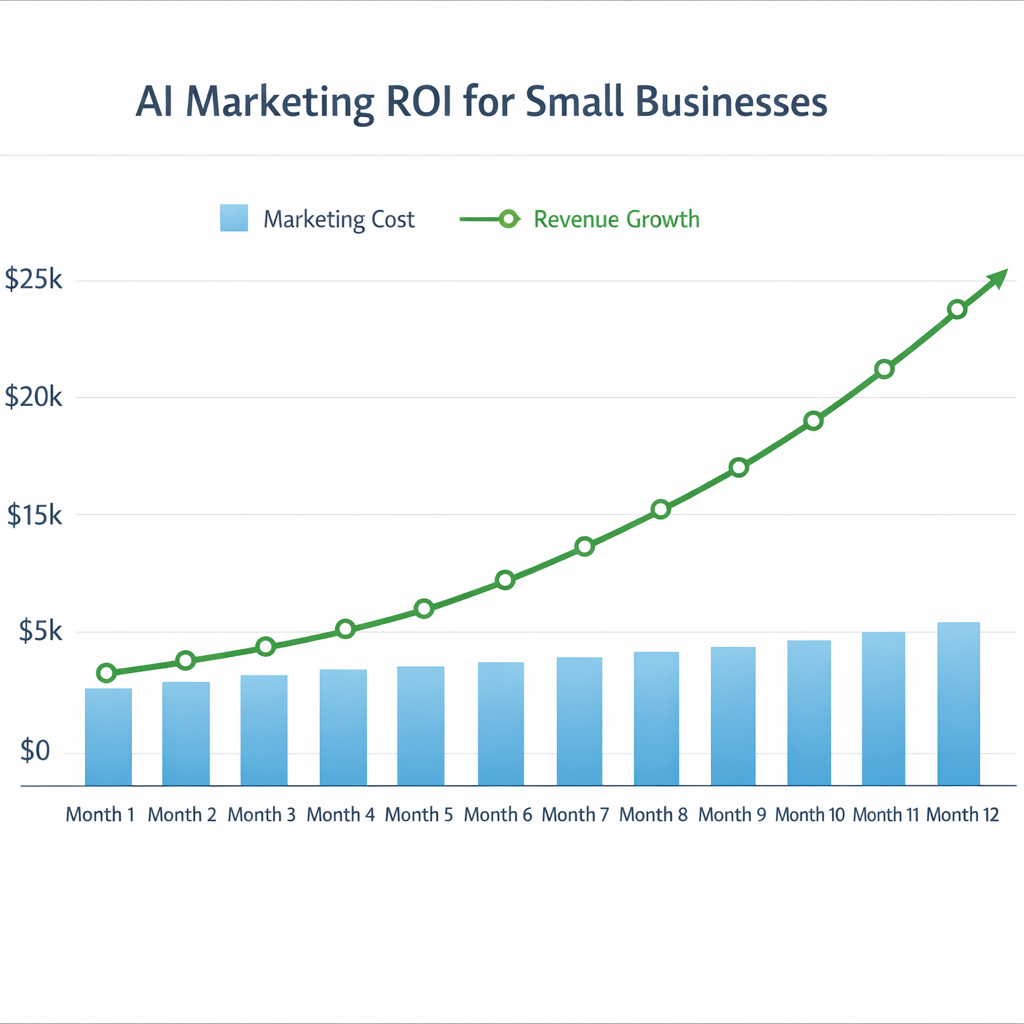
A local plumbing company implemented an AI chatbot on their website, automated their review requests, and used AI-optimized Google Ads. Within three months, they saw a 40% increase in qualified leads while reducing their monthly marketing hours by 15 hours. Their cost per acquisition dropped by 30%.
E-Commerce Stores
An online boutique used AI-powered email segmentation and personalized product recommendations. Their email revenue increased by 55% in the first quarter. AI-generated subject lines consistently outperformed manually written ones by 20% in open rates.
Professional Service Firms
A small accounting firm used AI content tools to produce weekly blog posts, driving organic traffic up 120% in six months. They implemented an AI-powered lead scoring system that prioritized follow-ups with the most promising prospects, improving their conversion rate from 8% to 14%.
These are not outlier results. They represent the kind of improvements that affordable AI-integrated marketing for small business consistently delivers when implemented thoughtfully and strategically.
The Future of AI Marketing for Small Businesses
The AI marketing tools available today are impressive, but they represent just the beginning. Here is what small businesses should watch for in the near future.
Hyper-Personalized Customer Journeys
AI will increasingly enable fully personalized customer journeys where every touchpoint adapts in real time to individual behavior and preferences. Website layouts, email content, ad creative, and product recommendations will shift dynamically for each visitor.
Voice and Conversational AI
Voice search and conversational AI are growing rapidly. Small businesses that optimize for voice queries and implement conversational AI interfaces will capture emerging traffic and engagement opportunities.
AI-Generated Video at Scale
Video production costs have already dropped significantly with AI tools. Expect further advances that enable small businesses to create professional-quality video content with minimal time and budget investment.
Predictive Customer Lifetime Value
AI models will become increasingly accurate at predicting customer lifetime value at the point of first contact, enabling smarter acquisition spending and more effective retention strategies from day one.
Staying informed about these developments and experimenting with emerging tools will keep your small business ahead of the curve. The companies that embrace AI marketing now are building capabilities and data advantages that compound over time.
How to Choose the Right AI Marketing Partner
While many AI marketing tasks can be handled in-house, partnering with an experienced digital marketing agency accelerates results and reduces the learning curve. Here is what to look for in a partner.
- Small business focus: Choose a partner who understands the unique challenges and budget constraints of small businesses.
- Proven track record: Look for case studies, testimonials, and measurable results from businesses similar to yours.
- Full-service capabilities: A partner who handles website design, SEO, content marketing, email campaigns, and analytics provides a cohesive strategy rather than fragmented tactics.
- Transparent pricing: No hidden fees, clear deliverables, and honest communication about what you can expect.
- AI integration expertise: Ensure your partner is up to date with the latest AI tools and knows how to integrate them effectively into your marketing strategy.
Brand Nexus Studios specializes in helping small businesses leverage digital marketing, website building, hosting, and maintenance to achieve measurable growth. Their team stays at the forefront of AI marketing innovations, ensuring clients benefit from the latest tools and strategies without the steep learning curve.
Frequently Asked Questions About Affordable AI Marketing for Small Business
What is affordable AI-integrated marketing for small business?
Affordable AI-integrated marketing for small business refers to using budget-friendly artificial intelligence tools and platforms to automate, optimize, and scale marketing efforts. These solutions include AI-powered email marketing, chatbots, content generators, social media schedulers, and predictive analytics tools that deliver enterprise-level results without the enterprise price tag.
How much does AI marketing cost for a small business?
Many AI marketing tools offer free tiers or plans starting at $10 to $50 per month. A comprehensive AI marketing stack for a small business can typically be assembled for $50 to $300 per month, depending on the tools selected and the scale of operations. This is significantly less than hiring additional marketing staff.
Can AI replace a human marketing team?
AI is not designed to fully replace human marketers. Instead, it augments their capabilities by handling repetitive tasks like data analysis, scheduling, A/B testing, and content drafts. Human creativity, strategic thinking, and brand voice oversight remain essential. AI works best as a powerful assistant that multiplies what a small team can achieve.
What are the best free AI marketing tools for small businesses?
Some of the best free or freemium AI marketing tools include ChatGPT for content ideation, Canva with AI design features, Mailchimp’s free tier for email automation, HubSpot CRM’s free plan, Google Analytics 4 with AI insights, and Buffer’s free social media scheduling plan. These tools provide a strong starting point for small businesses with limited budgets.
Is AI marketing effective for local small businesses?
Absolutely. AI marketing is especially effective for local small businesses because it helps them target specific geographic audiences, personalize messaging, optimize Google Business profiles, and automate review responses. Local businesses can use AI-powered ad targeting to reach nearby customers with precision, reducing wasted ad spend and improving conversion rates.
How do I get started with AI marketing on a tight budget?
Start by identifying your biggest marketing bottleneck, whether it is content creation, email campaigns, social media, or customer support. Choose one affordable AI tool that addresses that pain point, learn it thoroughly, measure results, and then expand your stack. Free trials and freemium plans make it easy to test tools before committing financially.
What risks should small businesses be aware of with AI marketing?
Key risks include over-reliance on AI-generated content without human review, data privacy concerns, potential brand voice inconsistencies, and choosing tools that do not integrate well with existing systems. Small businesses should always review AI outputs before publishing, comply with data protection regulations, and select tools with strong security practices.
How quickly can a small business see results from AI marketing?
Many small businesses see measurable improvements within 30 to 90 days of implementing AI marketing tools. Quick wins include faster content production, improved email open rates through AI-optimized subject lines, and more efficient ad spend. Longer-term benefits like improved SEO rankings and predictive customer insights typically develop over 3 to 6 months.
References
About the Author