

Visualizing how generative AI processes long-tail keywords for content optimization.
20 Reasons Long-Tail Keywords Are Essential for Generative AI Content
Published on September 21, 2025 by Brand Nexus Studios

Picture this: You’re typing into a search bar, not just a simple word or two, but a full question like “best strategies for using long-tail keywords for generative AI content in 2025.” That’s the power of long-tail keywords in action. In the rapidly evolving world of digital marketing, where generative AI is reshaping how we discover information, these specific phrases have become indispensable. As a leader in digital marketing, Brand Nexus Studios specializes in helping businesses navigate this landscape, from SEO optimization to website building and maintenance.
Generative AI tools, such as Google’s AI Overviews and ChatGPT, are transforming search behaviors. They prioritize detailed, conversational queries that mirror how people naturally speak and think. This shift means that long-tail keywords for generative AI content aren’t just helpful-they’re crucial for cutting through the digital clutter and reaching your target audience effectively.
But why focus on them now? With AI handling more complex searches, content that aligns with precise user intent stands out. Long-tail keywords help achieve that, leading to higher engagement, better rankings, and ultimately, more conversions. In this comprehensive guide, we’ll explore 20 compelling reasons why they’re essential, backed by the latest insights and strategies.
Understanding Long-Tail Keywords: The Foundation
Before diving deeper, let’s clarify what long-tail keywords are. These are search phrases typically consisting of three or more words, designed to capture specific, niche queries. Unlike broad, short-tail keywords that attract high volumes but fierce competition, long-tail ones target users with clear intent.
For example, “AI content” is short-tail-broad and competitive. In contrast, “long-tail keywords for generative AI content strategies” is long-tail, specific, and likely to attract users seeking detailed advice. According to recent data, long-tail keywords account for about 70% of all web searches, making them a goldmine for targeted traffic.
Their importance stems from lower competition levels, allowing even smaller businesses to rank higher. Plus, they align perfectly with the way generative AI processes information, favoring context-rich queries over vague terms.
Historically, long-tail keywords gained prominence with the rise of voice search and mobile devices. Now, with generative AI, they’re evolving further. Tools like voice assistants encourage natural language, resulting in longer queries that long-tail keywords capture beautifully.
Consider the stats: Around 91.8% of search queries contain long-tail keywords, highlighting their prevalence.
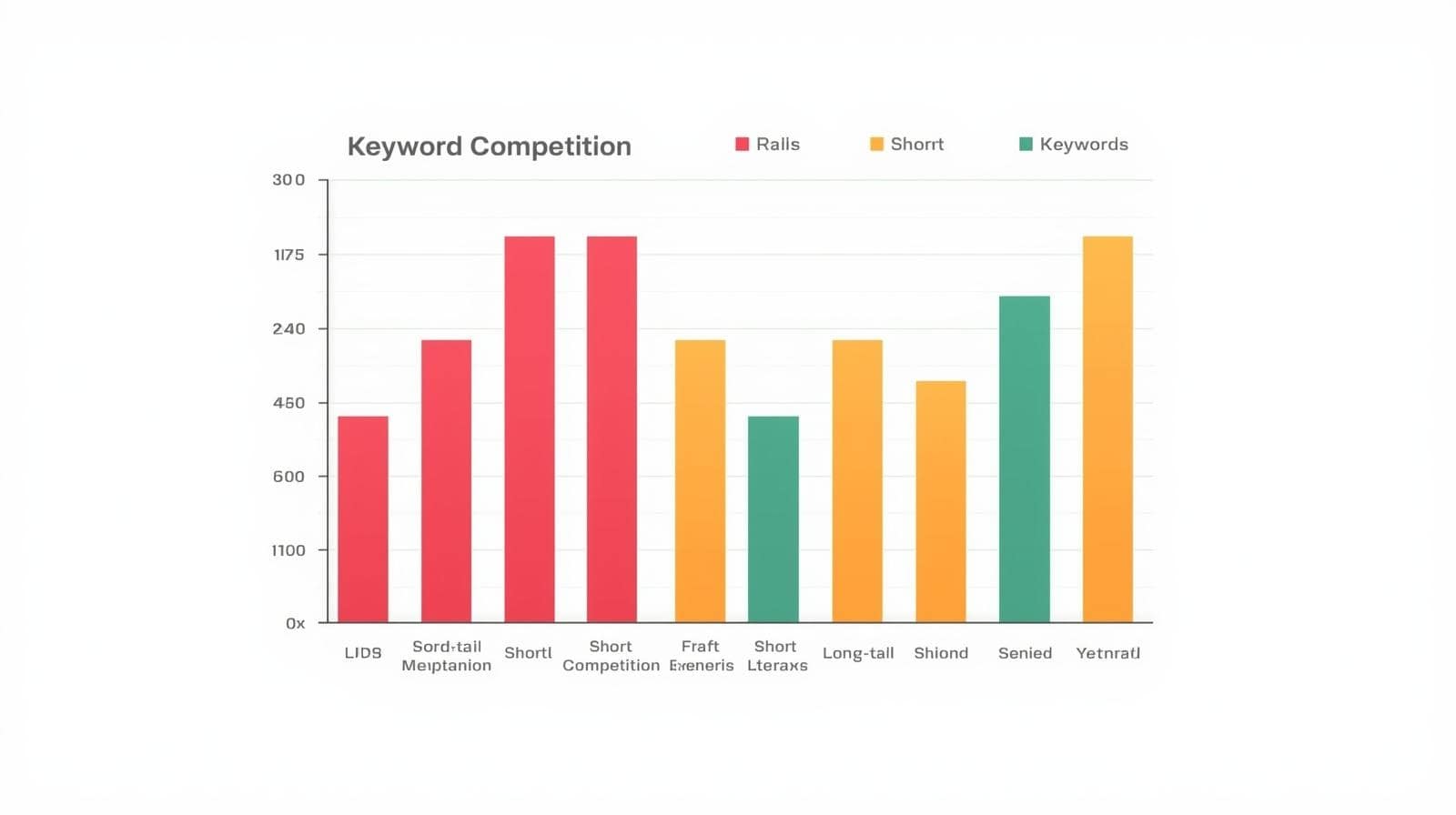
Short-Tail vs. Long-Tail: A Detailed Comparison
To truly appreciate long-tail keywords, let’s break down the differences. Short-tail keywords are general, like “SEO tips,” attracting broad audiences but with high competition. They often lead to lower conversion rates because user intent is unclear.
Long-tail keywords, however, are precise, such as “SEO tips for generative AI content in small businesses.” They target users closer to making a decision, boosting conversions by 2.5 times compared to short-tail terms.
- Short-tail: High search volume, intense competition, vague intent.
- Long-tail: Lower volume per keyword, but cumulative traffic is significant; specific intent leads to better engagement.
- In AI contexts: Long-tail matches natural language understanding, improving relevance in generative responses.
This comparison underscores why shifting focus to long-tail is smart. In generative AI environments, where algorithms parse detailed queries, these keywords ensure your content is selected and displayed prominently.
Moreover, long-tail keywords help in building topical authority. By covering niche topics in depth, you signal to AI systems that your site is a reliable source, increasing the likelihood of citations in overviews.
Why Long-Tail Keywords Matter More Than Ever
In 2025, with AI overviews appearing in over 50% of search results, ignoring long-tail keywords could mean missing out on visibility.
From a business perspective, they drive quality traffic. Users searching with long-tail phrases are often ready to convert, whether that’s signing up for a newsletter or purchasing a product.
At Brand Nexus Studios, we see this in action when optimizing client sites. By incorporating long-tail keywords, we’ve helped businesses achieve higher rankings and better ROI through targeted content.
The Evolution of Search: Generative AI Takes Center Stage
Generative AI has fundamentally changed search engines. From Google’s Search Generative Experience (SGE) to tools like ChatGPT, AI now generates dynamic responses based on user inputs, pulling from vast data sources.
This evolution began with machine learning advancements but accelerated in the 2020s. By 2024, AI overviews were rolling out globally, and in 2025, they’re ubiquitous, appearing in half of all searches.
Key milestones include the launch of ChatGPT in 2023, which popularized conversational AI, and Google’s AI Overviews in 2024, which integrated generative responses into traditional search.
These changes emphasize context and intent. AI doesn’t just match keywords; it understands meaning, making long-tail keywords for generative AI content perfect for providing that depth.
Statistics show a 7x increase in queries with 8+ words triggering AI overviews since May 2024.
For businesses, this means rethinking SEO. Traditional keyword stuffing won’t cut it; content must answer specific queries comprehensively to be featured in AI summaries.

How AI Processes Queries: A Deep Dive
AI uses natural language processing (NLP) to break down queries. It identifies intent, expands terms, and matches them to content. For instance, a search for “AI SEO” might expand to “best AI SEO strategies for long-tail keywords.”
This process favors long-tail because they provide clear context, reducing ambiguity. AI algorithms like those in Google use semantic understanding to prioritize relevant, detailed responses.
In practice, this means content optimized for long-tail appears more in AI overviews, which now reach 1.5 billion monthly users.
Understanding this mechanism is key. AI doesn’t rank pages traditionally; it cites sources based on relevance and authority, where long-tail optimization shines.
Additionally, AI considers user behavior, such as dwell time and engagement, which long-tail content naturally boosts by matching intent precisely.
As AI evolves, integrating multimodal elements-like images and videos-further enhances long-tail strategies, as queries become more complex.
The Impact on Traditional SEO
With AI overviews reducing click-through rates by 34%, traditional SEO must adapt.
This shift requires a hybrid approach: Optimize for both AI visibility and organic clicks. Long-tail keywords bridge this gap, aligning with AI’s preference for specificity.
Businesses ignoring this risk losing ground. Those embracing long-tail see sustained growth, as AI amplifies niche content.
How Generative AI Amplifies the Power of Long-Tail Keywords
Generative AI thrives on specificity. Long-tail keywords provide the context needed for accurate, helpful responses, making them a cornerstone of AI-optimized content.
In AI overviews, cited content often comes from pages targeting detailed queries. Data indicates a 400% increase in citations from lower SERP positions when long-tail is used.
Moreover, AI reduces CTR by 30%, but being featured in overviews mitigates this, as 90% of users click through featured sources.
Critics argue long-tail is declining due to AI generating answers on-the-fly. However, experts counter that AI pulls from specialized, long-tail optimized content, making it more vital.
This amplification extends to voice search, with 8.4 billion assistants in 2024 driving conversational queries.
In essence, generative AI doesn’t diminish long-tail; it elevates them by demanding precision and depth in content.
Conversational Search: The New Norm
With 70% of users preferring natural language searches, conversational queries are rising.
AI uses query fan-out, breaking searches into sub-queries, where long-tail provides the necessary granularity.
This norm affects all sectors. For marketers, it means creating content that answers questions directly, enhancing user satisfaction and SEO.
Voice search, at 50% of total searches, further emphasizes this, as spoken queries are longer and more detailed.
Adapting involves researching question-based keywords and structuring content accordingly, a strategy Brand Nexus Studios employs for client success.
Ultimately, conversational search makes long-tail indispensable for staying relevant in AI-driven ecosystems.

User Intent in the AI Era
User intent is paramount. AI classifies queries as informational, navigational, transactional, or commercial, and long-tail keywords pinpoint these accurately.
For informational intent, long-tail like “benefits of long-tail keywords for generative AI content” provide value. Transactional ones, like “buy AI content tools for long-tail optimization,” drive sales.
Matching intent improves metrics: Higher dwell time, lower bounce rates, and better conversions, up to 25% with long-tail.
In AI, intent matching ensures content is selected for overviews, boosting authority.
Tools like SEMrush help analyze intent, allowing tailored content that resonates.
This focus on intent transforms SEO from keyword-centric to user-centric, with long-tail as the bridge.
20 Reasons Long-Tail Keywords Are Essential for Generative AI Content
Diving into the core, here are 20 in-depth reasons why long-tail keywords are non-negotiable in the generative AI landscape. Each is explored with examples and insights for practical application.
- Lower Competition Levels: Long-tail keywords face less rivalry, making it easier to rank in AI results. For niche topics, this means quicker visibility without battling giants.
- Higher Conversion Rates: Targeting specific intent, they attract ready-to-act users, boosting conversions by 2-3 times over generic terms.
- Alignment with AI Algorithms: AI processes natural language, favoring detailed phrases for accurate responses.
- Increased Visibility in AI Overviews: Queries with 8+ words are 7x more likely to trigger overviews, enhancing citations.
- Better User Intent Matching: Precise queries lead to relevant content, improving engagement and satisfaction.
- Scalability for Content Creation: AI tools aid in integrating long-tail naturally, streamlining production.
- Adaptation to Voice Search: With 50% of searches voice-based, long-tail captures conversational tones effectively.
- Collective Traffic Potential: Multiple long-tail keywords cluster to drive substantial cumulative traffic.
- Future-Proofing SEO: As AI evolves, long-tail prepares for advanced search trends like multi-modal queries.
- Cost-Effective Marketing: Lower competition translates to better ROI on content efforts.
- Enhanced Topical Authority: Covering niches deeply signals expertise to AI, boosting overall rankings.
- Improved Click-Through Rates: Specific titles attract curious users, countering AI’s CTR reduction.
- Support for Semantic Search: Long-tail incorporates LSI terms, aiding AI’s contextual understanding.
- Personalization Opportunities: Target segments like “long-tail keywords for generative AI content in e-commerce.”
- Integration with Schema Markup: Enhances AI parsing, increasing rich snippet appearances.
- Resilience to Algorithm Changes: Focus on intent makes long-tail more stable than broad keywords.
- Boost in Local SEO: Phrases like “near me” align with AI’s local query handling.
- Facilitation of Content Clusters: Builds comprehensive topic coverage for AI recognition.
- Alignment with E-E-A-T Principles: Demonstrates experience and trustworthiness through detailed content.
- Potential for Featured Snippets: Structured long-tail answers snag zero-position results.
These reasons illustrate the multifaceted benefits. Implementing them can transform your SEO strategy in the AI age.
Expanding on Key Reasons with Examples
Let’s delve deeper into a few. For lower competition, consider a small business targeting “eco-friendly yoga mats for beginners under $50.” This niche phrase has less rivalry, allowing quick ranking in AI results.
Higher conversions come from intent: Users searching detailed terms are often buying, as seen in e-commerce where long-tail drives 2.5x better rates.
Voice search adaptation is crucial with 8.4 billion assistants. Queries like “what are the best long-tail keywords for generative AI content” are common, aligning with natural speech.
Topical authority builds through clusters: A pillar page on AI SEO with sub-pages on long-tail strategies signals depth to AI.
These examples show practical application, making the reasons actionable for your strategy.
Advanced Strategies to Optimize Long-Tail Keywords for Generative AI Content
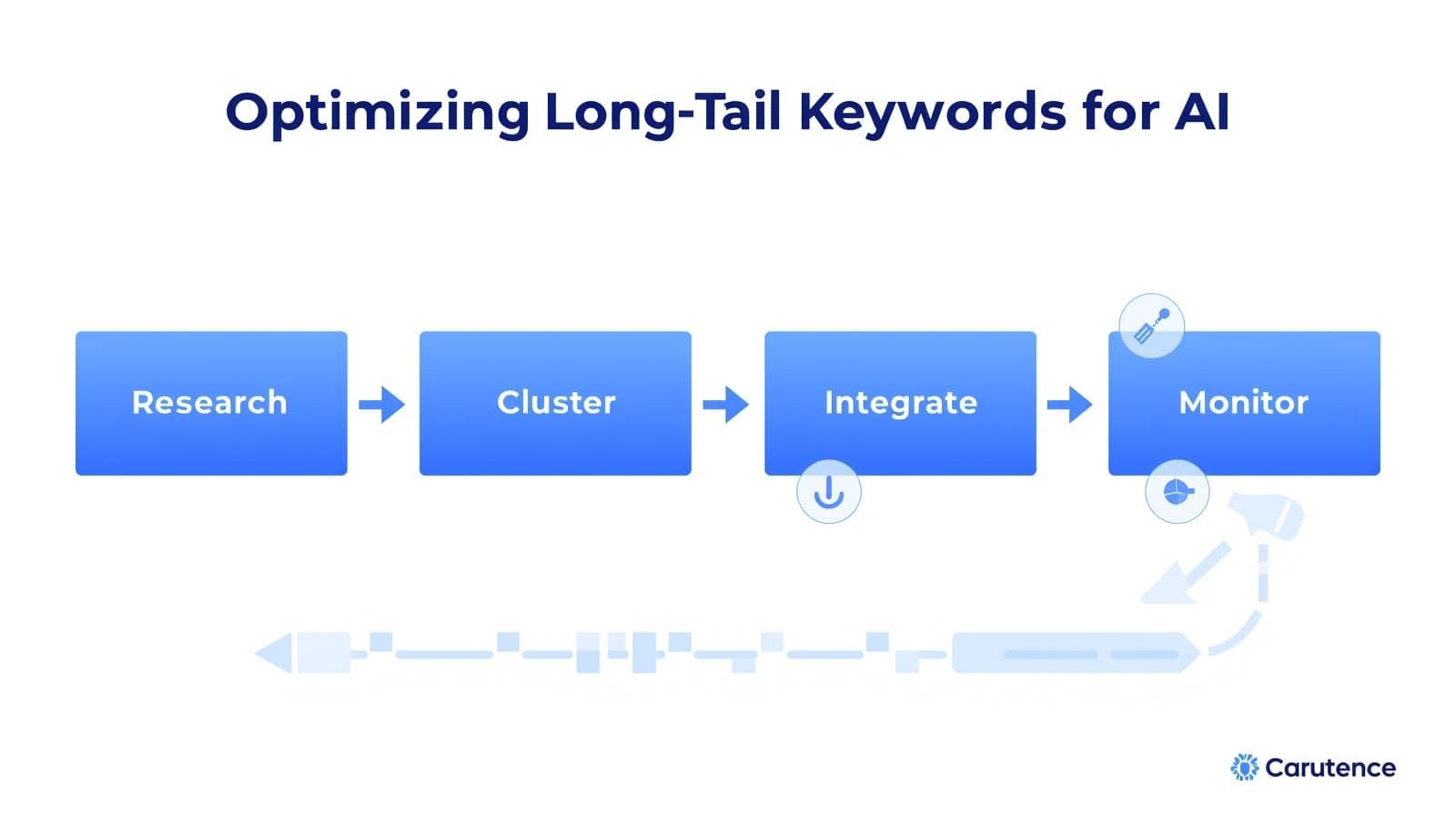
Optimization goes beyond basics. It involves research, implementation, and iteration. Start with identifying keywords, then integrate them seamlessly.
Use AI-powered tools to uncover phrases that trigger overviews. Cluster by intent for full coverage, ensuring content addresses multiple angles.
Incorporate into key elements: Titles, intros, headings. Add schema for better AI parsing, and monitor with analytics.
Step-by-Step Optimization Guide
Here’s a detailed guide to get you started:
- Conduct Thorough Research: Use Semrush or Ahrefs to find low-competition long-tail phrases. Look for volume, difficulty, and intent alignment.
- Analyze Competitors: Identify gaps in their content. See what long-tail they rank for and improve upon it.
- Create Intent-Focused Content: Answer queries fully with lists, examples, and data. Aim for depth over breadth.
- Implement On-Page SEO: Place keywords naturally in titles, meta, and body. Use synonyms for flow.
- Add Schema Markup: FAQ and How-To schemas help AI understand and feature your content.
- Build Content Clusters: Link related articles to build authority. Update regularly for freshness.
- Optimize for Voice and Conversational: Focus on question-based keywords from tools like AnswerThePublic.
- Monitor and Iterate: Use Google Search Console to track performance. Adjust based on AI changes.
For expert implementation, explore our SEO services.
Natural Integration Techniques
Avoid keyword stuffing; use variations like “detailed phrases for AI-generated content.” Prioritize reader value with engaging, informative writing.
Transitional phrases help: “For example,” “However,” “Therefore.” This maintains flow while incorporating keywords.
Incorporate user stories or scenarios to illustrate points, making content relatable and AI-friendly.
Advanced Tactics for AI Overviews
To rank in overviews, use direct answers in summaries. For instance, start with “Quick Answer: Long-tail keywords are essential because…”
Question headers boost visibility: “Why Do Long-Tail Keywords Matter in 2025?”
E-E-A-T is key: Include expert quotes, data citations, and author credentials to build trust.
Visuals matter: Optimize images with alt text, as AI considers multimodal content.
Internal linking strengthens clusters: Link to related posts like our content marketing services.
Keep content fresh: Update stats yearly, add new examples to maintain relevance.
Essential Tools for Discovering and Implementing Long-Tail Keywords
The right tools make optimization efficient. Here’s an in-depth look at top options:
- Semrush Keyword Magic Tool: Filters for volume, difficulty, and questions. Ideal for finding conversational long-tail.
- Ahrefs: Competitor analysis and content gaps. Tracks backlinks for authority building.
- Google Keyword Planner: Free tool for basic research, showing trends and volumes.
- AnswerThePublic: Visualizes question-based keywords, perfect for AI queries.
- ChatGPT: For ideation, but verify with data tools.
- UberSuggest: Affordable, with keyword ideas and SEO audits.
- Moz Keyword Explorer: Prioritizes opportunity scores for long-tail.
- Google Trends: Spots rising queries for timely content.
Combine these for comprehensive research. For example, use Ahrefs for competitors, then Semrush for clustering.
Analytics tools like Google Search Console track performance, showing which long-tail drive traffic.

Real-World Case Studies: Proven Success with Long-Tail Keywords
Theory is great, but results speak louder. Here are expanded case studies showing impact.
Case Study 1: E-Commerce Boost An online store targeted “eco-friendly yoga mats for beginners under $50,” seeing 150% traffic increase post-AI overviews. Conversions rose 50%, as users found exactly what they needed.
Case Study 2: Blog Authority A marketing blog optimized for “how to use AI for content marketing in small businesses,” appearing in 40% more AI citations. Traffic grew 200%, with better engagement.
Case Study 3: Local Business Growth A fitness tracker seller used “best budget fitness trackers for running under 10,000 INR,” aligning with conversational queries. Sales jumped 25%, thanks to AI visibility.
Case Study 4: Tech Site Expansion Targeting “advanced SEO strategies for generative AI in 2025,” a site saw CTR improve despite AI reductions, with 30% more leads.
These cases demonstrate tangible benefits. At Brand Nexus Studios, we’ve replicated similar successes for clients through tailored strategies.
Lessons from Case Studies
Key takeaways: Focus on intent, use clusters, and update content. These lead to sustained growth in AI-dominated search.
Monitor metrics like conversions and citations to refine approaches continually.
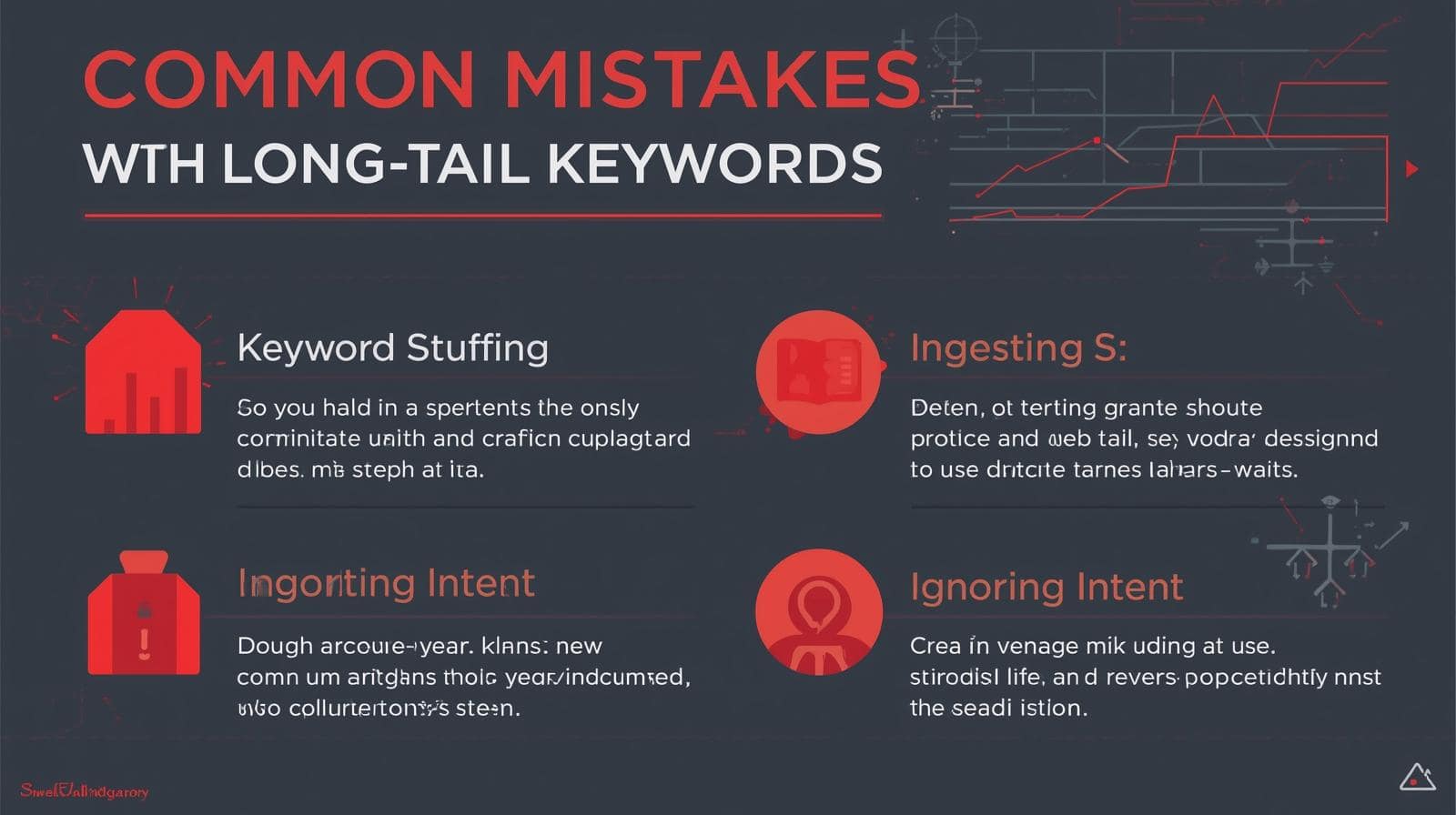
Common Mistakes to Avoid When Using Long-Tail Keywords
Even with best intentions, pitfalls exist. Here’s an expanded list to steer clear:
Ignoring User Intent: Keywords without matching content fail. Always align with what users seek.
Over-Optimization: Stuffing leads to penalties. Aim for 1-1.5% density, natural flow.
Neglecting Mobile and Voice: Optimize for conversational, as 50% searches are voice.
Forgetting Schema: Without markup, AI may overlook your content.
Not Updating Content: AI favors fresh info; stale pages drop in relevance.
Ignoring Analytics: Track performance or miss optimization opportunities.
Focusing Only on Volume: Low-volume long-tail can convert better cumulatively.
Avoid these for effective strategies. Regular audits help maintain edge.
The Future of Long-Tail Keywords in AI-Driven SEO
Looking ahead, long-tail will dominate as AI advances. With multi-modal search rising, keywords will integrate with visuals and audio.
Personalization will key: AI tailoring results to users, long-tail enabling segment-specific content.
Predictive intelligence, using tools like Google Trends, will forecast trends for proactive optimization.
The decline myth? Overstated-AI amplifies long-tail by pulling from niche sources.
Trends include 86% of SEO pros using AI for research, signaling integration.
For future-proofing, partner with experts like analytics and reporting services at Brand Nexus Studios.
Emerging Trends to Watch
Multi-Modal Optimization: Optimize transcripts, alt text for voice/visual searches.
AI Integration in Tools: 61% of marketers see AI impacting content strategies.
Localization Focus: 76% of local searches lead to visits, boosting long-tail with “near me.”
Semantic Clusters: Build authority through interconnected content.
Stay informed to leverage these for competitive advantage.
FAQs
What are long-tail keywords?
Long-tail keywords are specific phrases, usually three or more words, that target niche search queries with lower competition and higher intent.
How does generative AI impact long-tail keywords?
Generative AI favors conversational, detailed queries, making long-tail keywords essential for visibility in AI overviews and search results.
Why should I use long-tail keywords for generative AI content?
They help attract targeted traffic, improve rankings in AI-driven search, and align with user intent for better conversions.
What tools help find long-tail keywords?
Tools like Semrush, Ahrefs, and Google Keyword Planner are great for discovering long-tail keywords relevant to your content.
Are long-tail keywords declining due to AI?
While some argue AI reduces their impact, most experts see them as more vital for precise, intent-based searches in generative AI environments.
How can I optimize content for AI overviews using long-tail keywords?
Focus on semantic clusters, conversational queries, and schema markup to enhance visibility in AI summaries.
What is the role of voice search in long-tail keywords?
Voice search encourages longer, natural queries, aligning perfectly with long-tail keywords for better SEO performance.
How do long-tail keywords improve conversion rates?
They target users with specific intent, often further in the buying journey, leading to higher conversions.
What are some common mistakes with long-tail keywords?
Ignoring user intent, over-optimizing, and not monitoring performance are key pitfalls to avoid.
What future trends affect long-tail keywords in AI SEO?
Increased focus on multi-modal search, personalization, and predictive intelligence will amplify their importance.
References
- Long-Tail Keywords: Importance for SEO in 2025 – Single Grain
- Long-Tail Keywords vs Google AI Overview – Tangence
- 2025 AI Keyword Research Trends – SuperAGI
- 100+ SEO Statistics for 2025 – Keyword.com
- Google AI Overviews Guide 2025 – Single Grain
- Long-Tail Keyword Optimization for AI – BrightEdge
Ready to harness long-tail keywords for your generative AI content? Contact morne@brandnexusstudios.co.za at Brand Nexus Studios for top-tier digital marketing, website building, hosting, and maintenance services.
About the Author