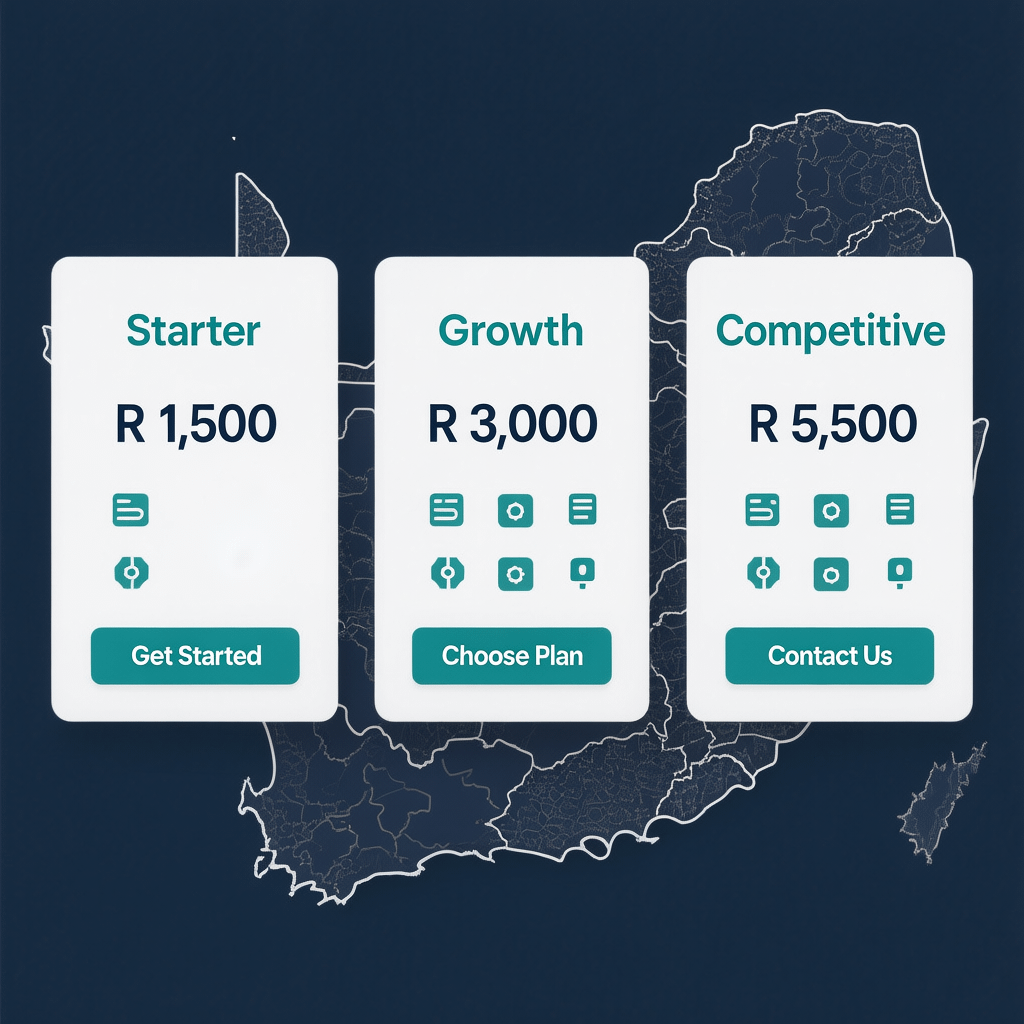

Smart choices now help your domain name pay dividends in SEO, trust, and conversions.
Domain Name: 21 Proven Steps for Better Rankings
By Morne de Heer, Published by Brand Nexus Studios
Try it
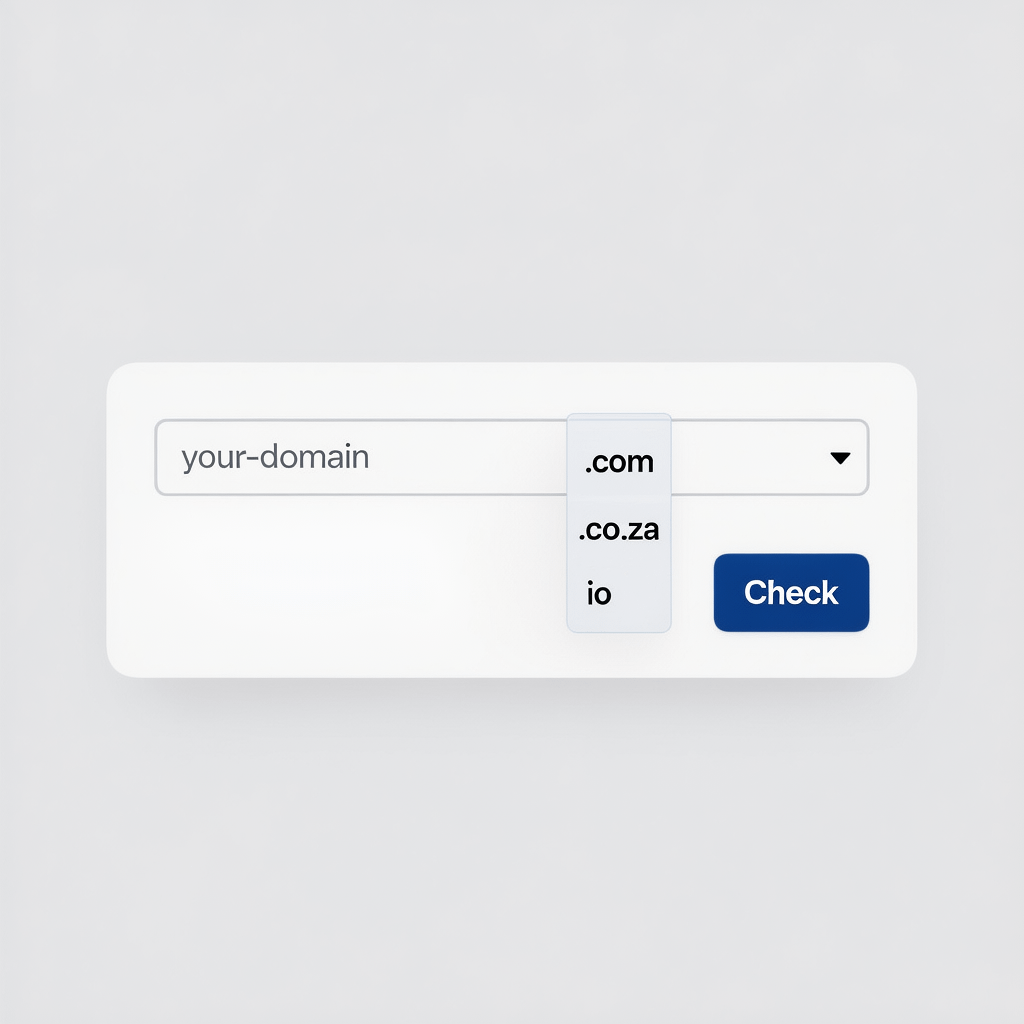
Search your domain name in seconds
Start strong. Use the domain search UI below to check a domain name across popular TLDs, then follow the steps to launch fast.
Implementation note: connect this form to your registrar or a WHOIS API to perform live checks, then route to cart. Add caching and debounce to reduce API calls.
Let’s make your domain name work harder than a catchy slogan. In a few focused steps you will learn how to pick a domain name, validate it, secure it, and launch it with clean DNS and airtight SEO.
Because every click starts with a domain name, the process below balances branding, search, legal, and technical choices. You will leave with a shortlist you love and a launch plan you can execute today.
What a domain name is and why it matters
At its core, a domain name is a memorable pointer to a server. People type it, search engines crawl it, and your site loads. That small string impacts brand recall, email trust, and long term authority.
When you select a domain name that is clear, short, and pronounceable, you reduce friction. Fewer typos. More direct traffic. More brand mentions. Those signals compound, especially when your content and UX deliver.
21 proven steps to choose the perfect domain name
Start with clarity. These steps will help you choose a domain name that strengthens brand, supports SEO, and avoids legal or technical trouble.
1. Define your brand promise
First, write a one line promise your market will remember. A domain name that echoes this promise improves recall and positions your offer in seconds.
2. List audience keywords
Next, capture 3 to 5 words your customers use. Blend one of these with your brand for a clean domain name that matches search intent without sounding spammy.
3. Favor short and simple
Then, keep it to 6 to 14 characters when possible. A short domain name reduces errors in speech, print, and email.
4. Make it easy to say
Because word of mouth is real, pick a domain name you can say twice on a call without spelling it out. Avoid homophones that confuse listeners.
5. Avoid hyphens and numbers
Clarity wins. A clean domain name without hyphens or numbers reads better, looks better, and avoids you repeating it with explanations.
6. Choose the right TLD
Default to .com if it matches your brand. If you target a single country, a ccTLD can boost trust. If your niche is specific, a relevant gTLD can make a domain name memorable.
7. Check social handle availability
Keep it consistent. If your domain name matches social handles, you reduce friction and avoid brand collisions.
8. Screen for trademarks
Protect yourself. Search national databases before falling in love with a domain name. If you operate globally, check in key markets too.
9. Validate real world usage
Ask three people to type and say your best options. If they stumble, that domain name may cost you leads over time.
10. Research domain history
Use a web archive and backlink tool to vet the past. If your dream domain name hosted spam, walk away or expect cleanup work.
11. Test for email clarity
Say your email out loud. If your domain name makes your email sound awkward, refine it now to improve deliverability and support interactions.
12. Watch for confusing doubles
Two repeated letters can cause typos. If your domain name creates repeats at word boundaries, consider a variant that flows better.
13. Balance brand and keyword
A partial match can be useful. Blend one concept word into a brandable domain name. Exact match names only help when your content is excellent.
14. Think long term
Avoid boxy names tied to one product. A flexible domain name keeps options open for future services and markets.
15. Consider locale
If you plan multilingual growth, a neutral domain name with subfolders for languages is usually simpler than splitting across multiple domains.
16. Check pricing and renewals
Some TLDs have low first year fees and high renewals. Before you commit to a domain name, check renewal pricing and registry policies.
17. Secure core variations
Buy the plural, common misspells, and key TLDs. Point them to your primary domain name with 301 redirects.
18. Enable privacy and lock
Turn on WHOIS privacy where allowed. Lock your domain name to prevent unauthorized transfers. Add 2FA to the registrar account.
19. Plan DNS from day one
Document records before launch. A clear plan means your domain name resolves quickly, email stays clean, and changes are low risk.
20. Get SSL and enforce HTTPS
Trust is critical. After pointing DNS, install a valid certificate and redirect all traffic to HTTPS for your domain name and subdomains.
21. Create a migration plan
If you are renaming an existing site, map every old URL to the new domain name with permanent redirects and updated canonicals.
From idea to live site: connect your domain name the right way
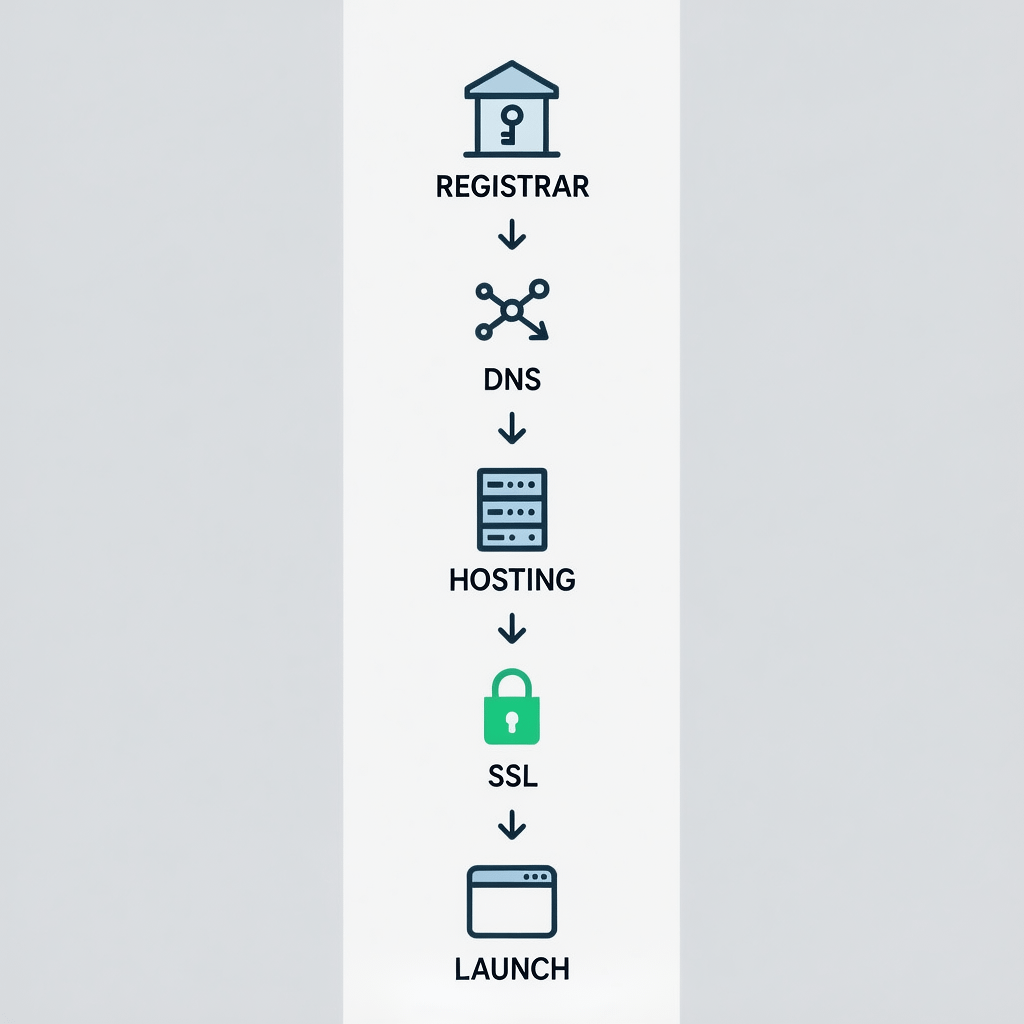
Ready to go live? Here is the practical path to connect a domain name to hosting, set email, and avoid slowdowns or SEO issues.
Pick a reputable registrar
Choose a registrar known for strong security and clear support. Your domain name is a long term asset, so predictable billing and fast support matter.
Add your domain to DNS
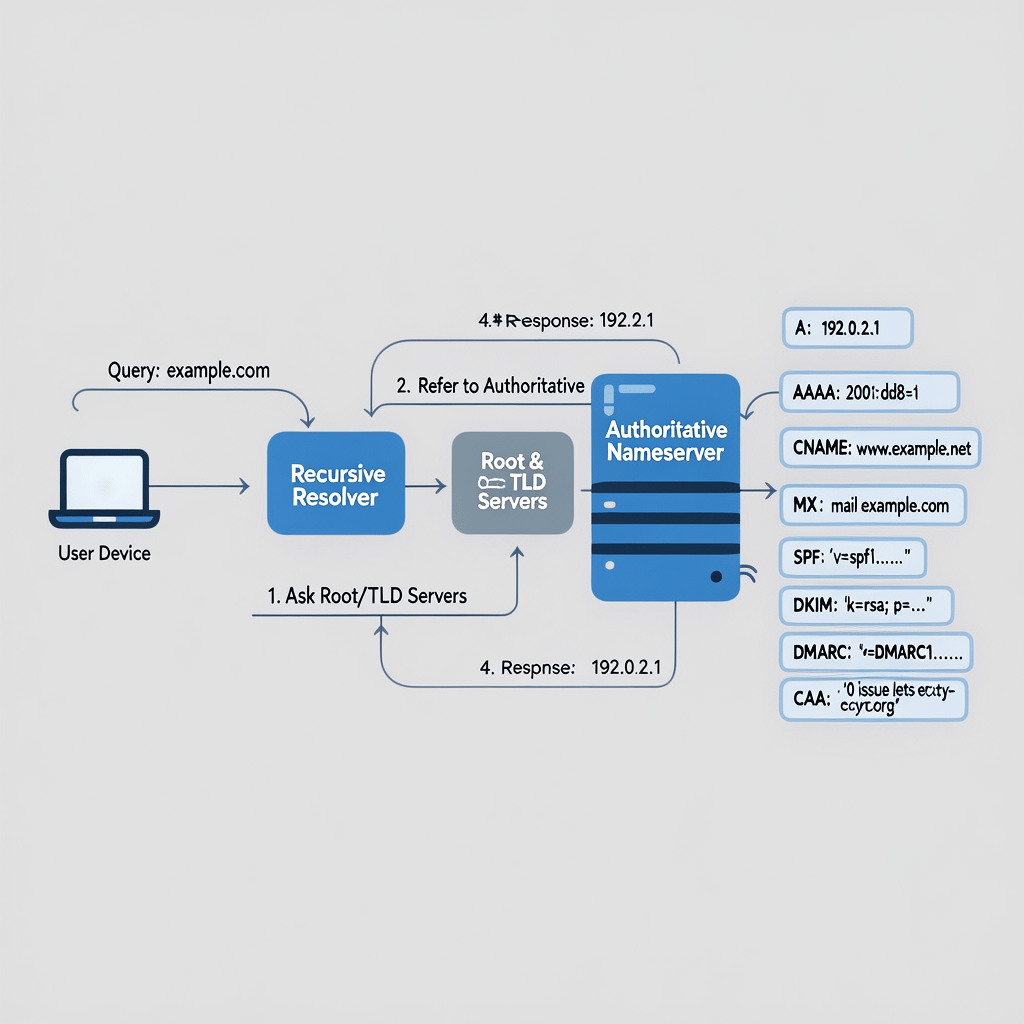
Point nameservers to your chosen DNS host. Then add an A record for the root domain name, a CNAME for www, and AAAA if your host supports IPv6.
Set email records correctly
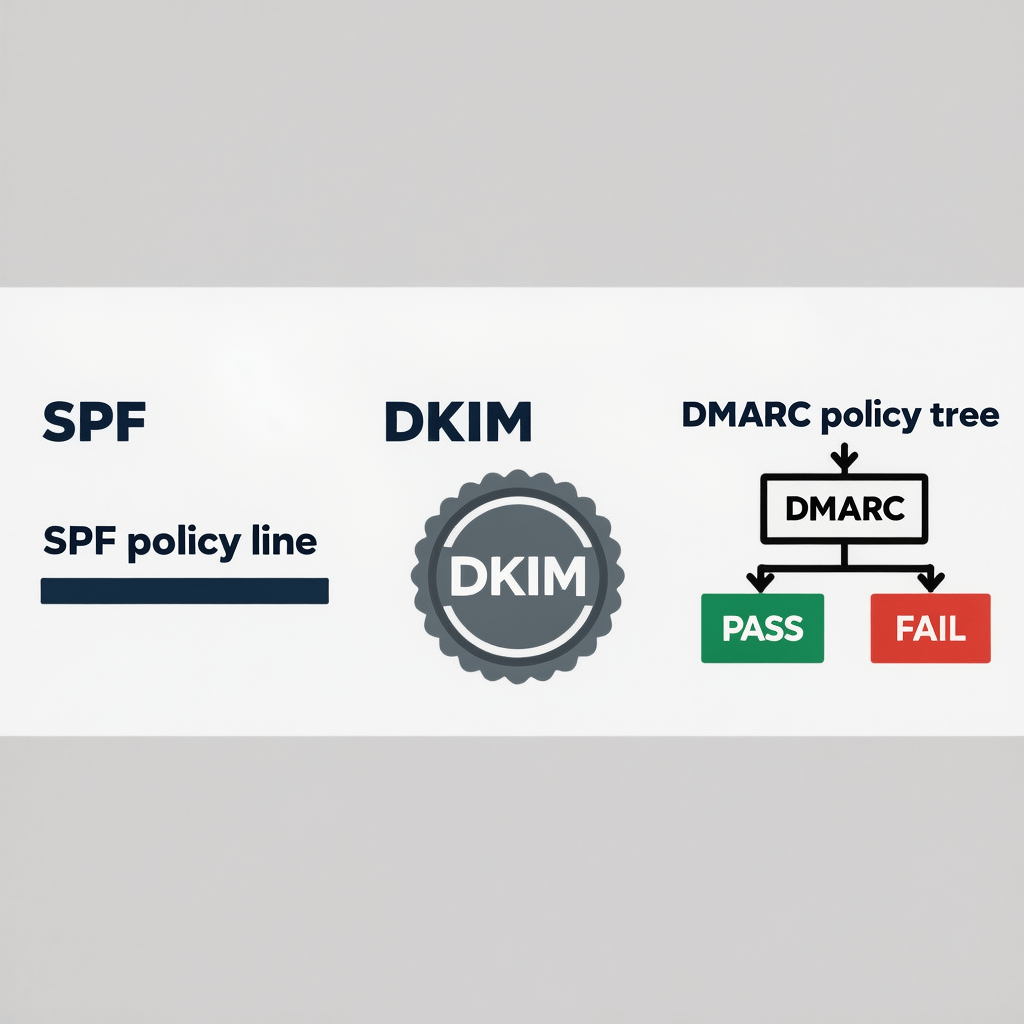
Add MX to route mail. Publish SPF to declare sending hosts, sign messages with DKIM, and enforce DMARC so your domain name cannot be spoofed easily.
Install SSL for every hostname
Install a certificate that covers your root domain name and www. Add HSTS after you confirm redirects are correct. Check subdomains too.
Force canonical URLs
Redirect non www to www or the other way around. Keep one canonical host for your domain name so link equity is not split.
Create a sitemap and submit
Generate an XML sitemap once your domain name serves content. Submit it in Search Console to speed crawling.
Track performance and errors
Add analytics and watch for 404s. Early fixes keep your domain name clean in the index and protect rankings.
Build a landing experience around your domain name search
Own the journey. Add a fast landing experience where visitors can test a domain name, view alternatives, and check pricing without friction.
- Use instant validation as users type a domain name and TLD.
- Offer similar options when the exact domain name is taken.
- Show renewal pricing upfront to avoid surprises.
- Cache recent checks to speed up repeated queries.
Because speed sells, compress images, preconnect to APIs, and enable server caching. Even small delays during a domain name search increase drop off.
SEO principles that intersect with your domain name
Good SEO starts with content and links, not just a domain name. Still, these principles ensure your choice supports the rest of your strategy.
Relevance over exact match
A relevant brand plus strong content beats a clunky exact match domain name. Aim for trust and authority, not keyword stuffing.
Consistent NAP for local
If you run local SEO, keep your business name, address, and phone consistent everywhere. Your domain name should match what users see offline.
International targeting
For multi country sites, a ccTLD can help in that market. For multi language within one market, a single domain name with language folders simplifies management.
Redirect strategy
Use 301s for permanent moves. Update internal links, sitemaps, and canonicals to the primary domain name and confirm with a crawl.
Link equity and brand mentions
Strong brands attract links. A memorable domain name nudges more citations, which supports rankings over time.
Common mistakes to avoid with your domain name
- Choosing a domain name that is too long or tricky to spell.
- Ignoring legal checks and later facing disputes.
- Using multiple live versions of your domain name without redirects.
- Forgetting to add SPF, DKIM, and DMARC before email outreach.
- Letting the domain name expire due to missed renewals.
Security and governance for your domain name
Security is not optional. Your domain name is a core asset and needs basic controls to stay safe.
- Registrar account 2FA and unique, long passwords.
- Domain lock and registry lock for high value names.
- Role based access so only the right people edit DNS.
- Change logs for every update that touches your domain name.
Subdomains or subfolders for products and regions
Structure matters. When possible use folders on one domain name to consolidate authority. Use subdomains only when technology or policy requires it.
Email reputation tied to your domain name
Deliverability hinges on authentication and sender behavior. Warm up new sending IPs and protect your domain name with a strict DMARC policy after testing.
Buying a premium domain name
Sometimes the right name costs more. Evaluate type-in traffic, brand clarity, and backlink quality. If the domain name compresses your marketing costs, the premium can be worth it.
Migrating to a new domain name without losing SEO
- Crawl the current site and export all URLs.
- Pick the new domain name and stand up a staging site.
- Map every old URL to a new one.
- Launch with global 301s and updated canonicals.
- Submit a change of address in Search Console.
- Monitor logs, 404s, and rankings for 8 to 12 weeks.
Performance tips for a fast domain name landing page
- Compress every image and serve modern formats like WebP.
- Enable server caching and a page cache to cut TTFB.
- Lazy load images and third party widgets.
- Preconnect to APIs used by your domain name search feature.
WordPress setup for your new domain name
WordPress makes it easy to launch content fast. Set the site URL to your domain name, install a trusted caching plugin, and add a security plugin to reduce risk.
- Set the primary URL and search visibility settings.
- Install an SEO plugin and create clean permalinks.
- Upload a robots.txt and sitemap for your domain name.
- Use an image compression plugin to keep pages under budget.
When to get expert help
If you want a partner to find, vet, and connect your domain name while building a fast site, the website design and development team can take it end to end.
If growth is the next step after launch, tap into seasoned SEO services to pair your domain name with content that ranks and converts.
Pricing tactics that protect your budget
Premium names can be worth the price if they remove friction. Run a quick model. If the right domain name lifts your conversion rate by a few points, the payback can be fast.
- Compare lifetime renewal costs across TLDs.
- Negotiate on marketplaces with data not opinions.
- Protect the brand with defensive buys of near matches.
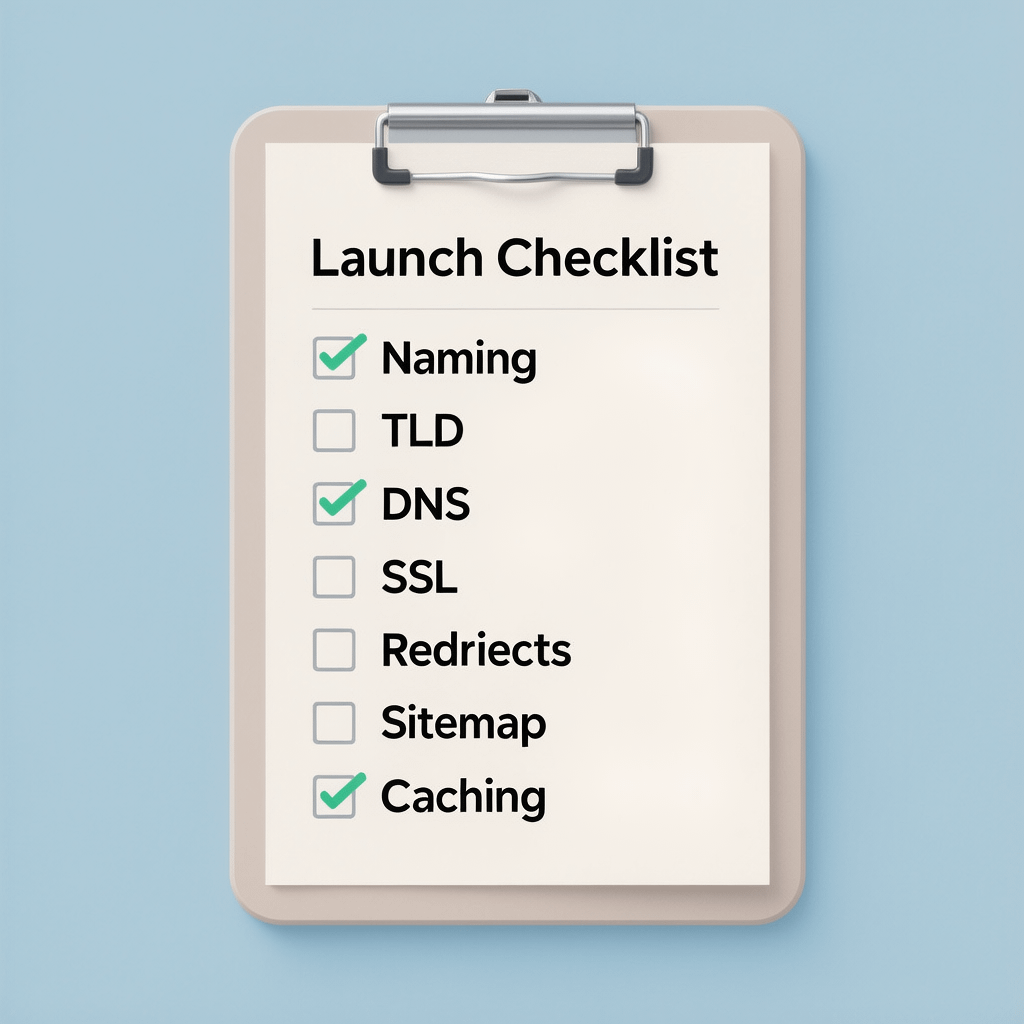
A lightweight checklist before you press buy
- The domain name passes the radio test and is easy to type.
- TLD fits your market and renewal costs are clear.
- No risky history or confusing overlap with other brands.
- Key social usernames are available.
- Variations and misspells are ready to register too.
FAQs
- What is a domain name and how does it work?
- A domain name is a human readable address that maps to a server IP via DNS. When someone types your domain name, DNS resolves to your host and the browser serves the page.
- Which TLD should I choose for my domain name?
- Pick .com if it fits. If you serve one country, a ccTLD like .co.za builds trust. Use gTLDs when they make your domain name clear and concise.
- Does a domain name affect SEO?
- Yes, indirectly. A crisp domain name improves clicks and mentions. Exact match helps only with quality content and clean technical SEO.
- Should I use hyphens or numbers in a domain name?
- Avoid both for clarity. You want a domain name people can say and type without effort.
- How do I secure my domain name after purchase?
- Enable domain lock, add WHOIS privacy, set auto renewal, and secure the registrar account with 2FA.
- What DNS records do I need to launch?
- Add A or CNAME, AAAA if available, MX, SPF, DKIM, and DMARC. Consider CAA for certificate control.
- How long does DNS propagation take after changing a domain name record?
- Usually a few minutes to hours. Full global propagation can take up to 24 to 48 hours depending on TTL and resolver caching.
References
Ready to move from idea to live domain name?
You have the steps, tools, and checks. Lock in the right domain name, connect clean DNS, and go live with confidence. If you want a single partner from strategy to launch and maintenance, explore our website packages that bundle setup, hosting guidance, and care. Questions or feedback? Email info@brandnexusstudios.co.za and let’s build something great.

Note on speed: images are compressed and lazy loaded, and we recommend enabling server caching so your domain name pages load instantly on mobile.
This article was created to help you make a smart domain name decision and launch without surprises. If you need a done for you option, Brand Nexus Studios can help you plan, build, and maintain a site that performs.
About the Author