

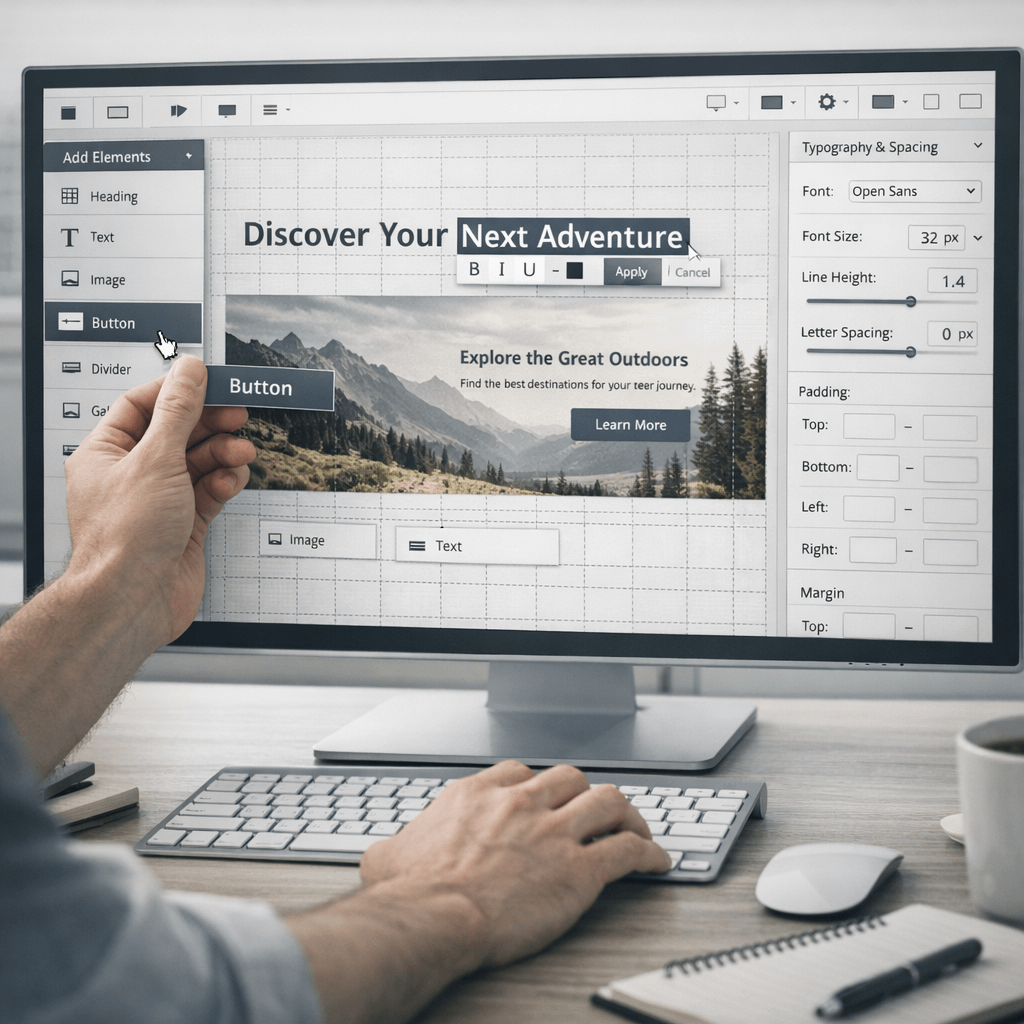
Visual breakdown of core digital marketing components
Published on April 5, 2025 | By Brand Nexus Studios
Let’s cut to the chase — if your business isn’t leveraging digital marketing effectively in 2025, you’re not just falling behind. You’re becoming invisible.
I remember working with a local Cape Town bakery last year. They had amazing pastries, loyal customers, and zero online presence. No website. No Google Business profile. Not even an Instagram page. When I asked the owner why, he said, “We’ve always done word of mouth.” Fair enough. But here’s the kicker: word of mouth now happens online.
After we built a simple website, optimized it for local search, and started posting mouthwatering photos of their croissants on Instagram, their weekend foot traffic jumped by 60% in three months. That’s the power of digital marketing — it’s not magic, it’s strategy.
And here’s the best part: it levels the playing field. A startup in Johannesburg can compete with a multinational brand if they understand the rules of the game. That’s why, whether you’re a solopreneur or running a corporate team, mastering digital marketing isn’t optional — it’s essential.
So, What Exactly Is Digital Marketing?
At its core, digital marketing is any form of marketing that happens online. That includes everything from showing up in Google search results to running ads on Facebook, sending email newsletters, or going viral on TikTok.
Unlike traditional marketing (think billboards, radio spots, or flyers), digital marketing is measurable, targeted, and often way more cost-effective. You’re not shouting into the void — you’re having a conversation with people who are already looking for what you offer.
And here’s the best part: it levels the playing field. A startup in Johannesburg can compete with a multinational brand if they understand the rules of the game. That’s why, whether you’re a solopreneur or running a corporate team, mastering digital marketing isn’t optional — it’s essential.
The 5 Pillars of Digital Marketing in 2025
Let’s break down the five key areas that make up a winning digital marketing strategy today. These aren’t just trends — they’re the foundation of how customers find, engage with, and buy from your business online.
1. Search Engine Optimization (SEO): Your 24/7 Salesperson
If you’re not showing up in Google, you might as well not exist. Think about it — when was the last time you went to page two of search results? Exactly.
SEO is the backbone of digital marketing. It’s how you get found when someone searches for “best coffee shops in Pretoria” or “affordable web design services.” And in 2025, it’s not just about keywords anymore.
Google’s algorithms are smarter than ever. They’re looking at user experience, content quality, mobile-friendliness, and even how fast your site loads. That’s why a solid SEO strategy includes:
- On-page SEO: Optimizing titles, headers, and content with relevant keywords — like our focus keyword, digital marketing.
- Technical SEO: Making sure your site is fast, secure (HTTPS), and easy for search engines to crawl.
- Content that answers real questions: Google rewards helpful, in-depth content. That’s why this post is packed with actionable insights.
- Backlinks: Getting other reputable websites to link to yours. It’s like a vote of confidence in the eyes of Google.
And if you’re wondering where to start, we’ve got a full guide on our site — check out Brand Nexus Studios for proven SEO strategies that work in South Africa.

2. Content Marketing: The Fuel Behind Digital Marketing
You’ve probably heard the phrase “content is king.” It’s cliché, but it’s true. Without great content, your digital marketing efforts are just noise.
Content marketing isn’t just blog posts (though this one helps). It includes videos, infographics, podcasts, social media posts, and even email newsletters. The goal? To provide value — solve problems, answer questions, and build trust.
Here’s a real example: A plumbing company in Durban started publishing short YouTube videos showing how to unclog drains or fix leaking taps. Not only did their views skyrocket, but their emergency service calls increased by 40%. Why? Because people remembered them when they needed help.
In 2025, content needs to be:
- Useful: Does it solve a real problem?
- Engaging: Is it easy to read or watch?
- Optimized: Does it include keywords like digital marketing naturally?
- Shareable: Would someone forward this to a friend?
And don’t forget — AI tools can help you draft content faster, but the human touch is what makes it resonate. Google can spot robotic, soulless content from a mile away.
To learn how AI is transforming content creation and SEO, visit Google’s Search Essentials, which outlines best practices for creating helpful, people-first content in the age of AI.

3. Social Media Marketing: Where Conversations Happen
If SEO is how people find you, social media is how they get to know you. It’s where brands build personality, respond to customers, and create communities.
But here’s the thing — you don’t need to be on every platform. Focus on where your audience actually spends time. For B2B companies, that might be LinkedIn. For fashion brands, Instagram and TikTok are goldmines.
In 2025, social media isn’t just about posting pretty pictures. It’s about:
- Authentic engagement: Replying to comments, starting discussions, and being human.
- Paid advertising: Organic reach is shrinking. Smart brands use targeted ads to amplify their message.
- User-generated content (UGC): Encouraging customers to share photos or reviews. It’s free social proof.
- Short-form video: TikTok and Instagram Reels dominate. If you’re not using video, you’re missing out.
Pro tip: Don’t just sell. Entertain, educate, or inspire. People follow brands they like, not just ones they need.
For the latest updates on algorithm changes and platform best practices, refer to Meta’s Official Newsroom, which provides transparent insights into Facebook and Instagram’s evolving digital marketing ecosystem.

4. Email Marketing: The ROI King
Still think email is dead? Think again. Email marketing consistently delivers one of the highest ROIs of any digital marketing channel — often $42 for every $1 spent.
The secret? Permission. When someone signs up for your newsletter, they’re saying, “I trust you. Talk to me.” That’s a powerful connection.
But bad email marketing is spammy, irrelevant, and ignored. Great email marketing is:
- Personalized: Using the recipient’s name, past behavior, or preferences.
- Valuable: Offering tips, exclusive deals, or useful updates.
- Mobile-friendly: Over 60% of emails are opened on phones.
- Automated: Welcome sequences, abandoned cart reminders, and birthday offers run on autopilot.
One of our clients, a fitness studio, used a simple email sequence to re-engage inactive members. They offered a free class and a personalized workout plan. Result? 28% of lapsed members came back. That’s the power of targeted digital marketing.
To understand how to build compliant and effective email campaigns, explore Email Marketing Best Practices by Campaign Monitor, a trusted resource for data-driven email strategies.

5. Paid Advertising (PPC): Fast-Track Visibility
Sometimes, you need results now — not six months from now. That’s where paid advertising comes in.
Whether it’s Google Ads, Facebook Ads, or LinkedIn campaigns, PPC (pay-per-click) lets you show up instantly when someone searches for your product or service.
Yes, it costs money. But when done right, it’s an investment, not an expense. For example, a law firm in Sandton used Google Ads to target “divorce lawyer near me.” In three months, they generated over 50 qualified leads — enough to cover their ad spend ten times over.
Keys to successful paid ads:
- Clear targeting: Who exactly are you trying to reach?
- Compelling copy: Your ad needs to grab attention and drive action.
- Landing pages: Send traffic to a dedicated page that matches the ad’s promise.
- Conversion tracking: Know exactly what’s working and what’s not.
And remember: great digital marketing blends paid and organic efforts. Use ads to boost visibility, and SEO/content to build long-term authority.
For up-to-date guidance on ad performance and bidding strategies, visit Google Ads Help Center, your go-to resource for mastering pay-per-click advertising in 2025.

The Role of AI in Digital Marketing
You can’t talk about digital marketing in 2025 without mentioning AI. It’s not replacing marketers — it’s empowering them.
From chatbots that handle customer service to AI tools that write ad copy or predict customer behavior, automation is making digital marketing smarter and faster.
But here’s the catch: AI can’t replace human insight. It can draft a blog post, but it can’t feel the frustration of a customer struggling with a broken website. It can analyze data, but it can’t craft a brand story that moves people.
Use AI to handle repetitive tasks — like keyword research, A/B testing, or scheduling posts. But keep the strategy, creativity, and empathy in human hands.
To explore how AI is reshaping SEO and content, read Google’s official blog on People-First Content Guidelines, which emphasizes value-driven content in the era of generative AI.
Measuring Success: KPIs That Matter
One of the biggest advantages of digital marketing is that you can measure almost everything. But don’t get lost in vanity metrics like “likes” or “followers.” Focus on what actually moves the needle:
- Website traffic: Are more people finding you?
- Conversion rate: How many visitors turn into leads or customers?
- Customer acquisition cost (CAC): How much does it cost to win a new customer?
- Return on ad spend (ROAS): Are your paid campaigns profitable?
- Customer lifetime value (CLV): How much is a customer worth over time?
Set clear goals, track your progress, and adjust your strategy based on data — not guesswork.
For a comprehensive guide on digital marketing analytics, check out Google Analytics Academy, which offers free courses on measuring performance across all digital channels.
Final Thoughts: Digital Marketing Is a Mindset
At the end of the day, digital marketing isn’t just about tactics and tools. It’s about understanding your audience, adding value, and building relationships.
It’s about being where your customers are, speaking their language, and solving their problems — all in a digital space that’s louder and more competitive than ever.
If you’re just starting out, don’t try to do everything at once. Pick one channel — maybe SEO or social media — and master it. Then expand.
And if you need help? We’ve got your back. At Brand Nexus Studios, we specialize in creating data-driven, results-focused digital marketing strategies for South African businesses. From SEO to social media, we help you grow — sustainably and profitably.
Because in 2025, digital marketing isn’t just about surviving the digital age. It’s about thriving in it.
Frequently Asked Questions (FAQs)
How is AI changing digital marketing in 2025?
AI is transforming digital marketing by automating content creation, improving personalization, and enhancing data analysis. In 2025, AI tools help marketers predict customer behavior, optimize ad targeting, and streamline SEO tasks — but human oversight remains crucial for authenticity and strategic direction.
What is the most effective digital marketing channel for small businesses?
For most small businesses, a combination of local SEO and social media marketing delivers the best results. Optimizing your Google Business profile, getting customer reviews, and posting engaging content on platforms like Instagram or Facebook can significantly boost visibility and trust.
How much should I budget for digital marketing?
A common rule of thumb is to allocate 5–12% of your gross revenue to marketing. For startups or businesses in competitive markets, this can go up to 20%. Focus on channels with the highest ROI — often SEO, email marketing, and targeted paid ads.
Can I do digital marketing myself, or should I hire an agency?
You can start with DIY digital marketing using free tools like Google Analytics, Meta Business Suite, and Canva. However, as your business grows, partnering with an experienced agency like Brand Nexus Studios ensures consistent, professional results and saves time.
How long does it take to see results from digital marketing?
Paid advertising can deliver results in days. However, organic strategies like SEO and content marketing typically take 3–6 months to gain momentum. Consistency, quality, and optimization are key to long-term success.
About the Author



It’s incredible how simple digital strategies, like a local SEO-optimized website and engaging social media, can drastically change a business’s success. That 60% increase in foot traffic is proof that the digital marketing world is no longer optional for small businesses.
I love the bakery example! It’s a great reminder that even small businesses with minimal resources can make a huge impact online. It’s all about using the right strategies to reach new customers in today’s digital world.
The emphasis on data-driven strategy over intuition-based marketing is the key insight that many businesses still miss. Too many small companies treat social media and content as afterthoughts rather than as core channels requiring measurement frameworks. The section on conversion optimization is especially actionable for teams just beginning to formalize their digital marketing approach.
The emphasis on building owned channels rather than depending entirely on algorithm-driven platforms is exactly the right long-term thinking for sustainable digital marketing. The email list point in particular — it’s one of the only truly owned assets in digital marketing. Content teams repurposing podcast episodes and recorded webinars into written content can save a lot of production time by transcribing audio automatically rather than re-creating everything from scratch.
This recipe looks absolutely wonderful — the combination of ingredients is spot on. I tried a similar approach recently and ended up creating some visual recipe cards using Banana Pro AI to capture the final dish. The 4K output made the textures look incredibly realistic.
Solid roundup — the emphasis on actually measuring channel ROI rather than chasing every platform is the advice most small businesses need to hear. I’d underline the email point; owned audiences still out-convert almost everything else. Good practical 2025 framing.