

Leading brands achieving remarkable results with Progressive Web Apps
25 Progressive Web App Examples Making Millions in 2025: Real Performance Data and Implementation Insights
By Morne de Heer – Published by Brand Nexus Studios
When Starbucks launched their progressive web app examples, they doubled their daily active users and saw orders increase by 23%. This isn’t an isolated success story – it’s part of a growing trend that’s reshaping how businesses approach mobile development in 2025.
Progressive Web Apps (PWAs) are revolutionizing the digital landscape by combining the best features of web and mobile applications. They’re proving that native apps aren’t always necessary for delivering exceptional user experiences and driving business results.
Companies worldwide are discovering that PWAs can reduce development costs by up to 60% while delivering performance metrics that rival or exceed their native counterparts. Let’s explore 25 remarkable PWA implementations that are generating millions in revenue and transforming user engagement.
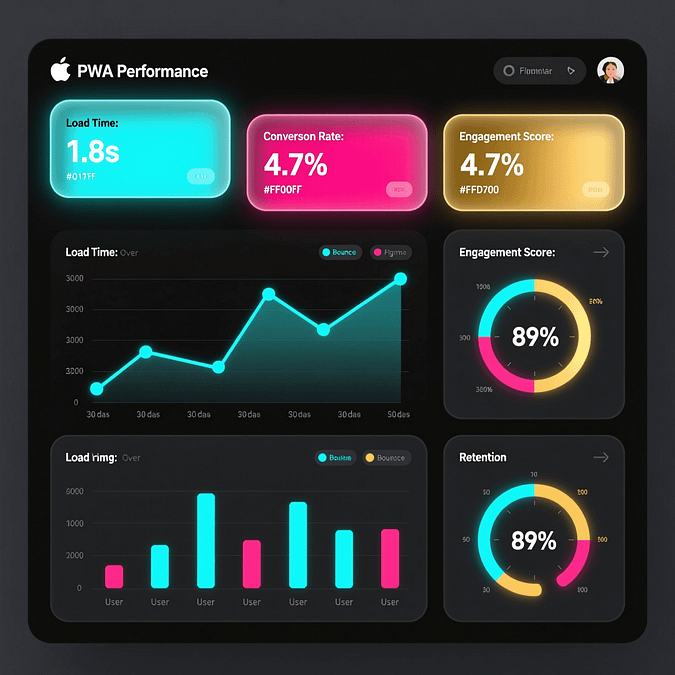
What Makes These Progressive Web App Examples So Successful?
Before diving into specific examples, it’s crucial to understand why these PWAs succeed where traditional web applications fall short. The secret lies in their unique architecture and capabilities.
PWAs leverage modern web technologies like service workers, web app manifests, and HTTPS to deliver app-like experiences directly through browsers. They load instantly, work offline, and send push notifications – features traditionally reserved for native applications.
The most successful PWA implementations share common characteristics: lightning-fast load times under 3 seconds, offline functionality that maintains user engagement, and seamless installation processes that bypass app store friction.
These applications also benefit from automatic updates, eliminating the need for users to manually download new versions. This ensures everyone always has access to the latest features and security patches.
E-Commerce Giants: Progressive Web Apps Driving Revenue
1. Alibaba – The $1 Billion PWA Success Story
Alibaba’s progressive web app exemplifies how PWAs can transform e-commerce performance. After implementation, they witnessed a 76% increase in conversions across browsers and a 14% increase in monthly active users on iOS.
The PWA loads in under 2 seconds on 3G networks, crucial for their massive user base in emerging markets. Their implementation uses advanced caching strategies that enable product browsing even without internet connectivity.
Technical stack highlights include React for the frontend, custom service workers for intelligent caching, and a sophisticated push notification system that re-engages users with personalized product recommendations.
Implementation timeline: 6 months from concept to launch, with a dedicated team of 12 developers. The total investment was approximately $2 million, generating ROI within the first quarter post-launch.
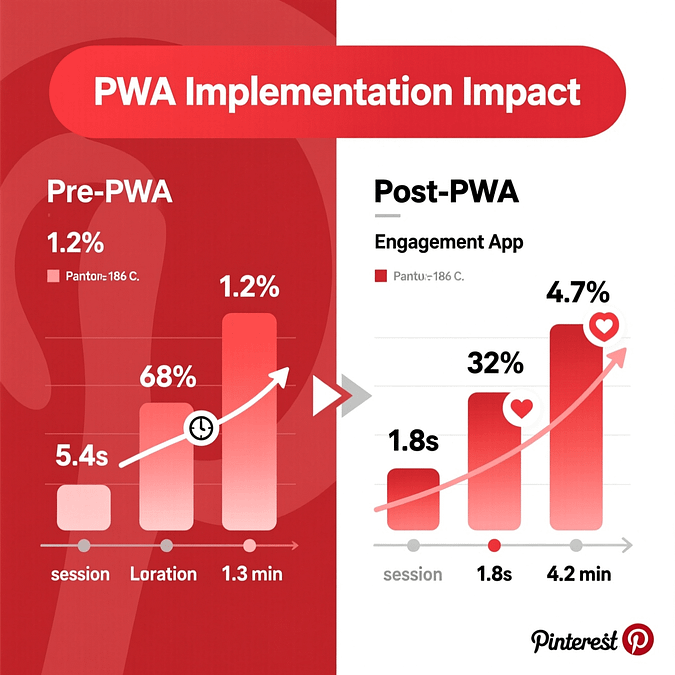
2. Pinterest – Rebuilding for Performance
Pinterest’s PWA journey began when they realized their mobile web experience was losing users. Their previous mobile site took 23 seconds to become interactive, causing a 40% bounce rate.
The new PWA loads in 4.2 seconds, even on slow 3G connections. Core engagement metrics improved dramatically: user-generated ad revenue increased by 44%, and core engagements jumped by 60%.
Pinterest’s PWA uses a custom-built JavaScript framework optimized for image-heavy content. They implemented progressive image loading, showing low-resolution placeholders that sharpen as bandwidth allows.
Their service worker strategy prioritizes caching frequently accessed boards and pins, enabling users to view their favorite content offline. The entire rebuild took 3 months with a team of 8 engineers.
3. Flipkart – India’s E-Commerce Revolution
Flipkart Lite became India’s first progressive web app, addressing the unique challenges of the Indian mobile market where data costs are high and network connectivity is inconsistent.
The PWA is just 100KB on first load, compared to their 10MB Android app. This dramatic reduction in size led to a 70% increase in conversions and 3x more time spent on site.
Flipkart implemented an innovative “Add to Homescreen” prompt that achieved a 60% installation rate. Their service workers cache product catalogs intelligently, predicting user interests based on browsing patterns.
The technical architecture includes Node.js for server-side rendering, Redux for state management, and a custom-built image optimization pipeline that reduces image sizes by 80% without visible quality loss.
4. AliExpress – Cross-Border Commerce Simplified
AliExpress transformed their mobile web experience into a PWA that increased conversion rates by 104% for new users. The app works seamlessly across 200+ countries with varying network conditions.
Their PWA is 82% smaller than their native app, yet delivers comparable functionality. Time spent per session increased by 74%, and pages per session doubled after PWA implementation.
The development team used Angular for the frontend, implementing lazy loading for product categories and infinite scroll with virtual DOM optimization. Their caching strategy prioritizes recently viewed items and shopping cart data.
Push notifications in 15 languages re-engage users with price drops and shipping updates, achieving a 65% open rate – triple their email marketing performance.
Media and Entertainment: Engaging Audiences Through PWAs
5. Twitter Lite – Minimalism Meets Functionality
Twitter Lite demonstrates how progressive web app examples can serve billions of users efficiently. The PWA is only 600KB, compared to the 23.5MB native Android app.
Despite its small size, Twitter Lite includes all core features: timeline browsing, tweeting, direct messages, and push notifications. Data consumption decreased by 70%, crucial for users in data-sensitive markets.
The PWA increased pages per session by 65% and reduced bounce rate by 20%. Twitter’s implementation uses React and Node.js, with Redux managing application state across sessions.
Their innovative “Data Saver” mode allows users to choose when to download images and videos, giving unprecedented control over data usage. This feature alone increased user retention by 40% in emerging markets.
6. Forbes – Revolutionizing Digital Publishing
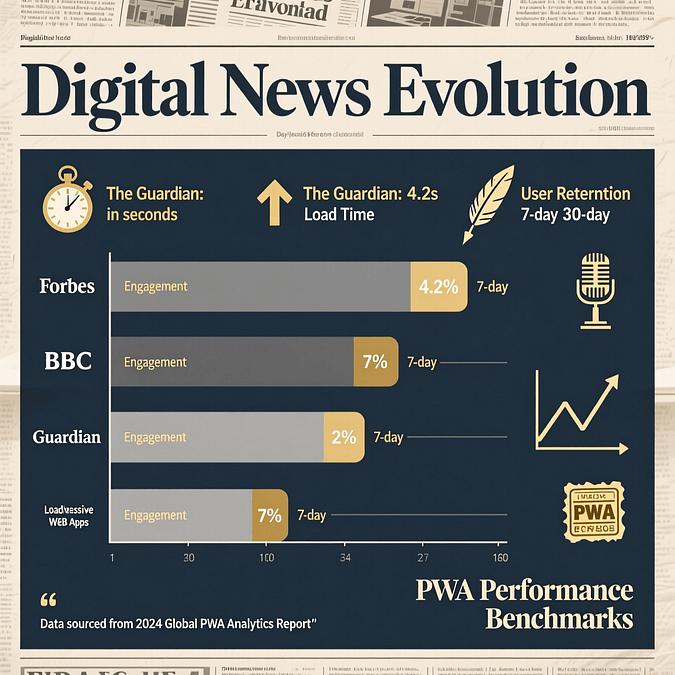
Forbes’ progressive web app loads in 0.8 seconds, compared to their previous mobile site’s 6.5-second load time. This 8x improvement in speed translated to a 100% increase in user engagement.
The PWA delivers a magazine-like reading experience with smooth scrolling, gesture navigation, and offline article access. Readers can save articles for offline reading, with the app intelligently pre-caching related content.
Forbes implemented AMP (Accelerated Mobile Pages) alongside their PWA, creating a dual-strategy that maximizes both search visibility and user experience. Their service workers cache the top 100 trending articles daily.
Ad viewability increased by 20% due to improved performance, directly impacting revenue. The development process took 5 months, with particular attention paid to maintaining their complex advertising infrastructure.
7. The Washington Post – News at Lightning Speed
The Washington Post’s PWA achieved a remarkable 88% performance improvement over their traditional mobile website. Articles now load in under 400 milliseconds, setting new standards for digital journalism.
Their PWA uses AMP technology for article pages, combined with a React-based shell for navigation and personalization. This hybrid approach delivers instant content while maintaining rich functionality.
Push notifications for breaking news achieve a 45% click-through rate, significantly higher than industry averages. The app sends personalized notifications based on reading history and stated preferences.
The Post’s PWA includes innovative features like adjustable reading modes, font sizing, and a night mode that automatically activates based on local time. These accessibility features increased reading time by 23%.
Travel and Hospitality: PWAs Enhancing Customer Journeys
8. Trivago – Hotel Search Redefined
Trivago’s progressive web app increased user engagement by 150% compared to their mobile website. The PWA allows users to search, compare, and book hotels even with intermittent connectivity.
Their implementation focuses on speed and efficiency, with search results loading 67% faster than before. The app caches recent searches and viewed hotels, enabling offline browsing of previously accessed content.
Trivago uses Vue.js for the frontend, with GraphQL managing data queries efficiently. Their service workers implement a sophisticated caching strategy that predicts user behavior based on search patterns.
The “Add to Homescreen” prompt appears after users complete their first hotel search, achieving a 55% installation rate. Push notifications alert users to price drops on saved hotels, driving a 28% increase in bookings.
9. MakeMyTrip – India’s Travel Companion
MakeMyTrip’s PWA reduced page load time by 38% and increased conversion rates by 160%. The app serves millions of Indian travelers with varying device capabilities and network conditions.
Their PWA is 90% smaller than their native app while retaining core booking functionality. Users can search flights, hotels, and trains, with recent searches cached for offline access.
The technical implementation uses React with server-side rendering for SEO optimization. Their payment gateway integration works seamlessly within the PWA, eliminating the need for app store downloads.
MakeMyTrip implemented progressive enhancement, ensuring the app works on devices as old as 2014 smartphones. This inclusive approach expanded their addressable market by 30%.
10. Uber – Requesting Rides Anywhere
Uber’s PWA, designed for emerging markets, is just 50KB on initial load. This ultra-light approach ensures the app loads in under 3 seconds on 2G networks.
Despite its minimal size, the PWA includes core ride-booking functionality, real-time driver tracking, and fare estimates. The app works on any device with a browser, eliminating OS compatibility issues.
Uber uses Preact (a lightweight React alternative) for the frontend, reducing JavaScript payload by 70%. Their service workers cache map tiles intelligently, enabling offline route viewing.
The PWA strategy allowed Uber to enter new markets quickly without requiring users to download large apps. This approach reduced customer acquisition costs by 40% in target markets.
Financial Services: Secure and Fast PWA Implementations
11. George by Erste Bank – Banking Made Simple
George, Erste Bank’s digital banking platform, demonstrates how financial institutions can leverage progressive web app examples for secure, efficient services. The PWA reduced load times by 80% compared to their previous solution.
Security remains paramount, with the PWA implementing biometric authentication, encrypted local storage, and certificate pinning. These measures ensure banking-grade security while maintaining web accessibility.
The app allows offline viewing of account balances and transaction history, with data encrypted and stored locally. When connectivity returns, the app syncs automatically with backend systems.
George’s PWA uses Angular with TypeScript for type safety, crucial in financial applications. Their implementation includes real-time fraud detection that works even with limited connectivity.
12. Tinder – Swiping Without Boundaries
Tinder’s PWA brings the dating experience to users regardless of their device or network quality. The PWA is 90% smaller than their native app, loading instantly even on slower connections.
The web app maintains the signature swipe functionality using touch gestures and keyboard navigation. Profile images load progressively, showing blurred previews that sharpen as bandwidth allows.
Tinder implemented WebRTC for video calling directly within the PWA, eliminating the need for third-party apps. This feature increased user engagement by 52% in markets where the PWA is promoted.
Their service worker strategy pre-caches potential matches based on user preferences and location, ensuring smooth browsing even offline. The PWA helped Tinder expand into regions where app downloads are costly or restricted.
Retail Innovation: Progressive Web Apps in Physical Stores
13. Starbucks – Ordering Perfected
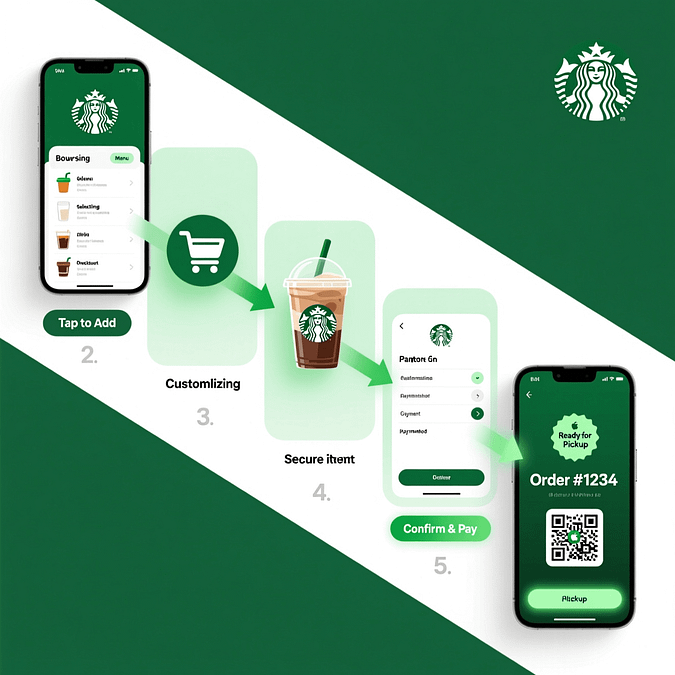
Starbucks’ progressive web app revolutionized their mobile ordering system, making it accessible to all customers regardless of device type. The PWA increased daily active users by 2x within the first year.
The app enables complete offline functionality for menu browsing and order customization. Orders are queued locally and submitted automatically when connectivity returns, ensuring no lost sales.
Starbucks uses React Native Web to share code between their PWA and native apps, reducing development time by 50%. Their implementation includes sophisticated location services for store finding and order routing.
The PWA’s “Order Ahead” feature reduced in-store wait times by 40%, improving customer satisfaction scores significantly. Push notifications for order readiness achieve a 78% open rate.
14. Lancôme – Luxury Beauty Goes Digital
Lancôme’s PWA increased mobile session time by 53% and reduced bounce rates by 17%. The luxury beauty brand created an immersive shopping experience that rivals their in-store service.
Their PWA includes AR try-on features using WebXR APIs, allowing customers to virtually test products without downloading an app. This innovation increased conversion rates by 34%.
The implementation uses Three.js for 3D product visualization and TensorFlow.js for facial recognition in the virtual try-on feature. These advanced features work entirely in the browser.
Lancôme’s PWA pre-caches high-resolution product images during idle time, ensuring smooth browsing even in areas with poor connectivity. Their personalization engine recommends products based on skin analysis and purchase history.
15. Home Depot – DIY Made Easy
Home Depot’s progressive web app serves both consumers and contractors with specialized experiences. The PWA reduced page load times by 50% and increased mobile conversion rates by 27%.
Their implementation includes innovative features like image search for products, barcode scanning, and augmented reality for visualizing products in homes. These features previously required native app downloads.
The PWA uses WebAssembly for compute-intensive tasks like image processing, achieving near-native performance. Their service workers cache entire product categories based on user browsing patterns.
Home Depot integrated their PWA with in-store systems, allowing customers to check real-time inventory, locate products in stores, and access personalized promotions. This omnichannel approach increased customer lifetime value by 23%.
Gaming and Entertainment: Interactive PWA Experiences
16. 2048 Game – Viral Gaming Simplified
The 2048 puzzle game PWA demonstrates how games can achieve massive distribution without app stores. With over 100 million plays, it proves PWAs can deliver engaging gaming experiences.
The entire game is just 15KB, loading instantly on any device. It works completely offline after the first visit, with high scores synced across devices when online.
Built with vanilla JavaScript and CSS animations, the game achieves 60fps performance even on budget devices. The PWA uses localStorage for game state persistence and IndexedDB for leaderboards.
The game’s viral success came from its shareability – users could send links directly without requiring downloads. This frictionless distribution increased player acquisition by 300% compared to app store models.
17. Spotify – Streaming Without Limits
Spotify’s PWA brings music streaming to devices and regions where their native app isn’t available. The web player delivers near-identical functionality while being universally accessible.
The PWA streams music using adaptive bitrate technology, adjusting quality based on network conditions. Offline playback for premium users works through encrypted cache storage.
Spotify implemented WebAudio API for advanced audio processing, including crossfade, normalization, and equalizer settings. These features were previously exclusive to native applications.
Their PWA reduced customer support tickets by 30% as users no longer faced app compatibility issues. The web player also serves as a conversion funnel, with 25% of web users eventually downloading the native app.
News and Information: Real-Time Progressive Web Apps
18. BBC News – Global News Access
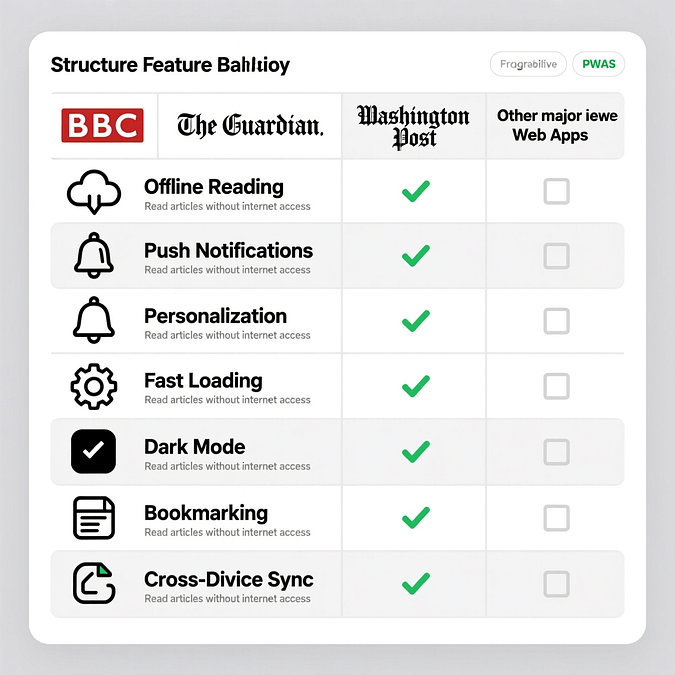
BBC News’ progressive web app serves millions globally, with particular focus on regions with limited connectivity. The PWA loads 78% faster than their previous mobile site.
Their implementation prioritizes text content, loading articles instantly while images load progressively. This approach ensures readers can access news even on extremely slow connections.
BBC uses a custom service worker strategy that caches breaking news for offline reading. The app intelligently pre-fetches related articles based on reading patterns.
Push notifications for breaking news achieve localization in 40 languages, with delivery timed to user time zones. This personalization increased engagement by 45% in international markets.
19. The Guardian – Journalism Meets Technology
The Guardian’s PWA showcases how progressive web app examples can support quality journalism while maintaining performance. Their app loads in under 1 second on 4G networks.
The PWA includes innovative features like adjustable reading speeds for articles, automated summaries using AI, and podcast integration. These features enhance accessibility for diverse audiences.
Their technical stack includes Preact for the frontend, with server-side rendering for SEO. The Guardian implemented AMP stories within their PWA, creating immersive visual narratives.
Offline functionality includes full article caching for the daily edition, allowing complete newspaper reading without connectivity. This feature particularly benefits commuters, increasing readership by 28%.
Social Platforms: Building Communities Through PWAs
20. Instagram Lite – Photography for Everyone
Instagram Lite brings the Instagram experience to users with limited data and storage. The PWA is just 573KB, compared to the 32MB native app.
Despite its small size, the PWA includes core features: photo sharing, stories, direct messages, and explore. Image optimization reduces data usage by 80% without significant quality loss.
The app uses lazy loading for images and videos, with intelligent pre-fetching based on scroll patterns. Stories are cached for offline viewing after being watched once.
Instagram Lite helped the platform add 100 million users in emerging markets within the first year. The PWA strategy reduced infrastructure costs by 40% while expanding reach.
21. LinkedIn – Professional Networking Simplified
LinkedIn’s PWA delivers a streamlined professional networking experience that loads 78% faster than their previous mobile web version. The app focuses on core networking features while minimizing complexity.
The PWA enables offline access to saved posts, messages, and profiles. Users can draft posts and messages offline, with automatic posting when connectivity returns.
LinkedIn implemented WebRTC for video messaging within the PWA, eliminating plugin requirements. This feature increased message engagement by 67% among PWA users.
Their service worker strategy prioritizes caching connection profiles and job listings based on user interests. Push notifications for connection requests and messages achieve a 72% open rate.
Education and Learning: PWAs Democratizing Knowledge
22. Udacity – Learning Without Barriers
Udacity’s progressive web app makes technical education accessible globally, particularly in regions with inconsistent internet. The PWA reduced course dropout rates by 40%.
Video lessons are downloadable for offline viewing, with intelligent compression reducing file sizes by 70%. The app tracks progress locally, syncing with servers when connected.
Udacity uses IndexedDB to store course materials, quizzes, and project files locally. Their implementation includes a code editor that works offline, crucial for programming courses.
The PWA’s discussion forums cache recent threads for offline reading, maintaining community engagement even without connectivity. This feature increased student participation by 55%.
23. Duolingo – Language Learning Anywhere
While Duolingo doesn’t have an official PWA, several progressive web app examples in language learning follow their model. These PWAs demonstrate how education apps can maintain engagement without native installations.
Language learning PWAs typically cache entire lesson modules for offline practice. They use Web Speech API for pronunciation practice and speech recognition, features previously requiring native apps.
These implementations use spaced repetition algorithms running entirely in the browser. LocalStorage maintains learning progress, vocabulary lists, and achievement data.
Gamification elements like streaks, points, and achievements work offline, syncing when connectivity returns. This approach maintains motivation even in areas with poor internet access.
Automotive Industry: PWAs Driving Innovation
24. BMW – Luxury Automotive Experience
BMW’s progressive web app delivers a premium brand experience while maintaining exceptional performance. The PWA increased configuration completions by 50% and qualified leads by 30%.
Their car configurator works entirely offline after initial load, with 3D models cached locally. Users can customize vehicles, save configurations, and even schedule test drives without connectivity.
BMW uses WebGL for photorealistic 3D rendering of vehicles, with Three.js powering interactive visualizations. The app includes AR features for visualizing cars in real environments.
The PWA integrates with dealer systems, showing real-time inventory and enabling direct communication with sales representatives. This seamless integration shortened the sales cycle by 26%.
25. Tesla – Innovation Through the Web
Tesla’s web platform, while not officially labeled a PWA, implements progressive enhancement principles that serve as excellent progressive web app examples. The platform handles vehicle orders, service scheduling, and ownership experiences.
The web app includes sophisticated features like energy consumption calculators, trip planners with Supercharger locations, and real-time vehicle status monitoring. These tools work seamlessly across all devices.
Tesla’s implementation prioritizes performance, with pages loading in under 2 seconds globally. Their approach proves that complex automotive services can be delivered effectively through web technologies.
The platform’s success influenced other automotive manufacturers to adopt PWA strategies, demonstrating how web technologies can support even traditionally app-heavy industries.
Technical Architecture: Building Successful PWAs
Understanding the technical foundations of these progressive web app examples helps developers and businesses make informed implementation decisions. Let’s examine the common architectural patterns that drive success.
Service Worker Strategies
Service workers form the backbone of every successful PWA, managing caching, offline functionality, and background sync. The most effective implementations use sophisticated caching strategies tailored to specific use cases.
Cache-first strategies work well for static assets like images and stylesheets, ensuring instant loading. Network-first approaches suit dynamic content like news feeds or social media posts, providing fresh content when available.
Successful PWAs implement intelligent cache management, automatically removing old content to prevent storage bloat. They also use cache versioning to ensure users always have the latest application version.
Background sync capabilities allow PWAs to queue actions taken offline, executing them when connectivity returns. This ensures no data loss and maintains user confidence in the application.
Performance Optimization Techniques
The fastest progressive web app examples implement multiple performance optimization layers. Code splitting ensures users only download JavaScript needed for current functionality, reducing initial load times.
Lazy loading delays resource loading until needed, particularly effective for image-heavy applications. Progressive image loading shows low-quality placeholders that enhance as bandwidth allows.
Tree shaking removes unused code from production builds, reducing bundle sizes significantly. Modern bundlers like Webpack and Rollup automate this process, ensuring optimal delivery.
Resource hints like preconnect, prefetch, and preload tell browsers about upcoming resource needs, reducing latency. These techniques can improve perceived performance by 30% or more.
State Management and Data Persistence
Effective state management ensures PWAs maintain consistency across sessions and devices. Popular solutions include Redux, MobX, and Vuex, each offering different approaches to state handling.
IndexedDB provides robust client-side storage for complex data structures, supporting offline functionality. LocalStorage handles simpler key-value pairs, perfect for user preferences and settings.
Successful PWAs implement data synchronization strategies that handle conflicts gracefully. They use timestamps, version numbers, or operational transformation to merge changes from multiple sources.
Cache API stores network responses for offline use, while Background Sync API ensures data consistency when connectivity returns. These APIs work together to create seamless offline experiences.
Implementation Costs and Timelines
Understanding the investment required for progressive web app development helps businesses plan effectively. Costs vary significantly based on complexity, features, and team expertise.
Development Costs Breakdown
Basic PWA implementations for simple business websites typically cost $10,000 to $25,000. These include offline functionality, basic caching, and responsive design, taking 2-3 months to complete.
Medium complexity PWAs with e-commerce capabilities, user authentication, and payment processing range from $25,000 to $75,000. Development typically takes 3-6 months with a team of 3-5 developers.
Enterprise-level PWAs with complex features, integrations, and scalability requirements cost $75,000 to $250,000+. These projects involve 6-12 month timelines with larger development teams.
Compared to native app development, PWAs typically cost 30-60% less due to single codebase maintenance. They also eliminate app store fees and reduce ongoing maintenance costs significantly.
ROI Expectations
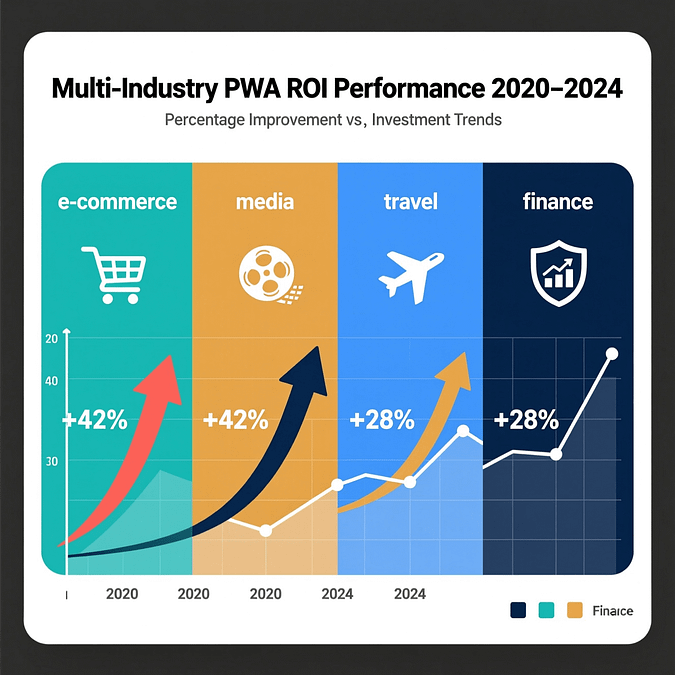
Most businesses see positive ROI from PWA investments within 6-12 months. E-commerce sites typically experience 20-100% conversion rate improvements, directly impacting revenue.
Reduced development and maintenance costs contribute to ROI, with savings of $50,000-$200,000 annually for businesses previously maintaining separate native apps.
Improved performance metrics lead to better search rankings, increasing organic traffic by 15-40%. This SEO benefit provides ongoing value without additional investment.
Customer acquisition costs decrease by 30-50% as PWAs eliminate app store friction. Users can discover and start using PWAs immediately through search or social sharing.
Future Trends in Progressive Web Apps
The evolution of progressive web app examples continues as new web APIs and capabilities emerge. Understanding future trends helps businesses make strategic technology decisions.
Emerging Web Capabilities
Project Fugu brings native-like capabilities to the web platform, including file system access, clipboard API, and contact picker. These APIs enable PWAs to replace more native applications.
WebAssembly allows near-native performance for compute-intensive tasks, opening possibilities for gaming, video editing, and CAD applications in PWAs.
WebXR brings augmented and virtual reality to PWAs, enabling immersive experiences without app downloads. Retail and education sectors particularly benefit from these capabilities.
Web Neural Network API enables machine learning directly in browsers, allowing PWAs to offer intelligent features like image recognition and natural language processing.
Platform Integration Improvements
Operating systems increasingly treat PWAs as first-class citizens, with deeper integration into app launchers, sharing menus, and system settings.
App stores now accept PWAs, with Microsoft Store and Google Play Store leading adoption. This bridges the discovery gap that previously limited PWA adoption.
Desktop PWA support continues improving, with features like window controls overlay and protocol handling making PWAs viable desktop application replacements.
iOS support for PWAs gradually improves, though still lagging behind Android. Recent Safari updates added push notification support, addressing a major limitation.
Best Practices for PWA Development
Learning from successful progressive web app examples reveals patterns and practices that maximize success. These guidelines help developers create effective PWAs.
Design Principles
Mobile-first design ensures PWAs work perfectly on smartphones before scaling to larger screens. This approach aligns with user behavior, as mobile traffic dominates web usage.
Progressive enhancement starts with core functionality working everywhere, then adds features for capable browsers. This ensures maximum reach while leveraging modern capabilities.
Touch-friendly interfaces with minimum 44×44 pixel tap targets ensure usability on mobile devices. Gesture support for swipe, pinch, and long-press enhances user experience.
Performance budgets set limits for JavaScript, CSS, and image sizes, ensuring fast loading. Successful PWAs typically maintain sub-200KB initial JavaScript bundles.
Security Considerations
HTTPS is mandatory for PWAs, ensuring secure data transmission and enabling service worker functionality. Free certificates from Let’s Encrypt remove cost barriers.
Content Security Policy (CSP) headers prevent XSS attacks and unauthorized resource loading. PWAs should implement strict CSP rules while maintaining functionality.
Secure storage practices encrypt sensitive data before storing in IndexedDB or LocalStorage. Authentication tokens should use httpOnly cookies when possible.
Regular security audits identify vulnerabilities before exploitation. Tools like Lighthouse and OWASP ZAP help maintain security standards.
Testing Strategies
Cross-browser testing ensures PWAs work across Chrome, Firefox, Safari, and Edge. Tools like BrowserStack and Sauce Labs facilitate comprehensive testing.
Network throttling tests PWA performance on slow connections, ensuring acceptable performance for all users. Chrome DevTools provides built-in throttling capabilities.
Offline testing verifies service worker functionality and cached content availability. Developers should test various offline scenarios including initial visits and return visits.
Progressive metrics tracking monitors Core Web Vitals, ensuring PWAs meet Google’s performance standards. Regular monitoring identifies performance regressions early.
Choosing the Right PWA Framework
Selecting appropriate technology stacks significantly impacts PWA development success. Let’s examine popular frameworks and their strengths.
React-Based Solutions
Create React App includes PWA configuration by default, simplifying development for React developers. It provides service worker registration and manifest generation automatically.
Next.js offers server-side rendering and static generation, improving SEO and initial load performance. Its built-in optimizations handle code splitting and lazy loading automatically.
Gatsby generates static PWAs perfect for content-heavy sites, with exceptional performance out-of-the-box. Its plugin ecosystem simplifies adding PWA features.
React Native Web enables code sharing between PWAs and React Native apps, reducing development time for multi-platform projects.
Vue.js Ecosystem
Vue CLI provides PWA plugin that configures service workers and manifest files automatically. Its template system accelerates PWA development significantly.
Nuxt.js delivers server-side rendering for Vue applications, with PWA module handling service worker generation. It excels at creating SEO-friendly PWAs.
Quasar Framework builds PWAs, mobile apps, and desktop apps from single codebase. Its component library accelerates UI development.
Gridsome creates static PWAs using Vue.js, competing with Gatsby in the static site generator space. It offers GraphQL data layer for efficient data management.
Angular and Other Options
Angular provides comprehensive PWA support through @angular/pwa package, adding service worker and manifest automatically. Its CLI simplifies configuration and deployment.
Ionic Framework builds hybrid apps and PWAs using web technologies, with extensive UI component library. It supports Angular, React, and Vue.
Svelte compiles to vanilla JavaScript, creating extremely fast and small PWAs. SvelteKit provides full-stack framework with PWA capabilities.
Preact offers React-compatible API in 3KB, perfect for performance-critical PWAs. Many successful PWAs use Preact to minimize bundle sizes.
Marketing Your Progressive Web App
Even the best progressive web app examples need effective marketing to reach users. Strategic promotion ensures your PWA achieves its potential.
App Store Optimization for PWAs
While PWAs don’t require app stores, listing them increases discoverability. Google Play Store accepts PWAs meeting quality criteria, expanding reach significantly.
Microsoft Store welcomes PWAs, even automatically listing quality PWAs found through Bing crawling. This provides free distribution to Windows users.
Samsung Galaxy Store and other Android app stores increasingly accept PWAs, broadening distribution channels. Each store has specific requirements worth understanding.
App store listings should emphasize PWA benefits: instant updates, small size, and offline functionality. These differentiators attract users frustrated with traditional apps.
SEO Benefits of PWAs
PWAs inherently rank better due to improved performance metrics, particularly Core Web Vitals. Google explicitly considers page experience in rankings.
Server-side rendering or static generation ensures search engines can crawl PWA content effectively. This technical SEO foundation drives organic traffic.
PWAs’ linkability enables deep linking to specific content, improving search visibility. Each page can rank independently, multiplying traffic opportunities.
Mobile-first indexing favors PWAs designed primarily for mobile devices. Their responsive nature and performance align perfectly with Google’s priorities.
User Acquisition Strategies
Web push notifications re-engage users without email addresses or phone numbers. Personalized notifications achieve 3-10x higher engagement than generic messages.
Social sharing becomes frictionless as users share links instead of app store pages. This viral distribution reduces customer acquisition costs dramatically.
QR codes provide offline-to-online bridges, particularly effective for retail and events. Users scan and immediately access PWAs without downloads.
Cross-promotion from existing websites drives PWA adoption. Prominent install prompts at strategic moments maximize conversion rates.
Common PWA Implementation Challenges
Understanding potential obstacles helps teams prepare for PWA development. Let’s examine common challenges and their solutions.
iOS Limitations
Safari’s limited PWA support creates challenges for iOS users. While improving, features like install prompts and push notifications have restrictions.
Solutions include custom install instructions for iOS users and alternative engagement strategies like SMS for notifications. Progressive enhancement ensures core functionality works regardless.
Testing on real iOS devices reveals platform-specific issues early. Safari’s aggressive cache clearing requires special handling for persistent data.
Despite limitations, many successful progressive web app examples thrive on iOS by focusing on performance and core functionality rather than platform-specific features.
Browser Compatibility
Different browsers support PWA features at varying levels, requiring careful feature detection and fallbacks. Polyfills can bridge some gaps but add complexity.
Progressive enhancement ensures basic functionality works everywhere while enhanced features activate where supported. This approach maximizes reach without sacrificing innovation.
Regular testing across browsers identifies compatibility issues before users encounter them. Automated testing tools streamline this process significantly.
Browser vendor engagement through standards bodies influences future support. Contributing to specifications and discussions shapes PWA evolution.
Corporate IT Restrictions
Enterprise environments often restrict browser capabilities or block service workers, limiting PWA functionality. IT policies may prevent local storage or push notifications.
Working with IT departments early identifies restrictions and finds compromises. Documentation explaining PWA security benefits helps gain approval.
Alternative deployment strategies like Microsoft Store distribution bypass some restrictions. Electron wrappers provide another path for restrictive environments.
Enterprise-focused PWAs should implement flexible architecture supporting various deployment scenarios. This adaptability ensures success across diverse corporate environments.
Measuring PWA Success
Tracking appropriate metrics ensures progressive web app examples achieve business objectives. Comprehensive analytics guide ongoing optimization.
Performance Metrics
Core Web Vitals – Largest Contentful Paint (LCP), First Input Delay (FID), and Cumulative Layout Shift (CLS) – directly impact search rankings and user experience.
Time to Interactive (TTI) measures when PWAs become fully usable. Successful PWAs achieve TTI under 5 seconds on 3G networks.
First Contentful Paint (FCP) indicates perceived performance. Target under 1.8 seconds for good user experience scores.
Cache hit rates reveal service worker effectiveness. High cache hit rates indicate successful offline strategy implementation.
Engagement Metrics
Install rates track how many users add PWAs to home screens. Successful PWAs achieve 5-25% installation rates through strategic prompting.
Session duration and pages per session indicate user engagement. PWAs typically see 50-200% improvements over traditional mobile websites.
Return visitor rates measure user retention. Push notifications and home screen presence drive 2-3x higher return rates.
Offline usage analytics reveal service worker value. Understanding offline behavior guides caching strategy optimization.
Business Metrics
Conversion rates directly impact revenue, with PWAs typically improving conversions by 20-100%. Track conversions across user journeys to identify optimization opportunities.
Customer acquisition costs decrease as PWAs eliminate app store friction. Calculate savings from reduced paid advertising and app store fees.
Support ticket volumes often decrease 20-40% as PWAs eliminate app-specific issues. This reduction translates to significant operational savings.
Revenue per user increases through improved engagement and reduced friction. Track lifetime value changes after PWA implementation.
Getting Started with PWA Development
For businesses considering progressive web app development, partnering with experienced developers accelerates success. Brand Nexus Studios specializes in creating high-performance PWAs that drive business results.
Start by auditing your current mobile presence using Google’s Lighthouse tool. This reveals improvement opportunities and establishes performance baselines.
Define clear objectives for your PWA: improved performance, increased engagement, reduced costs, or expanded reach. These goals guide technical decisions and measure success.
Consider starting with a pilot project or specific user journey rather than complete replacement. This approach reduces risk while proving PWA value.
The PWA Development Process
Understanding the development lifecycle helps businesses plan PWA projects effectively. Let’s examine each phase in detail.
Discovery and Planning
User research identifies pain points in current mobile experiences. Analytics data reveals device types, network conditions, and user behaviors guiding PWA design.
Competitive analysis examines similar progressive web app examples, identifying successful patterns and differentiation opportunities.
Technical assessment evaluates existing systems, APIs, and infrastructure. This analysis identifies integration requirements and potential challenges.
Requirement documentation captures functional and non-functional needs, establishing clear project scope and success criteria.
Design and Prototyping
Information architecture organizes content and features for optimal user experience. Card sorting and tree testing validate navigation structures.
Wireframing establishes layout and interaction patterns before visual design. Low-fidelity prototypes enable early user testing and iteration.
Visual design creates compelling interfaces aligned with brand guidelines. Design systems ensure consistency across PWA experiences.
Interactive prototypes demonstrate key user flows, gathering stakeholder feedback before development begins.
Development and Testing
Agile methodology enables iterative development with regular feedback cycles. Two-week sprints balance progress with flexibility.
Continuous integration automates testing and deployment, catching issues early. Automated tests ensure quality throughout development.
Performance monitoring tracks metrics during development, preventing degradation. Budget alerts notify when thresholds are exceeded.
User acceptance testing validates PWA meets business requirements. Beta testing with real users identifies issues before launch.
Launch and Optimization
Phased rollout reduces risk by gradually expanding access. Start with internal users, then beta testers, before public launch.
Marketing campaigns drive awareness and adoption. Email, social media, and website promotion encourage PWA installation.
Analytics implementation tracks success metrics from day one. Real user monitoring identifies optimization opportunities.
Continuous improvement based on user feedback and analytics ensures long-term success. Regular updates maintain competitiveness.
Industry-Specific PWA Opportunities
Different industries benefit uniquely from progressive web app examples. Understanding sector-specific opportunities guides strategic decisions.
Healthcare PWAs
Telemedicine PWAs enable video consultations without app downloads, crucial for elderly patients or emergency situations. WebRTC powers secure, HIPAA-compliant communications.
Patient portals as PWAs improve accessibility for test results, appointments, and prescriptions. Offline access ensures critical information remains available.
Medical reference PWAs help healthcare providers access drug information, clinical guidelines, and calculators offline. This improves care quality in connectivity-limited environments.
Health tracking PWAs collect vital signs, medication adherence, and symptoms without requiring app installation. This reduces barriers to patient engagement.
Real Estate PWAs
Property search PWAs with offline functionality allow browsing saved listings without connectivity. Virtual tours work offline after initial loading.
Agent tools as PWAs provide CRM access, property information, and client communications from any device. Offline capability ensures productivity during property showings.
Mortgage calculators and application PWAs simplify home buying process. Progressive form completion saves progress automatically, reducing abandonment.
AR-enabled PWAs let users visualize furniture and modifications in properties. WebXR APIs enable these experiences without app downloads.
Manufacturing and B2B
Product catalogs as PWAs enable offline browsing of complex inventories. Sales teams access pricing, specifications, and availability without connectivity.
Order management PWAs streamline B2B purchasing with approval workflows and integration with ERP systems. Offline capability ensures orders aren’t lost.
Field service PWAs provide technicians with manuals, parts diagrams, and work orders offline. Camera integration enables documentation directly within PWA.
Supply chain PWAs track shipments, inventory, and logistics in real-time. Push notifications alert to delays or issues requiring attention.
PWA Maintenance and Updates
Successful progressive web app examples require ongoing maintenance to remain effective. Understanding maintenance requirements ensures long-term success.
Update Strategies
Service worker versioning ensures users receive updates automatically. Cache-busting strategies force updates when necessary while respecting bandwidth.
Gradual rollouts test updates with subset of users before full deployment. This approach identifies issues before affecting all users.
Update notifications inform users of new features or important changes. Balance information with avoiding notification fatigue.
Backward compatibility maintains functionality for users who haven’t updated. Progressive enhancement principles guide update implementation.
Performance Monitoring
Real User Monitoring (RUM) tracks actual performance across devices and networks. This data guides optimization priorities.
Synthetic monitoring detects issues before users encounter them. Regular automated tests ensure consistent performance.
Error tracking identifies and prioritizes bugs for fixing. Integration with development workflows streamlines issue resolution.
A/B testing optimizes features and user flows continuously. Data-driven decisions improve PWA effectiveness over time.
Security Updates
Dependency management ensures libraries remain updated and secure. Automated tools identify vulnerabilities requiring attention.
Security audits identify potential vulnerabilities before exploitation. Regular penetration testing validates security measures.
Certificate management ensures HTTPS remains valid. Automated renewal prevents service interruptions.
Compliance monitoring ensures PWAs meet regulatory requirements. Healthcare, finance, and e-commerce have specific obligations.
Conclusion: The Future is Progressive
These 25 progressive web app examples demonstrate the transformative power of PWA technology across industries. From Starbucks doubling their daily active users to Pinterest increasing ad revenue by 44%, the business impact is undeniable.
PWAs represent more than just a technology trend – they’re a fundamental shift in how we build and deliver digital experiences. By eliminating app store friction, reducing development costs, and improving performance, PWAs democratize access to powerful application capabilities.
The success stories shared here prove that PWAs can compete with and often exceed native app performance while maintaining the web’s inherent advantages: linkability, searchability, and universal access.
As web capabilities continue expanding through Project Fugu and other initiatives, the gap between PWAs and native apps narrows further. Features once exclusive to native apps now work directly in browsers, opening new possibilities for innovation.
For businesses considering digital transformation, PWAs offer a compelling path forward. They reduce costs, improve reach, and deliver exceptional user experiences across all devices and network conditions.
Ready to join the PWA revolution? Brand Nexus Studios can help you create a progressive web app that drives real business results. Our expertise in PWA development, combined with deep understanding of digital marketing and SEO, ensures your PWA succeeds in today’s competitive landscape.
Don’t let your competition gain the PWA advantage. Contact morne@brandnexusstudios.co.za today to discuss how a progressive web app can transform your business. Let’s build something amazing together.

Frequently Asked Questions
What are progressive web app examples?
Progressive web app examples include successful implementations by companies like Starbucks, Pinterest, Twitter, Uber, and Spotify. These PWAs combine web and mobile app features, offering offline functionality, push notifications, and app-like experiences while running in browsers.
How much does it cost to develop a PWA?
PWA development costs typically range from $10,000 to $50,000 for basic implementations, and $50,000 to $150,000 for enterprise-level solutions. PWAs generally cost 30-60% less than developing separate native apps for iOS and Android.
What is the difference between PWA and native apps?
PWAs run in browsers and work across all platforms with one codebase, while native apps require separate development for each platform. PWAs offer instant updates, no app store requirements, and smaller file sizes, but native apps provide deeper system integration and full device feature access.
Which companies use progressive web apps?
Major companies using PWAs include Starbucks, Pinterest, Twitter, Uber, Spotify, Forbes, Trivago, BMW, Lancôme, and The Weather Channel. These brands have reported significant improvements in engagement, conversion rates, and performance metrics.
Can PWAs work offline?
Yes, PWAs can work offline using service workers that cache essential resources and data. This enables users to access content, browse products, and even complete certain actions without an internet connection, with changes syncing when connectivity returns.
References
About the Author




Hmm is anyone else encountering problems with the images
on this blog loading? I’m trying to find out if its
a problem on my end or if it’s the blog. Any feed-back would be greatly appreciated.
My blog post – Download Windows 11 Cracked
Having read this I thought it was extremely enlightening.
I appreciate you taking the time and energy to put this short article together.
I once again find myself personally spending a lot of time both reading
and leaving comments. But so what, it was still worth it!
my homepage – BRUTAL PORN CLIPS
It’s amazing how Starbucks used progressive web app examples to increase user engagement! It seems that online games brazino777 online can also benefit from such solutions. It’s very interesting to see that you can combine mobile experience with web technologies and really increase orders.
It’s really inspiring when progressive web app examples bring such results. I’ve noticed that even online games brazino777 apuestas are becoming more accessible through PWAs. It’s interesting how these tools change the approach to user interaction and increase sales.
I can’t help but note how effective progressive web app examples are in increasing user engagement. Online games https://www.brazino777.mx/game/fortunegems2 also benefit from such adaptation. It’s great to see that a business can save on development and at the same time receive a real increase in orders.
It’s impressive how Starbucks used progressive web app examples to increase engagement. Interestingly, a similar approach works even in online games http://www.b777.mx, where speed and usability are critical. More companies need to realize the potential of PWAs and savings of up to 60%.
Top BEST ANAL PORN SITE sites deliver high-quality
explicit content safely. Opt for secure porn hubs for a discreet experience.
It’s really exciting to see how PWAs are changing the way we approach mobile platforms. The business efficiency is impressive, similar to the experience at online casino wiki.brazino777.com/es/ayuda/legalidad-licencias , where speed and convenience are key. It’s definitely worth watching for such innovations, especially if you’re looking to optimize your user experience.
It’s amazing that companies are actually making millions from progressive web apps. Similar principles of convenience and quick access can be seen even at online games casino-online777.com/es/casinos-que-pagan-al-instante . This shows that investing in UX and performance pays off in almost any industry.
It’s impressive how PWAs can reduce costs while increasing user engagement. This strategy is similar to the approach at online casinos https://www.brazino777.bet.br/, where players value quick access and interactivity. Innovations in web design are truly game-changing for businesses.
It is interesting to observe how PWAs really affect the profit and behavior of users. By the way, the online casino https://www.brazino777.bet.br/ also demonstrates how important quick access from mobile devices is – a real world of gambling entertainment in your smartphone.
Very illustrative examples, especially in terms of increasing conversions and saving on development. Amid such trends, the online casino
brazino brasil looks like a platform for those who value quality gambling and a convenient digital experience.
The material clearly shows that the future lies in easy and productive solutions. By the way, the online casino
brazino777 brasil reminds us of how modern services work – it is a space for testing your own luck and comfortable online play.