

A visual overview of how variables unify design systems. Images are compressed for fast loading.
Simplify CSS with Custom Properties: 21 Powerful Wins
By Morne de Heer · Published by Brand Nexus Studios
If you want to simplify CSS with custom properties, you are in the right place. This guide shows practical ways to cut duplication, create scalable themes, and keep styles consistent across every component.
Teams that simplify CSS with custom properties ship faster, reduce regressions, and make designers and developers smile. You will learn token naming, theming patterns, responsive tricks, and performance tips you can use today.
At Brand Nexus Studios we apply these patterns to high performing websites and apps, pairing strong UX with maintainable code. If you build or rebuild a site, our website design and development approach uses tokens to keep visuals consistent at scale.
What CSS custom properties are and why they matter
CSS custom properties are variables in native CSS. They sit in the cascade, inherit like other properties, and can be changed at runtime. When you simplify CSS with custom properties, you stop scattering values and start centralizing decisions.
Unlike preprocessor variables, these values live in the browser. That means you can theme on the fly, respect user preferences, and tweak components without rebuilding.
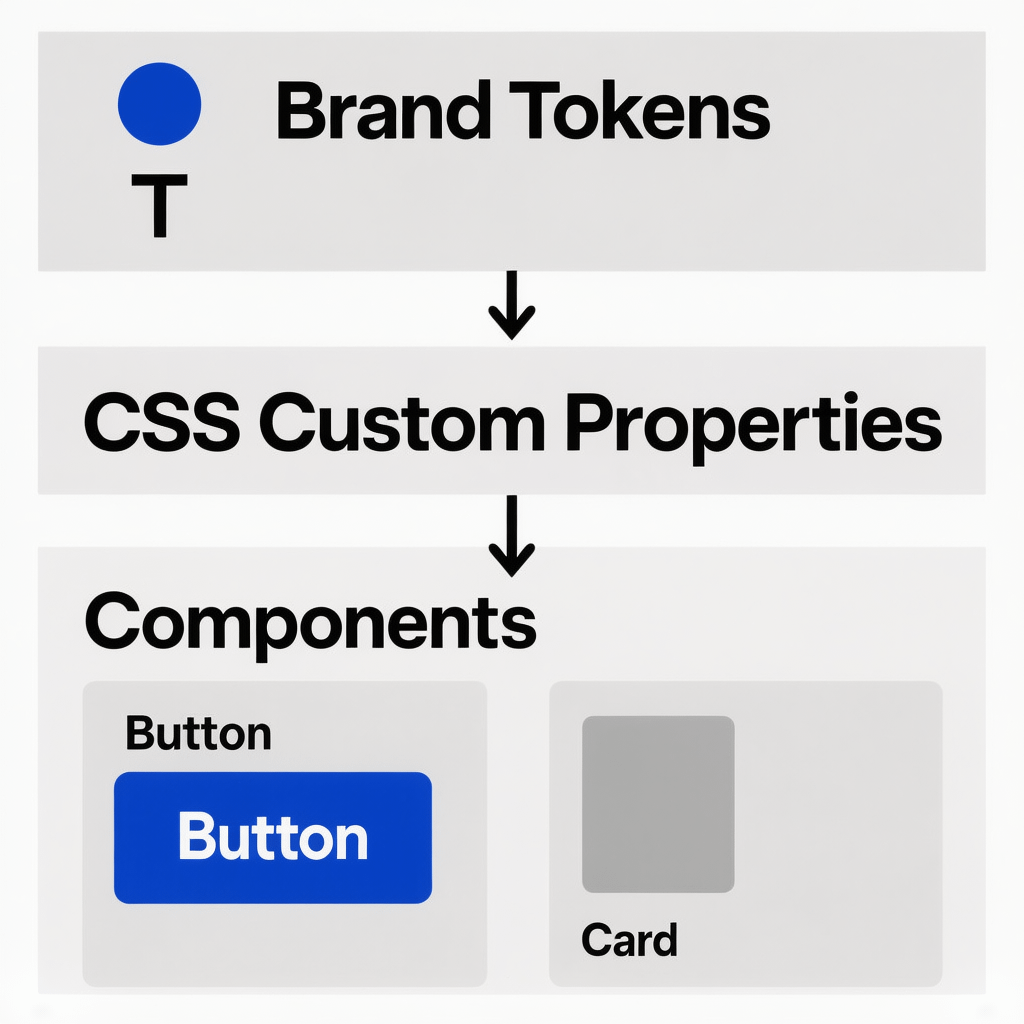
/* Base tokens */
:root {
  --color-bg: #ffffff;
  --color-text: #111111;
  --space-1: .25rem;
  --space-2: .5rem;
  --space-3: 1rem;
  --radius-sm: .25rem;
}

/* Using tokens in components */
.card {
  background: var(--color-bg);
  color: var(--color-text);
  padding: var(--space-3);
  border-radius: var(--radius-sm);
}
This small change alone can simplify CSS with custom properties across your entire system. One update in tokens refreshes every component that references them.
The core benefit set
Let’s call out the real-world wins you get when you simplify CSS with custom properties and design tokens.
- Consistency – one source of truth for colors, spacing, and typography.
- Speed – faster prototyping and fewer regressions.
- Theming – light or dark mode without recompile.
- Extensibility – new brands and campaigns plug into the same scales.
- Performance – fewer CSS bytes through reuse and strong caching.
21 practical ways to simplify CSS with custom properties
1) Build a robust color system
Start with semantic names like –color-surface, –color-text, and –color-accent. This abstraction helps you simplify CSS with custom properties because components rely on meaning, not raw hex codes.
:root {
  --color-surface: #ffffff;
  --color-surface-2: #f6f7f9;
  --color-text: #0a0a0a;
  --color-accent: #3b82f6;
  --color-accent-contrast: #ffffff;
}
.btn-primary {
  background: var(--color-accent);
  color: var(--color-accent-contrast);
}
2) Tokenize spacing scale
Pick a modular scale and stick to it. Tokens like –space-1 to –space-7 simplify CSS with custom properties by normalizing rhythm across layouts and components.
:root {
  --space-1: .25rem;
  --space-2: .5rem;
  --space-3: 1rem;
  --space-4: 1.5rem;
  --space-5: 2rem;
}
3) Responsive typography with clamp
Use clamp with variables for fluid type. You simplify CSS with custom properties when your sizing logic lives in tokens instead of component rules.
:root {
  --step--1: clamp(.78rem, .73rem + .2vw, .9rem);
  --step-0: clamp(1rem, .95rem + .3vw, 1.125rem);
  --step-1: clamp(1.25rem, 1.15rem + .6vw, 1.5rem);
}
h1 { font-size: var(--step-2, 2rem); }
p { font-size: var(--step-0); }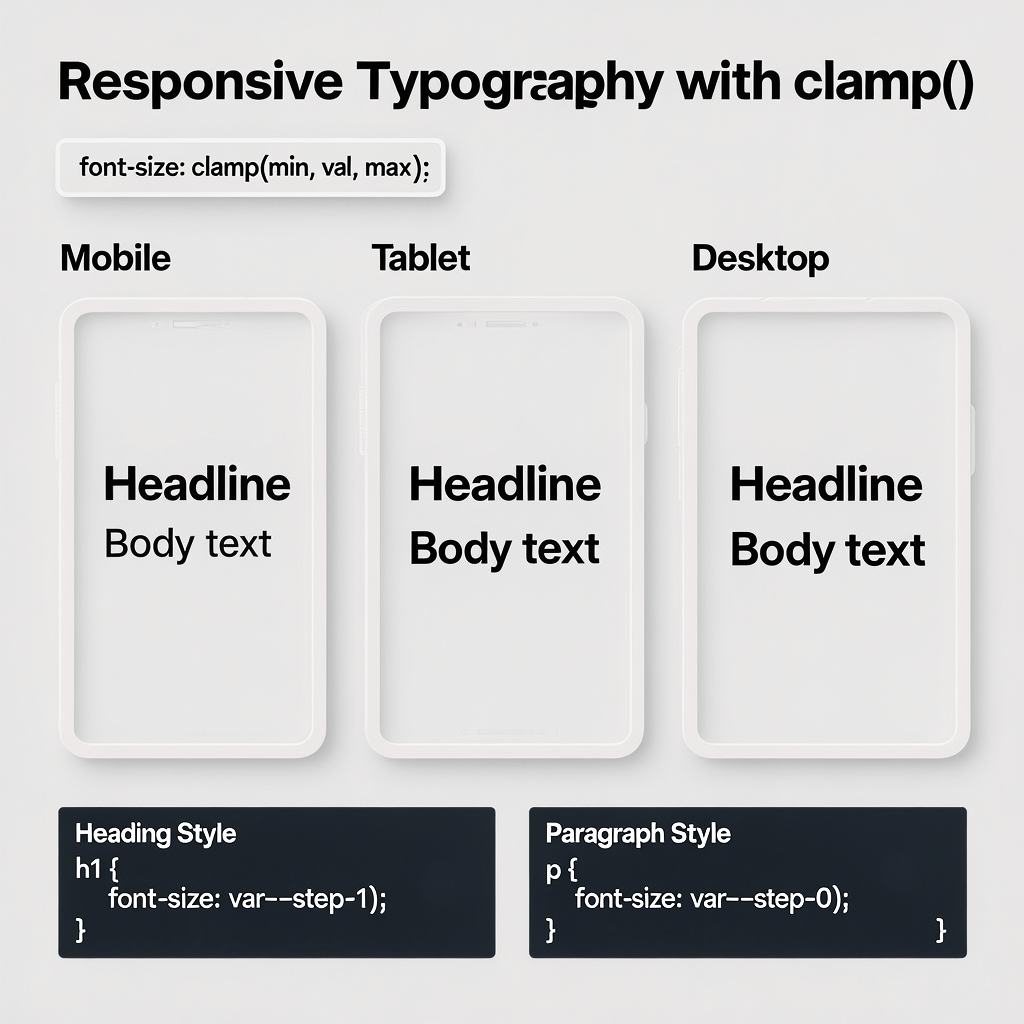
4) Dark mode without rebuild
Define base tokens on :root and override them in a theme scope. This pattern lets you simplify CSS with custom properties to deliver dark mode with a single attribute flip.
:root {
  --color-bg: #fff;
  --color-text: #111;
}
[data-theme="dark"] {
  --color-bg: #0b0e14;
  --color-text: #e6edf3;
}
body { background: var(--color-bg); color: var(--color-text); }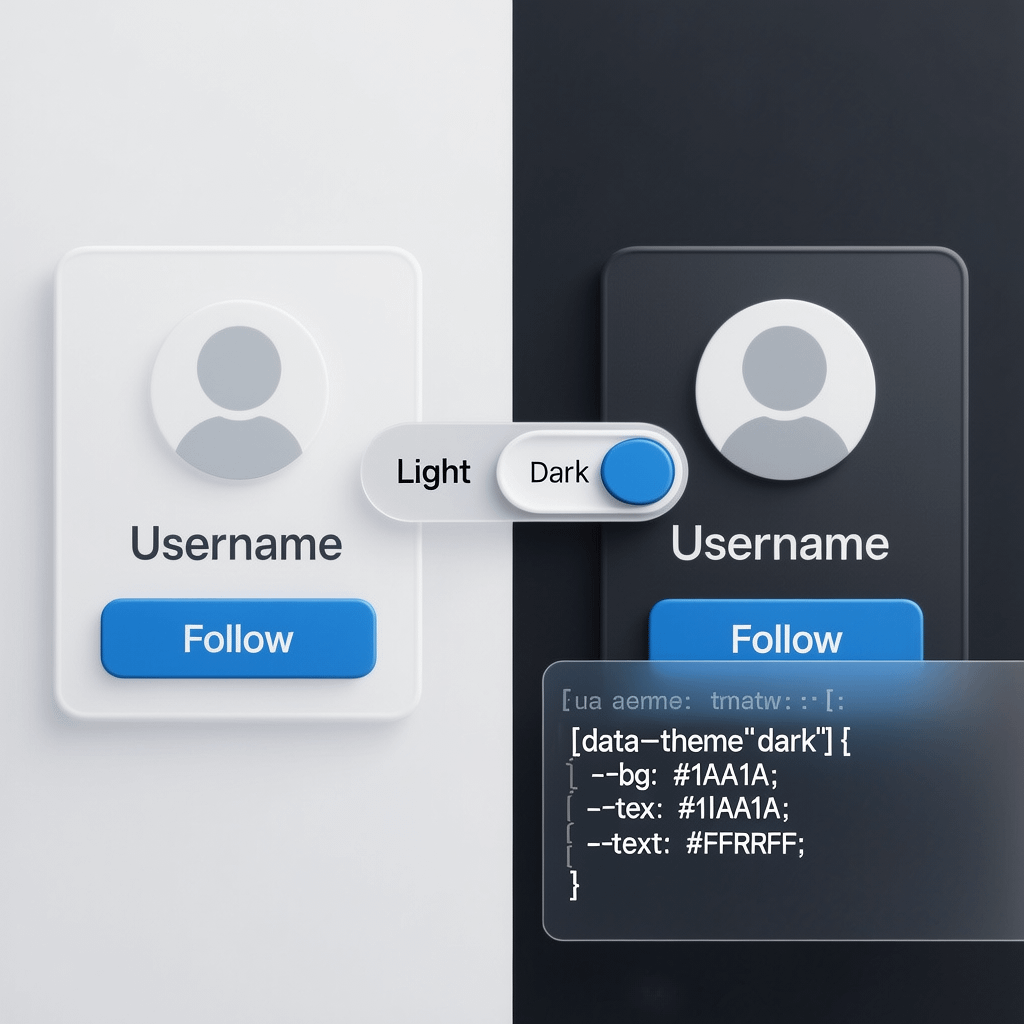
5) Component scopes over global overrides
Scope only what you need. To simplify CSS with custom properties, create component-level variables for context without leaking styles globally.
.card {
  --card-padding: var(--space-4);
  --card-bg: var(--color-surface);
  padding: var(--card-padding);
  background: var(--card-bg);
}
.card--inverted {
  --card-bg: var(--color-text);
  color: var(--color-surface);
}
6) Use calc and var together
When you mix var with calc, you unlock powerful expressive styles. It helps simplify CSS with custom properties by collapsing layout math into readable tokens.
:root {
  --gutter: 1rem;
  --container: 72rem;
}
.grid {
  width: min(100% - calc(var(--gutter) * 2), var(--container));
  margin-inline: auto;
}
7) Build accessible color ramps
Pair variables with WCAG checks. You simplify CSS with custom properties and protect accessibility by referencing semantic tokens and verifying contrast.
8) Create motion tokens for consistency
Animation tokens centralize timing and easing. You simplify CSS with custom properties when every animation shares the same tempo.
:root {
  --ease-standard: cubic-bezier(.21, .61, .35, 1);
  --duration-1: 150ms;
  --duration-2: 250ms;
}
.modal {
  transition: transform var(--duration-2) var(--ease-standard);
}
9) Control z-index with layers
Define a z-index scale and reference semantic layers like overlay, toast, and modal. This is a simple way to simplify CSS with custom properties in complex UIs.
:root {
  --z-base: 0;
  --z-dropdown: 1000;
  --z-sticky: 1100;
  --z-overlay: 1200;
  --z-modal: 1300;
}
10) Prefer semantic naming over raw tokens
Names like –button-bg or –chip-radius are easier to use. You simplify CSS with custom properties when names describe purpose, not implementation.
11) Bridge preprocessors and runtime variables
Keep Sass for maps and loops, then export maps to CSS custom properties at build time. This hybrid approach can simplify CSS with custom properties without losing preprocessor ergonomics.
12) Use cascade layers for predictability
Cascade layers reduce specificity wars. Layer tokens first, then components, then utilities to simplify CSS with custom properties in the cascade.
@layer tokens, components, utilities;

@layer tokens {
  :root { --color-accent: #3b82f6; }
}
@layer components {
  .btn { background: var(--color-accent); }
}
@layer utilities {
  .u-shadow { box-shadow: 0 2px 4px rgb(0 0 0 / .1); }
}
13) Prefer logical properties
Combine logical properties with variables to support RTL automatically. This helps you simplify CSS with custom properties across languages.
.card {
  padding-inline: var(--space-4);
  padding-block: var(--space-3);
}
14) Theme by container
Apply tokens to a container scope for micro themes. You can simplify CSS with custom properties by nesting brands or sections without touching global tokens.
.brand-acme {
  --color-accent: #f97316;
}
.brand-zen {
  --color-accent: #10b981;
}
15) Ship a tiny runtime theme switch
One line flips your theme. This is the fastest way to simplify CSS with custom properties when product teams want personalization.
<button id="toggle">Toggle theme</button>
<script>
const el = document.documentElement;
toggle.onclick = () => {
  const next = el.getAttribute("data-theme") === "dark" ? "light" : "dark";
  el.setAttribute("data-theme", next);
  localStorage.setItem("theme", next);
};
el.setAttribute("data-theme", localStorage.getItem("theme") || "light");
</script>
16) Use var fallbacks like a pro
Fallbacks make styles resilient. When you simplify CSS with custom properties, always provide sane defaults to handle edge cases.
.chip {
  background: var(--chip-bg, var(--color-surface));
  color: var(--chip-text, var(--color-text));
}
17) Tie media and container queries to tokens
Reference breakpoints and sizing tokens inside queries. This locks layout and logic together and helps you simplify CSS with custom properties across viewports.
:root {
  --bp-md: 48rem;
}
@media (min-width: var(--bp-md)) {
  .grid { grid-template-columns: repeat(12, 1fr); }
}
18) Deliver icon and illustration colors via tokens
Align SVG fills and strokes to color tokens. You simplify CSS with custom properties and keep brand visuals perfectly consistent.
19) Tune forms and micro interactions
Inputs, focus rings, and hover states all benefit from variable driven values. You simplify CSS with custom properties and reduce style drift in enterprise apps.
20) Audit and refactor with token substitution
Audit hard coded values and swap them to variables. This is the fastest way to simplify CSS with custom properties in legacy codebases.
21) Cache CSS smartly and compress images
Minify CSS, split critical path styles, and set long cache headers for static CSS files. When you simplify CSS with custom properties, you also reduce file churn which improves caching. Always compress images and serve modern formats for speed.
How to simplify CSS with custom properties in real projects
Let’s wire a mini system that you can lift into any project. You will define tokens, scope theme overrides, and connect a simple toggle. This pattern will help you simplify CSS with custom properties while keeping code readable.
Step 1 – define tokens
:root {
  /* Color tokens */
  --color-surface: #ffffff;
  --color-surface-2: #f6f7f9;
  --color-text: #101114;
  --color-muted: #6b7280;
  --color-accent: #2563eb;
  --color-accent-contrast: #ffffff;

  /* Type tokens */
  --font-sans: ui-sans-serif, system-ui, -apple-system, Segoe UI, Roboto, Ubuntu, Cantarell, Noto Sans, Helvetica, Arial, "Apple Color Emoji", "Segoe UI Emoji";
  --step-0: clamp(1rem, .98rem + .2vw, 1.1rem);
  --step-1: clamp(1.25rem, 1.15rem + .6vw, 1.5rem);
  --step-2: clamp(1.6rem, 1.2rem + 1.2vw, 2rem);

  /* Spacing and radius */
  --space-1: .25rem;
  --space-2: .5rem;
  --space-3: 1rem;
  --radius-sm: .25rem;
  --radius-md: .5rem;

  /* Motion */
  --ease-standard: cubic-bezier(.21, .61, .35, 1);
  --duration-1: 150ms;
  --duration-2: 250ms;
}
Step 2 – create dark theme overrides
[data-theme="dark"] {
  --color-surface: #0b0e14;
  --color-surface-2: #111827;
  --color-text: #e6edf3;
  --color-muted: #9ca3af;
  --color-accent: #60a5fa;
  --color-accent-contrast: #0b0e14;
}
Step 3 – hook up a toggle and respect user preference
<script>
const root = document.documentElement;
const stored = localStorage.getItem("theme");
const prefersDark = window.matchMedia("(prefers-color-scheme: dark)").matches;
root.setAttribute("data-theme", stored || (prefersDark ? "dark" : "light"));
function setTheme(v){ root.setAttribute("data-theme", v); localStorage.setItem("theme", v); }
</script>
Step 4 – test contrast and ship fast pages
Run contrast checks, especially for text and interactive states. Compress and lazy load images, use HTTP caching, and keep CSS lean. As you simplify CSS with custom properties, you often trim bundle size by removing duplicated values and utility sprawl.
Architecture patterns that amplify variables
Good architecture multiplies the gains you get when you simplify CSS with custom properties. Consider these approaches to keep your code stable for years.
ITCSS or similar layering
Start with settings and tools, then generic, elements, objects, components, and utilities. This helps you simplify CSS with custom properties by placing tokens in a predictable layer.
BEM and naming conventions
BEM pairs well with tokens. You simplify CSS with custom properties by keeping class names semantic and letting variables handle the look and feel.
Design tokens pipeline
Use a token source of truth, then transform to CSS, JSON, and platform specific formats. This is how product teams simplify CSS with custom properties across web and native apps.
Framework integration
React, Vue, and Svelte all play nicely. You can inline style objects that reference variables, or bind style props to tokens. This makes it straightforward to simplify CSS with custom properties inside component libraries.
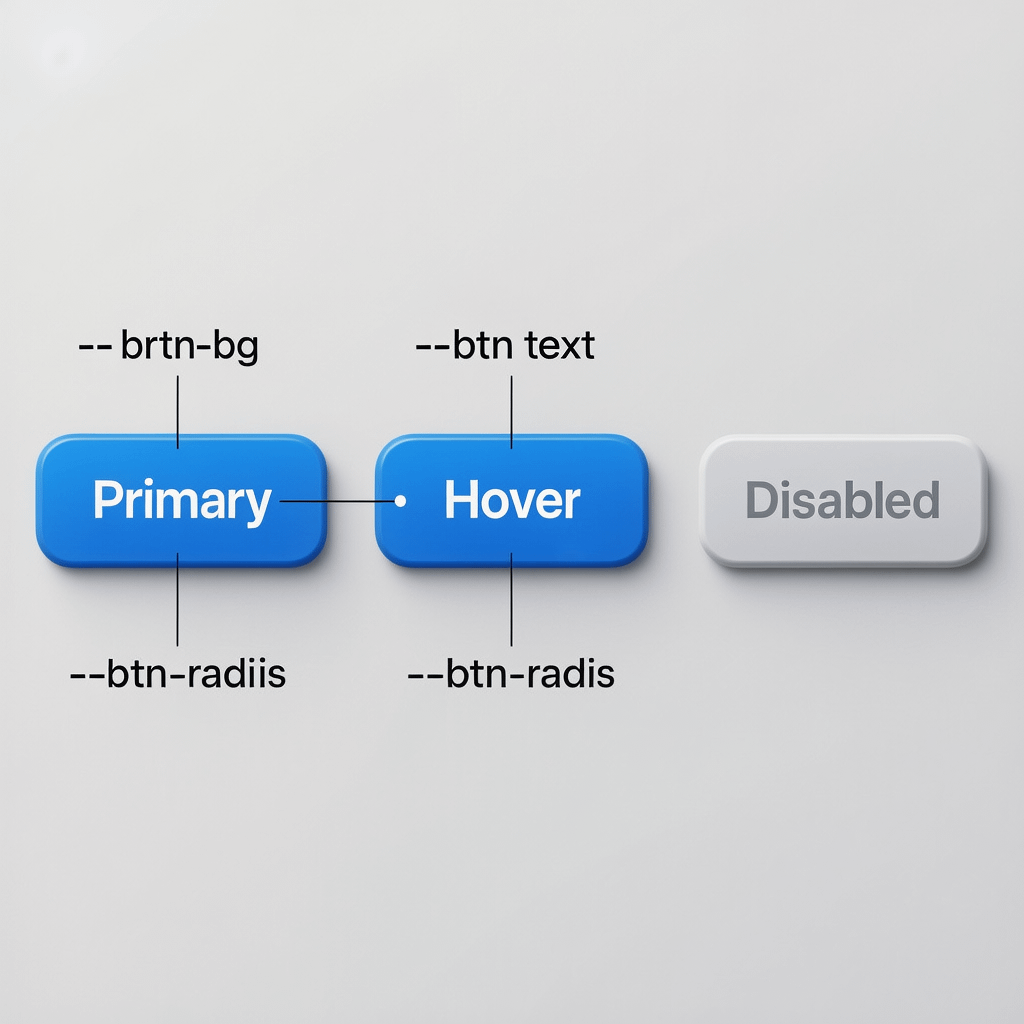
/* Example: theme driven button */
.btn {
  --btn-bg: var(--color-accent);
  --btn-text: var(--color-accent-contrast);
  --btn-radius: var(--radius-md);
  --btn-pad-x: var(--space-3);
  --btn-pad-y: calc(var(--space-2) - 2px);
  background: var(--btn-bg);
  color: var(--btn-text);
  border-radius: var(--btn-radius);
  padding: var(--btn-pad-y) var(--btn-pad-x);
  transition: background var(--duration-2) var(--ease-standard);
}
.btn:hover { filter: brightness(1.05); }
Performance truths and tradeoffs
Variables compute at runtime. Used normally, the cost is negligible and the benefits are large. But to truly simplify CSS with custom properties, avoid performance traps.
- Animate transforms or opacity, not properties that trigger layout.
- Scope variables to containers when possible to limit inheritance depth.
- Cache CSS aggressively and split critical path CSS.
- Compress and lazy load images. Modern formats plus caching cut load time.
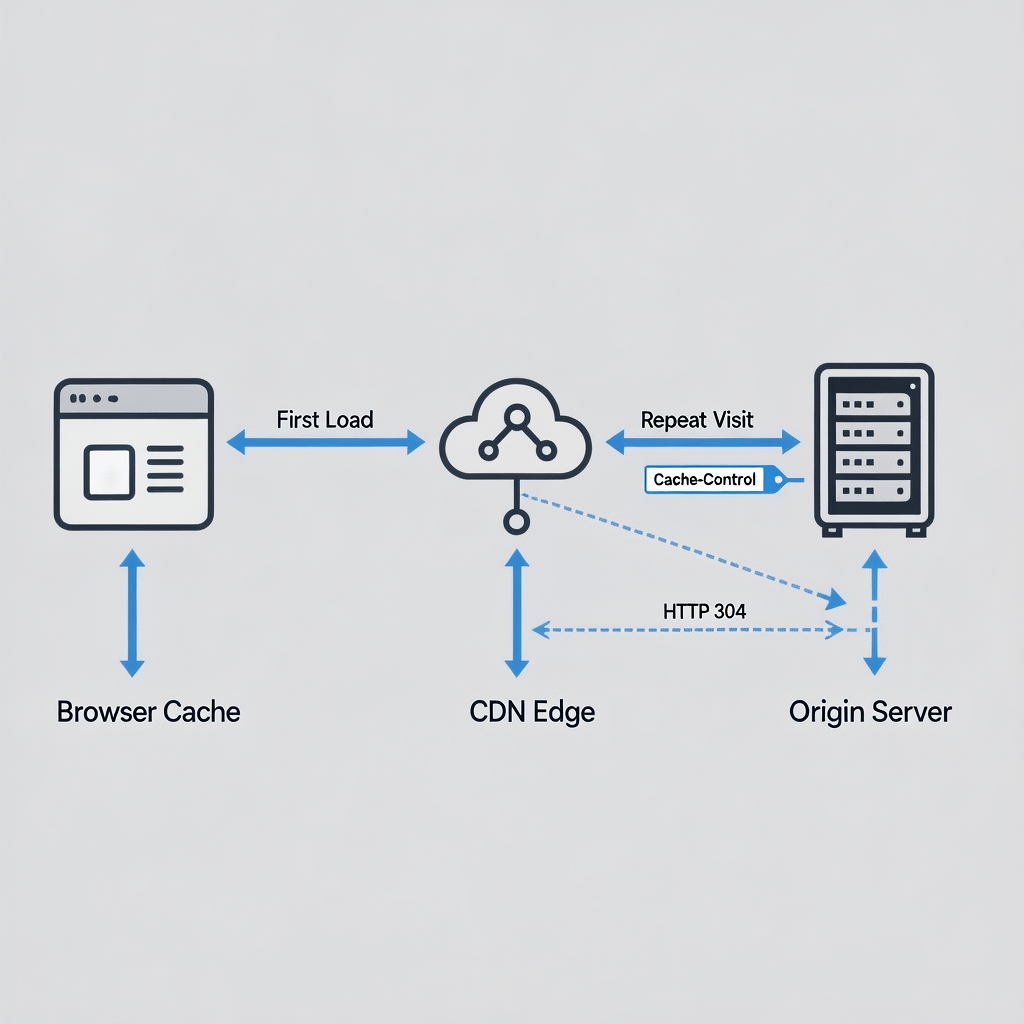
We pair these techniques with analytics to validate impact. If you need help measuring and improving page speed, our analytics and reporting practice tracks Core Web Vitals and highlights opportunities.
Accessibility and inclusive design
Tokens are not only a developer convenience. They also simplify CSS with custom properties by making accessibility automatic when you wire the right semantics.
- Text and interactive states map to semantic color tokens with verified contrast.
- Focus rings use motion and color tokens for visibility.
- Spacing tokens create predictable hit areas on touch devices.
:root {
  --focus-ring: 0 0 0 3px rgb(59 130 246 / .5);
}
:where(a, button, [tabindex]) {
  outline: none;
  box-shadow: none;
}
:where(a:focus-visible, button:focus-visible, [tabindex]:focus-visible) {
  box-shadow: var(--focus-ring);
}
When stakeholders ask for brand updates, you simplify CSS with custom properties by dialing values at the token layer rather than rewriting component rules.
Testing and maintenance routines
Want to keep momentum after you simplify CSS with custom properties? Bake the following habits into your CI pipeline and code reviews.
- Lint for disallowed hard coded values like hex codes and magic numbers.
- Snapshot visual diffs when tokens change.
- Track CSS bundle size and report on cache hit rates.
- Use codeowners for tokens to prevent accidental drift.
Design and engineering alignment is easier when the system language is consistent. This is the cultural boost you get when you simplify CSS with custom properties and design tokens.
Common pitfalls and how to avoid them
Too many one-off variables
Resist creating component-specific tokens unless the concept is reusable. To simplify CSS with custom properties long term, keep tokens semantic and layered.
Confusing names and scales
Use clear naming and documented scales. You simplify CSS with custom properties when designers and developers share the same mental model.
Variable values that fight the cascade
Leverage cascade layers and container scopes. This ensures you simplify CSS with custom properties instead of adding specificity hacks.
Skipping fallbacks
Every var should have a reasonable fallback for safety. This habit will simplify CSS with custom properties and reduce edge case bugs.
Migration playbook for legacy code
Here is a lightweight plan to help you simplify CSS with custom properties in an existing app without risky rewrites.
- Inventory colors, spacing, and fonts. Group by intent.
- Define a minimal token set that covers 80 percent of use cases.
- Swap hard coded values for variables in high traffic components first.
- Introduce theme scopes only after tokens stabilize.
- Document the system and add lint rules to block regressions.
This phased approach lets you simplify CSS with custom properties while shipping features continuously.
Real outcomes you can expect
- Cleaner PRs because changes are localized to tokens and small overrides.
- Faster onboarding since tokens express design intent in plain language.
- Reduced CSS size by removing repetition and unused utilities.
- Higher design consistency across pages and micro apps.
If you oversee brand or product at scale, this is how you simplify CSS with custom properties and sleep better at night.
When to pair variables with utility classes
Utilities are great until they explode. To simplify CSS with custom properties, let utilities reference tokens, then cap utility breadth to essentials like spacing and display.
Where this approach shines
- Design systems and component libraries in any framework.
- Marketing sites with regular brand refreshes and seasonal themes.
- Enterprise dashboards where consistency and accessibility are critical.
Across all of these, the fastest win is to simplify CSS with custom properties and let tokens do the heavy lifting.
Need a partner to roll this out with guardrails and documentation that teams actually use? The specialists at SEO services and performance at Brand Nexus Studios align technical SEO with design system best practices so speed and UX work together.
FAQs
These are the questions teams ask most when they simplify CSS with custom properties for the first time.
How do I name tokens so everyone understands them?
Pick semantic names and numeric scales. For example, –color-text, –space-3, and –radius-sm. This helps you simplify CSS with custom properties and keep documentation clean.
What about CSS-in-JS and runtime performance?
Variables work in any styling strategy. Use them for themes and user settings, then keep heavy animation in CSS transforms to simplify CSS with custom properties without jank.
How many tokens should I start with?
Start with 5 to 7 colors, a spacing scale from 1 to 7, and 3 to 4 typography steps. You can still simplify CSS with custom properties with a small, focused set.
Can I localize tokens for international sites?
Yes. Use container scopes to override direction and locale specific spacing. This is a practical way to simplify CSS with custom properties for global audiences.
What tools help maintain tokens?
Any static analysis tool that flags literal values will help. A simple style dictionary or a custom JSON source of truth feeds CSS and app code so you simplify CSS with custom properties across platforms.
References
About the Author