
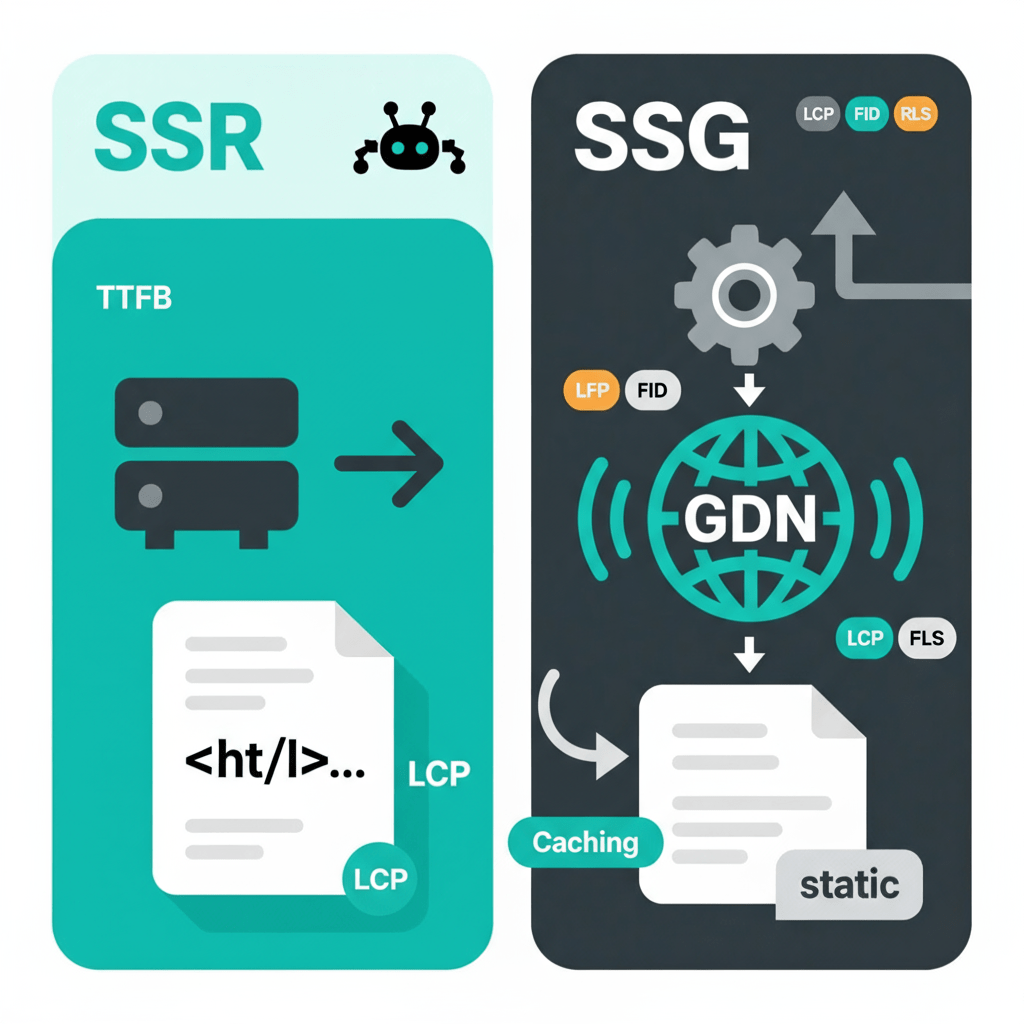
Feature image compressed for speed, illustrating how SSR and SSG deliver HTML for search visibility.
SSR vs SSG SEO: 11 Proven Wins and Pitfalls
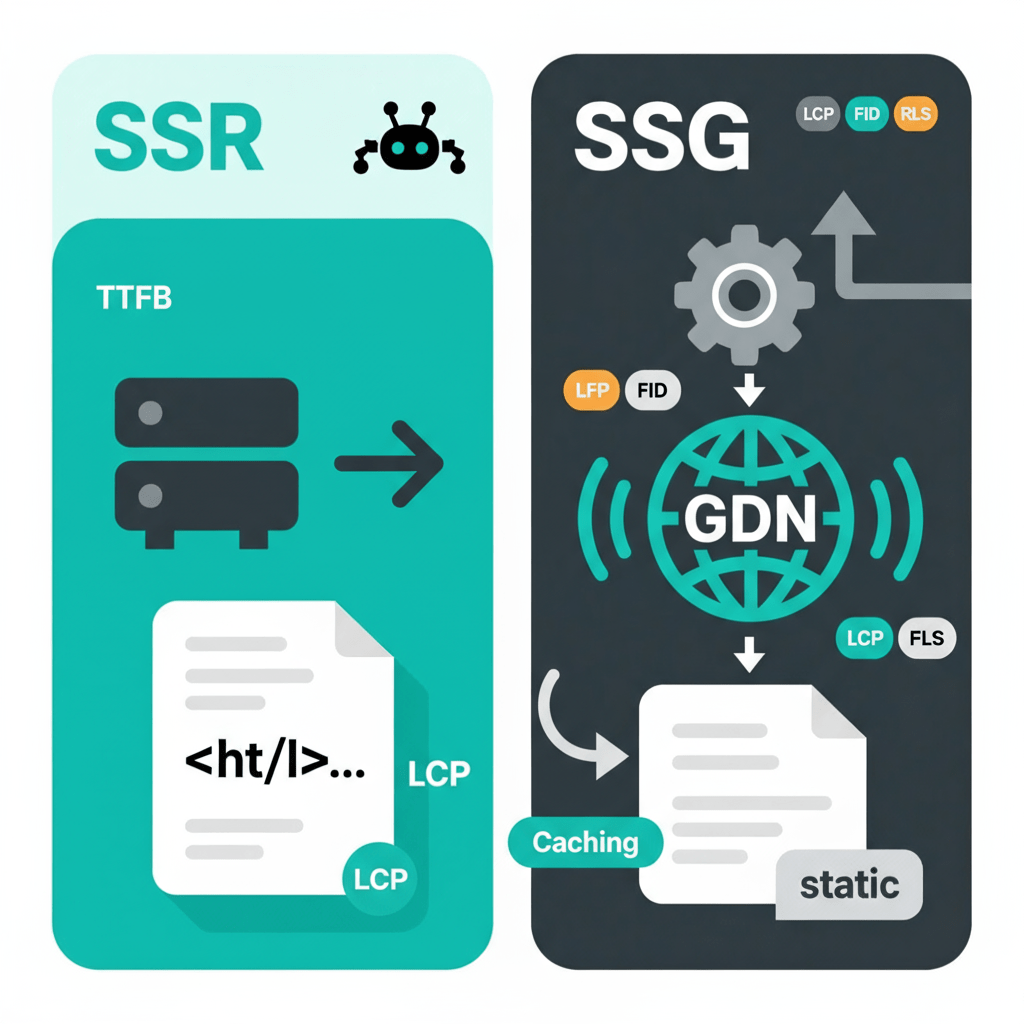
Here is the truth about ssr vs ssg seo. Both can rank like champions when implemented well, and both can stumble if you ship blank HTML or slow interactions. The trick is aligning rendering with intent, freshness, and performance budgets.
Right away, ssr vs ssg seo decisions shape crawlability, indexation, Core Web Vitals, and even your infrastructure costs. If your site must surface fast changing data, SSR helps you ship complete HTML instantly. If content is mostly static, SSG gives you fast global delivery with simple caching.
In this guide, we will demystify ssr vs ssg seo with actionable steps, common pitfalls, and a practical decision tree. You will leave with a template by template plan you can roll into your backlog without guesswork.
As you read, look for quick wins you can apply this week. Also note our image assets are compressed to keep page speed snappy and to mitigate bandwidth on mobile connections.
ssr vs ssg seo at a glance
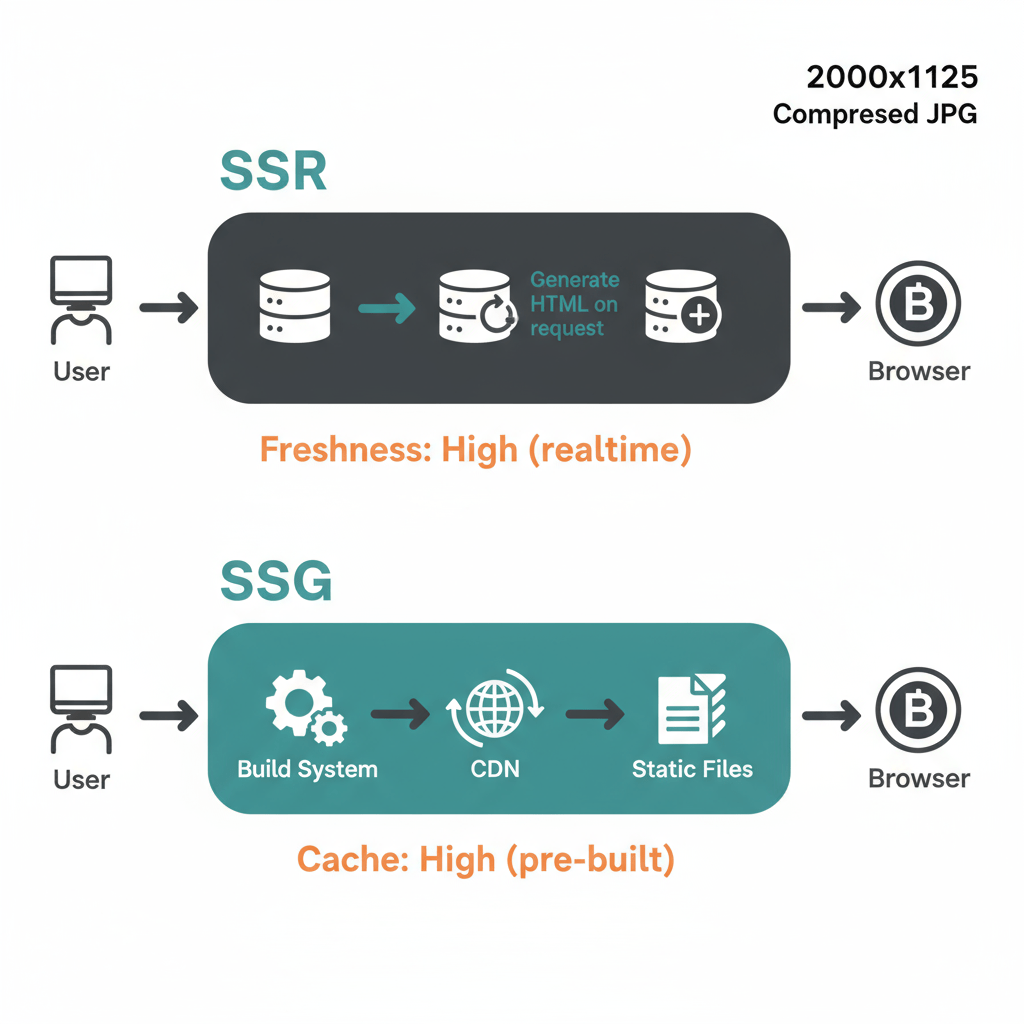
At the highest level, ssr vs ssg seo is about when HTML is produced. SSR returns full HTML per request. SSG produces static HTML at build time. Search engines happily crawl both when the initial response includes meaningful content.
With SSR, you control freshness per request, which suits inventory, listings, and personalization that must index. With SSG, you prioritize speed and stability, which suits documentation, blogs, and evergreen pages where updates are scheduled.
For ssr vs ssg seo, the first milestone is visible content in the initial HTML. If a crawler receives a shell with no content, you rely on deferred rendering which can delay or block indexing for critical pages.
How search engines render and why it matters
Historically, client only rendering created gaps for JavaScript heavy sites. Today, rendering queues are better, but server rendered or pre rendered HTML still wins for predictable indexing. That is why ssr vs ssg seo choices still move the needle.
First, crawlers request your URL and parse the HTML. If content is available immediately, it is indexed quickly. If essential content requires JavaScript, it may wait in a render queue which introduces delays. SSR and SSG remove that uncertainty.
Second, structured data should appear in the initial HTML. This helps rich results, breadcrumb trails, and product enhancements. In ssr vs ssg seo planning, make sure JSON-LD prints on first response, not after hydration.
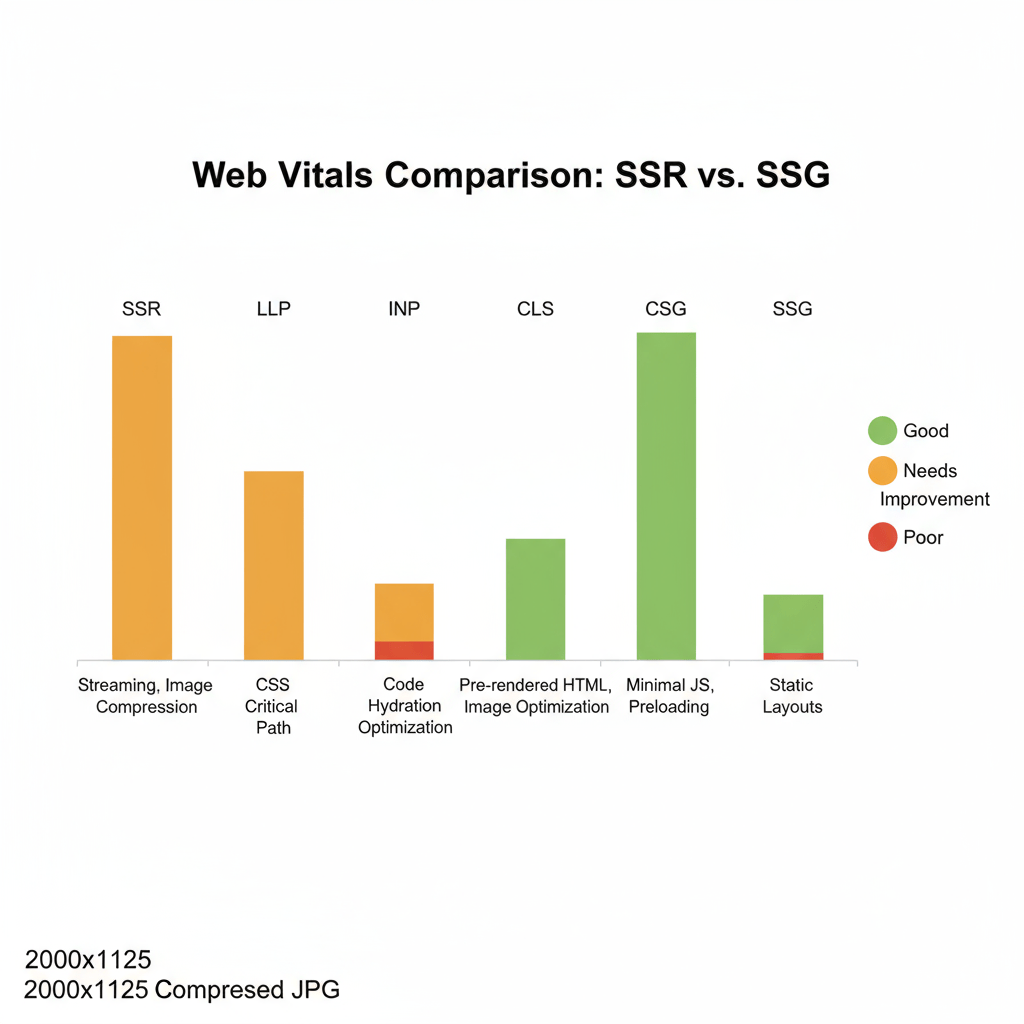
Finally, Core Web Vitals are part of the ranking puzzle. SSG pages typically achieve great LCP and CLS. SSR can do the same with caching, streaming, and small payloads. Either path can hit green metrics when tuned well.
SSR advantages for organic growth
When you compare ssr vs ssg seo, SSR shines for dynamic catalogs, filters, and marketplace inventory. The server can assemble canonical HTML for every combination so crawlers see complete content immediately.
Because SSR runs per request, you can include personalized or geo specific modules that still resolve to HTML. Use care not to vary critical content per user because that can fragment signals. In most cases, personalization for layout or recommendations is safe.
SSR also enables streaming HTML. With streaming, the server sends above the fold content first and hydrates progressively. That keeps LCP low even for complex pages, which benefits ssr vs ssg seo goals on rich templates.
Caching is the force multiplier. Pair SSR with CDN caching, stale while revalidate, and cache keys by path and language. TTFB can be very close to static hosting while you still enjoy fresh data.
For structured data, SSR prints JSON-LD consistently. That stability helps product, article, and FAQ enhancements. In ssr vs ssg seo, consistent structured data output is a quiet ranking booster through improved eligibility and CTR.
SSG advantages for organic growth
On the other side of ssr vs ssg seo, SSG dominates for blogs, help centers, docs, and evergreen landers. Every page is static, so delivery is lightning fast from the edge and HTML is complete the instant it arrives.
Build pipelines can generate thousands of pages safely. With content workflows you can re publish only changed pages using incremental builds or ISR. You get freshness without losing the static benefits.
SSG outputs tiny payloads and minimal JavaScript. That combination drives excellent LCP, CLS, and INP scores. Better vitals support ssr vs ssg seo outcomes by reinforcing both rankings and conversions.
For security and cost, SSG reduces your attack surface and server spend. There is no runtime compute for each request, only CDN delivery. That simplicity removes many operational failure points.
When ssr vs ssg seo helps or hurts
Let us map common templates to their ideal rendering mode. This is where ssr vs ssg seo choices directly impact index coverage and speed.
- Product listing pages: SSR with heavy caching. Facets must produce unique canonical HTML with clear canonical tags.
- Product detail pages: Either SSR or ISR. If price and stock update hourly, SSR or short ISR intervals are best.
- Blog posts and docs: SSG with ISR. Publish instantly, regenerate on edits, and ship tiny bundles.
- Location pages: SSG if content is stable, SSR if hours and inventory change throughout the day.
- Search results: SSR for crawlable default views, then client side enhance. Avoid infinite scroll without pagination.
- Account pages: CSR only. No SEO needs here, keep bots out with robots rules.
If you overuse client side rendering for indexable content, ssr vs ssg seo suffers. Crawlers may miss content, links, and structured data, and your pages can take longer to qualify for rich results.
Direct comparison across SEO factors
Core Web Vitals
With SSG, LCP is often a static hero image or heading served from the CDN. With SSR, LCP can be just as fast if you stream and compress HTML, preload critical assets, and reduce JavaScript. For ssr vs ssg seo, aim for LCP under 2.5 seconds and CLS under 0.1 on mobile.
Crawl and render predictability
Both SSR and SSG deliver HTML on first response, so both beat client only rendering for crawl predictability. That reliability is the foundation of ssr vs ssg seo at scale.
Freshness and change cadence
SSG excels when content changes daily or weekly. SSR wins when prices, stock, or listings change by the minute. If your editorial and catalog needs differ, split strategies to balance ssr vs ssg seo trade offs.
Internationalization and hreflang
Either approach can output correct hreflang on initial HTML. The real ssr vs ssg seo work is in generating consistent URL patterns and avoiding mixed language bundles. Preload locale data and test alternates in Search Console.
Structured data stability
Print JSON-LD server side for both SSR and SSG. Avoid client only injection for data needed by rich results. This is a key safeguard for ssr vs ssg seo quality.
Architecture and frameworks that support success
Modern frameworks make ssr vs ssg seo a switch you can flip per route. Next.js, Nuxt, SvelteKit, Astro, and Gatsby all support route level rendering modes and hybrid strategies like ISR or deferred static generation.
For SSR, consider serverless and edge runtimes. They shorten network paths and keep TTFB low. For SSG, pair your build with a global CDN and smart caching headers for long tail speed wins.
Keep hydration light. Load only what you need per route, defer non essential scripts, and lazy load below the fold media. These tactics boost ssr vs ssg seo outcomes by cutting JS execution time.
Performance levers that impact rankings
Images are your biggest assets, so compress them aggressively and serve responsive sizes. Mentioning it clearly, all images in this post are compressed to improve page speed. This matters for ssr vs ssg seo because LCP images often control the score.
Cache smart. For SSR, use cache keys by URL and language, adopt stale while revalidate, and set short TTLs for hot data. For SSG, set long cache lifetimes with revalidation on deploy or webhook triggers.
Ship less JavaScript. Remove unused dependencies, split bundles per route, and prefer progressive enhancement. In ssr vs ssg seo projects, smaller JS pays twice through better vitals and more reliable indexing.
Hybrid strategies that often win
Many teams settle on a hybrid. That is where ssr vs ssg seo stops being a binary and becomes a route level choice. You can mix SSG for editorial content with SSR for product listings.
Incremental Static Regeneration is a standout. With ISR, you pre render and then refresh pages on a timer or on demand. This approach pairs SSG speed with near real time freshness, a sweet spot for ssr vs ssg seo.
Streaming SSR complements ISR for complex pages. Send above the fold HTML instantly, hydrate progressively, and keep interaction fast. This reduces TTFB and improves perceived speed in competitive niches.
Edge rendering adds one more win. Render closer to users, shorten round trips, and cache partial fragments. For ssr vs ssg seo, edge delivery smooths global traffic patterns without sacrificing freshness.
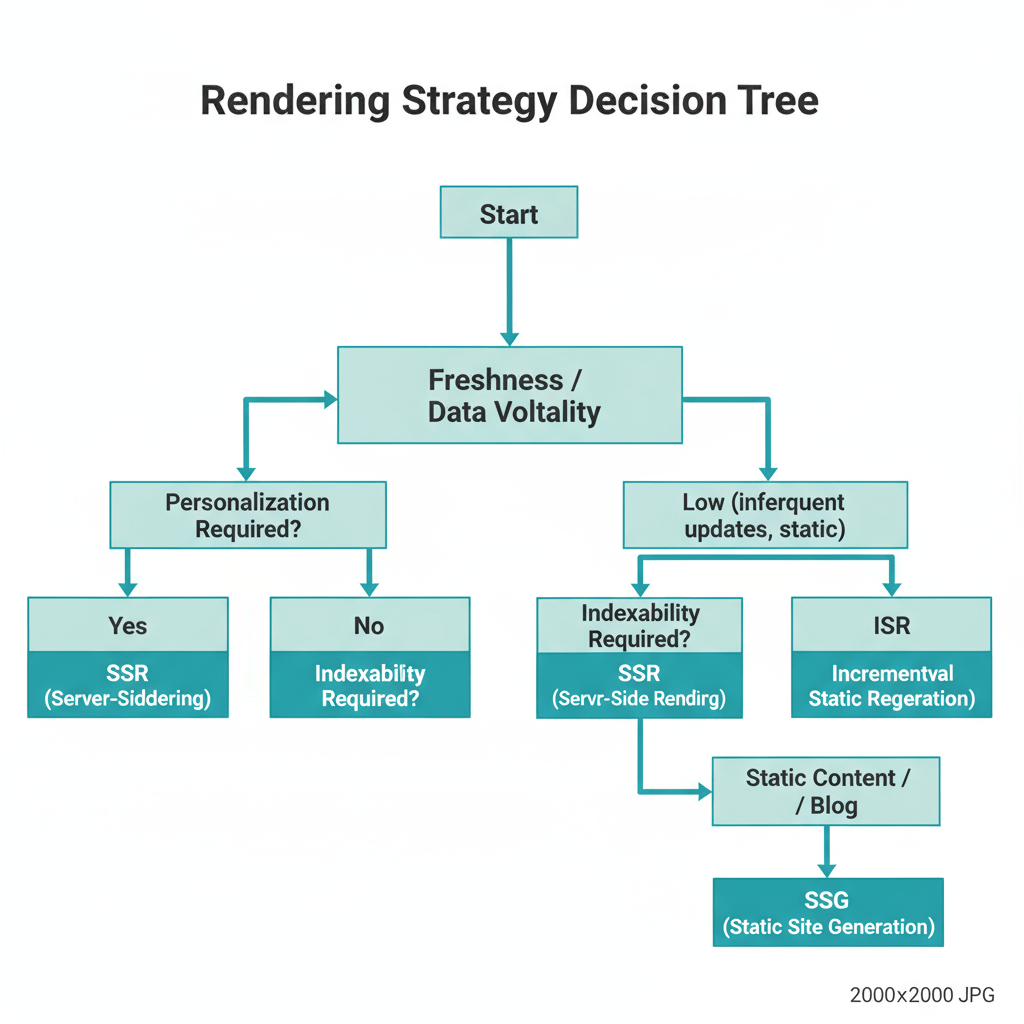
How to choose: a practical 6 step method
Use this compact method to resolve ssr vs ssg seo for your site quickly. It pairs well with agile backlogs and can be done in one sprint.
- Map pages by intent and freshness. Separate catalogs, editorial, and landing pages.
- Measure LCP, INP, CLS, crawl stats, and index coverage. Note slow templates and missing HTML.
- Prototype SSR on dynamic pages. Add caching and streaming to control TTFB.
- Prototype SSG for content pages. Enable image compression and route level code splitting.
- Set caching policies and ISR schedules. Use webhooks on content changes.
- Test with real users and Search Console. Ship gradually and monitor regressions.
Migration playbook without losing rankings
Migrations are where ssr vs ssg seo decisions become expensive or valuable. Protect your equity with a staged approach and aggressive measurement.
First, freeze URL structures and canonical logic. Keep titles, meta descriptions, and H1s intact. If you must change, map redirects precisely and verify in batches.
Next, output the same structured data or better. Print JSON-LD server side on day one. Validate on staging and again after launch.
Then, pre warm caches and image CDNs. Use load testing to confirm TTFB and headroom. Mention this in your runbook so the team knows images are compressed and cached.

Finally, monitor Search Console for crawl spikes, index coverage changes, and structured data warnings. For ssr vs ssg seo, quick fixes in the first 72 hours often prevent weeks of recovery.
Instrumentation and measurement
To quantify ssr vs ssg seo outcomes, track Core Web Vitals, crawl stats, and conversions by template. Use real user monitoring to capture device and network variation.
Set up A or B tests where possible. Compare SSR and SSG versions of similar pages to measure gains. Keep changes isolated so you attribute performance accurately.
Dashboards should include LCP, INP, CLS, TTFB, crawl rate, index coverage, CTR, and conversion rate. That mix lets you connect technical improvements to business outcomes.
Common ssr vs ssg seo pitfalls to avoid
- Shipping empty shells in initial HTML and relying on client hydration for content that must index.
- Rendering personalized content that changes titles or canonical tags per user.
- Ignoring image compression and responsive sizes which inflates LCP.
- Not caching SSR responses which raises TTFB and server costs.
- Mixing languages or region content in one URL which confuses hreflang.
If you avoid these traps, ssr vs ssg seo becomes a strategic advantage instead of a risk. Keep a tight feedback loop with performance and search data to stay in the green.
Where Brand Nexus Studios can help
If you need a partner to implement ssr vs ssg seo across a complex site, our team can help with planning, builds, and performance tuning. Explore our SEO services for strategy, audits, and implementation support.
When the plan includes redesigns, we also handle modern website design and development with route level rendering, clean HTML, and structured data baked in.
After launch, keep a close eye on results with analytics and reporting that trace vitals to rankings and revenue. That is how you compound gains from ssr vs ssg seo over time.

FAQs
What is the difference between SSR and SSG for SEO?
SSR renders HTML per request and suits dynamic content. SSG pre renders at build and suits content heavy sites. For ssr vs ssg seo, both are excellent when the initial response contains meaningful content.
Which is faster for Core Web Vitals?
SSG usually wins on raw speed. SSR can match it with caching, streaming, and small bundles. Measure both approaches on your templates.
Can I mix SSR and SSG?
Yes. Many teams mix SSG for blogs and SSR for catalogs. Hybrid architectures often produce the best ssr vs ssg seo results.
Does Google index JavaScript content?
Yes, but server or static rendered HTML is more predictable. Keep essential content in the initial HTML and keep hydration light.
Is ISR considered SSG or SSR?
ISR is a variant of SSG with scheduled or on demand regeneration. It delivers static speed with improved freshness, which is ideal for ssr vs ssg seo at scale.
Do I need structured data for both?
Absolutely. Print JSON-LD in server output for SSR and in prebuilt HTML for SSG. Validate and monitor for changes during deploys.
What about global sites and hreflang?
Either mode can output correct hreflang. The key is consistent URL patterns, language files, and testing with Search Console.
References
About the Author





Hi there! This article could not be written any better!
Looking at this post reminds me of my previous roommate!
He continually kept talking about this. I’ll forward this information to him.
Fairly certain he’s going to have a very good read.
Thank you for sharing!
Have you ever thought about writing an ebook or
guest authoring on other sites? I have a blog centered
on the same information you discuss and would love to have you share
some stories/information. I know my audience would enjoy your
work. If you are even remotely interested, feel free
to send me an e-mail.
my webpage: BEST ANAL PORN SITE