What Digital Marketing Is | Complete Guide
Understanding Search Intent
For example, when someone searches “what is digital marketing,” they’re likely seeking an informational answer. In contrast, “best digital marketing agency near me” indicates transactional intent. Knowing the difference helps tailor both your content and calls to action.
Table of Contents
1. What Digital Marketing Is
Digital marketing is the umbrella term for all marketing efforts that use the internet or an electronic device. Businesses leverage digital channels such as search engines, websites, social media platforms, email, and paid ads to connect with potential and existing customers.
In contrast to traditional marketing, which relies on static print or broadcast methods, digital marketing offers dynamic tools for tracking performance, personalizing messages, and scaling fast. It enables brands to engage in two-way conversations, gather user data, and optimize campaigns in real time.
2. Why Digital Marketing Matters in 2025
- Massive Reach: Over 5 billion people are connected to the internet. That’s a massive audience waiting to discover your brand.
- Hyper-Targeted Campaigns: From Facebook ads to Google Display, digital platforms let you reach audiences based on behavior, demographics, or search history.
- Real-Time Analytics: See what’s working and pivot fast. Google Analytics, Search Console, and ad dashboards let you make data-driven decisions.
- Lower Entry Barriers: You don’t need a TV-sized budget. Small businesses can launch powerful campaigns for a fraction of traditional ad costs.
- Personalization & Automation: Tools like CRM systems and email automations allow tailored messaging at scale—boosting conversion rates significantly.
The importance of digital marketing will only increase as AI and automation continue to reshape the customer journey.
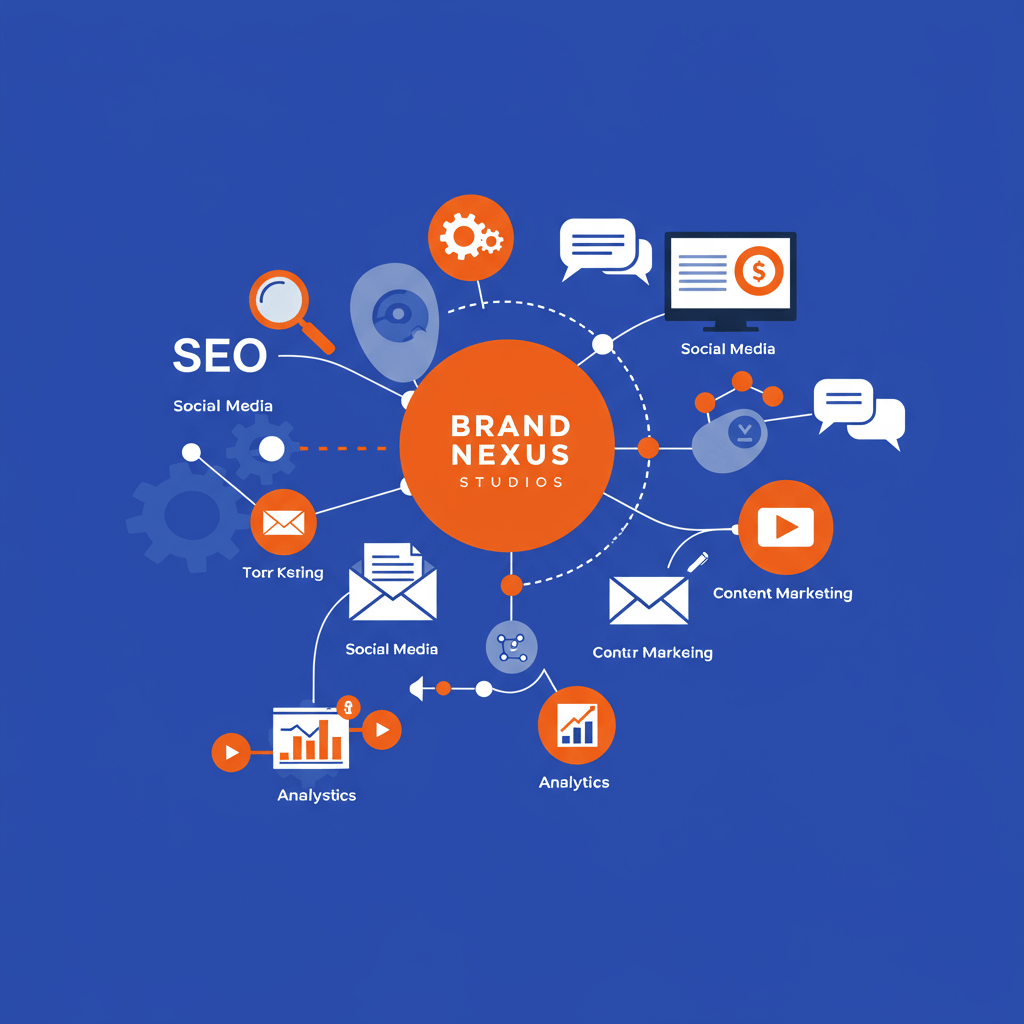
3. Main Digital Marketing Channels & Techniques
⚙️ a. SEO (Search Engine Optimization)
SEO is the foundation of digital marketing. It ensures your website ranks high on Google and other search engines. By optimizing on-page elements (like titles, headings, and internal links) and off-page signals (like backlinks), you can attract organic traffic with long-term value.
Rank Math recommends structuring your content around a primary keyword and several secondary keywords. Add them naturally to headings, meta tags, and image alt text. Don’t forget schema markup to enhance your search appearance.
📱 b. Content Marketing
Content is what drives traffic, builds trust, and generates leads. Effective content marketing includes blog posts, videos, podcasts, guides, and case studies—all optimized for SEO and user engagement.
Use storytelling, visuals, and strong formatting (H2s, bullet points, and internal links) to keep readers engaged. Google favors content that is well-structured and informative.
Build a winning content plan →
📧 c. Email Marketing
With an average ROI of $42 for every $1 spent, email marketing remains one of the most effective channels. Use lead magnets like checklists, webinars, or discounts to grow your list. Then segment users and send tailored campaigns that educate and convert.
Ensure your emails are mobile-friendly and that subject lines are compelling. A/B testing can significantly improve performance over time.
📣 d. Social Media Marketing
Facebook, Instagram, LinkedIn, and TikTok offer opportunities to grow your audience and connect with users on a daily basis. Create platform-specific content—e.g., reels for Instagram, thought leadership posts on LinkedIn—to resonate with your audience where they are.
Use insights and engagement metrics to guide your content calendar and promote top-performing posts.
🎯 e. PPC Advertising
Paid search and social ads allow you to appear instantly in front of your ideal customer. Google Ads, Meta Ads, YouTube TrueView, and programmatic platforms all offer deep targeting and retargeting features.
Rank Math advises linking paid landing pages with properly optimized on-page SEO and CTAs for maximum conversion. Ensure your ad copy is aligned with the landing page headline and intent.
🔗 f. Link Building
Backlinks from credible sources act as endorsements to Google. Earning links through guest posts, digital PR, or value-driven content (like data reports) will help your domain authority rise—and improve your chances of ranking.
4. How to Measure Success
Digital marketing is only as effective as its data. Use the following tools to evaluate performance:
- Google Analytics – Track sessions, bounce rates, and time on page.
- Google Search Console – Monitor keyword performance and technical issues.
- Email Marketing Platforms – Open rates, click-throughs, conversion rates.
- CRM Tools – Track leads, customer behavior, and funnel progression.
- Social Analytics – Measure reach, shares, comments, and sentiment.
With Rank Math’s built-in analytics, you can monitor keyword rankings and SEO scores directly inside your WordPress dashboard.
5. Steps to Launch Your Digital Marketing Strategy
- Define Your Objectives: Set SMART goals—Specific, Measurable, Achievable, Relevant, Time-bound.
- Understand Your Audience: Create personas based on demographics, psychographics, and digital behavior.
- Do Keyword Research: Use Rank Math, Ahrefs, or Ubersuggest to find terms that match your audience’s intent.
- Plan a Content Calendar: Schedule consistent, relevant, and SEO-friendly content. Focus on cornerstone content and supporting articles.
- Optimize On-Page SEO: Craft compelling meta titles, descriptions, URL slugs, and heading structures.
- Add Visuals: Use custom graphics, videos, and data charts. Optimize with proper alt tags and file compression.
- Publish and Promote: Use social media, email, and influencers to amplify reach. Repurpose content across channels.
- Test and Improve: Monitor performance, run A/B tests, and iterate based on real-world data.
Conclusion & Next Steps
Digital marketing is more than a buzzword—it’s a strategic engine for growth in 2025 and beyond. Whether you’re a small business owner or marketing director, understanding and implementing digital channels can elevate your brand visibility, customer relationships, and bottom-line performance.
By applying best practices from tools like Rank Math—from search intent alignment to technical SEO—you set yourself up for scalable, measurable success.
👉 Ready to take action? Start by optimizing your website for search, publishing one high-value blog, or launching a targeted email campaign this week. One step at a time leads to exponential impact.
About the Author