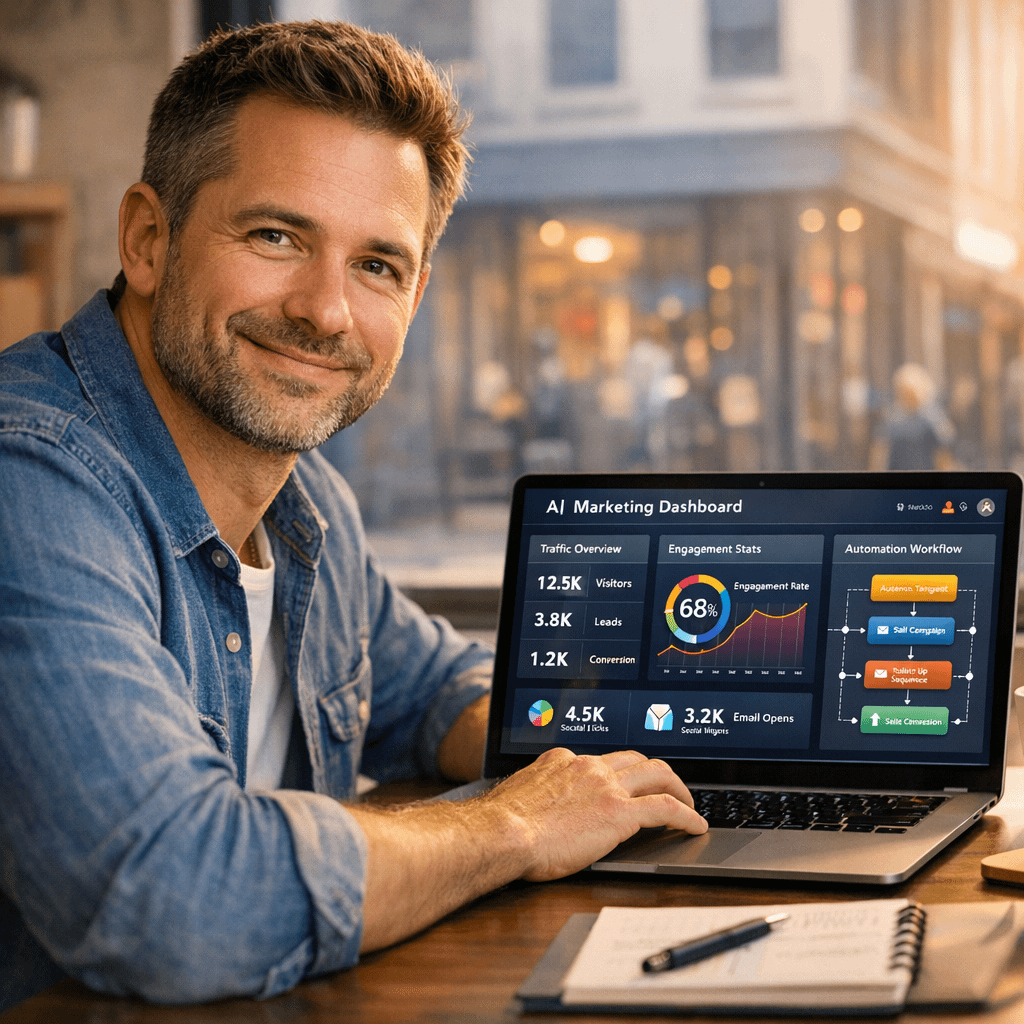

Leveraging location data is key for local businesses to connect with customers effectively.
Unleash Local Dominance: 7 Ways How Local Businesses Use Geo Marketing for Unbeatable Growth
Published: July 9, 2025

The Geo-Revolution: How Local Businesses Use Geo Marketing to Thrive
In today’s hyper-connected world, proximity is power. For local businesses, the ability to connect with potential customers precisely when and where they are most receptive is not merely an advantage; it is a fundamental necessity for survival and unparalleled growth.
This is where geo marketing steps in, transforming the way enterprises engage with their immediate environment. Geo marketing, at its essence, is a sophisticated marketing strategy that leverages location intelligence to deliver highly targeted messages and experiences to consumers based on their geographic position. It’s about understanding that a customer standing two blocks from your coffee shop has a different set of needs and a higher propensity to convert than someone across town. Understanding how local businesses use geo marketing is critical for gaining a competitive edge in a saturated market. For more insights into comprehensive digital strategies, visit BrandNexus Studios.
Historically, local advertising relied on broad strokes – newspaper ads, local radio, and flyers. While these methods had their place, they lacked the precision and personalization that modern technology now affords.
The digital age has ushered in an era where geographical data, gleaned from smartphones, Wi-Fi, GPS, and even IP addresses, can be harnessed to create incredibly effective campaigns. This guide will delve deep into the mechanics of geo marketing, illuminating the diverse applications and demonstrating exactly how local businesses use geo marketing to not only attract but also retain a loyal customer base.
From driving foot traffic to physical stores to delivering personalized online experiences, the scope of geo marketing is vast and its potential for local enterprises is truly transformative. We will explore the critical distinctions between core concepts like geotargeting and geofencing, unraveling the nuances that allow for finely-tuned campaigns. Furthermore, we will dissect seven powerful strategies, providing actionable insights into how local businesses use geo marketing to achieve tangible results. Prepare to unlock the secrets of location-based marketing and position your business for unprecedented local dominance. This is a crucial aspect of how local businesses use geo marketing to secure their market position.
Understanding the Core: Geotargeting vs. Geofencing in Local Business
Before exploring the specific applications, it’s crucial to differentiate between two foundational concepts within geo marketing: geotargeting and geofencing. While often used interchangeably, they represent distinct approaches to leveraging location data. Both are central to how local businesses use geo marketing effectively.
Geotargeting: Broader Strokes, Broader Reach
Geotargeting refers to the practice of delivering content or advertisements to users based on their current or historical geographic location, typically at a broader scale. This could involve targeting individuals within a specific city, state, postal code, or even an entire country. The primary data sources for geotargeting include IP addresses, Wi-Fi data, and GPS information.
Advertisers use geotargeting to show relevant ads to an audience residing or working within a defined area. For example, a local pizzeria might geotarget customers within a 10-mile radius of its location with online display ads or search engine ads. This method is highly effective for increasing brand awareness and reaching a large segment of a geographically defined audience. The messaging in geotargeting campaigns tends to be less real-time and more general, though still location-specific. It’s about reaching potential customers who are *likely* to be in your service area, showcasing one way how local businesses use geo marketing for broader reach.
Geofencing: Precision Pings for Immediate Engagement
Geofencing, conversely, involves creating a virtual geographic boundary (a “geofence”) around a specific physical location. When a mobile device enters or exits this pre-defined area, it triggers a pre-programmed action, such as sending a push notification, an SMS message, or an in-app alert. Geofencing leverages GPS, Wi-Fi, and cellular data for highly precise location detection, often down to a few meters.
Imagine a clothing boutique setting up a geofence around its store. As a potential customer, with the boutique’s app installed and location services enabled, walks into that geofenced area, they could immediately receive a notification about a special in-store discount. This real-time, hyper-local engagement is the hallmark of geofencing. It’s about reaching potential customers who are *currently* in a specific, highly relevant location, making it a powerful tool for driving immediate foot traffic and impulsive purchases.
Many local businesses use geo marketing through geofencing to capitalize on these real-time opportunities. The precision of geofencing allows for highly personalized and timely offers, which can significantly influence consumer behavior. This exemplifies another powerful strategy for how local businesses use geo marketing.
In essence, geotargeting is about reaching an audience within a general geographical area, while geofencing is about engaging individuals who cross a specific virtual boundary, often in real-time. Both are invaluable components of a robust geo marketing strategy, each serving different tactical purposes. Understanding these distinctions is fundamental to mastering how local businesses use geo marketing to their maximum advantage.
7 Powerful Ways How Local Businesses Use Geo Marketing
The strategic application of location intelligence offers a multitude of avenues for local businesses to connect with their target audience. Here are seven powerful ways how local businesses use geo marketing to drive growth, enhance customer experience, and secure a competitive edge:
1. Hyper-Local Mobile Advertising
One of the most direct and effective ways how local businesses use geo marketing is through hyper-local mobile advertising. This involves serving digital ads specifically to smartphone users who are within a very precise geographical radius of the business. Platforms like Google Ads and social media advertising tools (Facebook, Instagram, TikTok) allow businesses to define custom audience segments based on location data.
For instance, a coffee shop could run an ad campaign targeting individuals within a 1-mile radius during morning rush hour, promoting a special breakfast combo. A hardware store might target homeowners within a 5-mile radius with ads for seasonal garden supplies. This level of precision minimizes ad spend wastage and ensures that marketing messages reach those most likely to convert into paying customers.
The visual nature of mobile advertising, combined with location relevance, significantly increases click-through rates and engagement. This strategy directly addresses the “near me” search trend, a dominant factor in local consumer behavior. The ability to push relevant ads to users actively searching or Browse nearby dramatically improves conversion potential, demonstrating a core aspect of how local businesses use geo marketing to their benefit.

2. Personalized Promotions & Dynamic Content Delivery
Geo marketing enables businesses to deliver highly personalized promotions and dynamic content based on a user’s location. This goes beyond simple advertising; it’s about tailoring the user experience directly. A multi-location restaurant chain, for example, can use geo-IP detection on its website to automatically display the menu, pricing, and special offers relevant to the visitor’s nearest branch.
E-commerce sites can adjust shipping costs, delivery times, or even product recommendations based on the user’s geographic location. Imagine a local bookstore’s website that, upon detecting a visitor from a specific neighborhood, highlights local author events or book club meetings relevant to that community. This dynamic content delivery fosters a sense of personal connection and relevance, significantly enhancing the customer journey.
By providing location-specific information and offers, businesses demonstrate an understanding of their customers’ immediate context, leading to increased engagement and conversion rates. This customization is a powerful demonstration of how local businesses use geo marketing to build deeper relationships with their clientele. It’s a key strategy for how local businesses use geo marketing effectively.
3. Real-Time Push Notifications & SMS Marketing
Leveraging geofencing, local businesses can send real-time push notifications and SMS messages to users who enter a pre-defined virtual boundary. This is particularly effective for brick-and-mortar stores. Consider a retail store setting up a geofence around its premises and a nearby shopping mall. As a customer (who has opted in for notifications through the store’s app) enters the geofenced area, they could receive an immediate push notification announcing a flash sale or a loyalty reward.
Similarly, an SMS campaign could be triggered when a known customer’s phone registers within a certain distance, inviting them for a personalized offer. The immediacy and directness of these communications make them incredibly impactful. They intercept potential customers at the perfect moment – when they are physically close to the point of sale and their purchase intent is high. This strategy is a prime example of how local businesses use geo marketing to convert proximity into profit, offering a direct line of communication that can bypass the noise of traditional advertising. It’s clear how local businesses use geo marketing to drive immediate action.
4. Strategic Social Media Geo-Targeting
Social media platforms have become indispensable for local businesses, and their robust geo-targeting capabilities are a cornerstone of modern marketing. Businesses can create highly specific audience segments based on location (city, neighborhood, postal code) and combine this with demographic and interest-based targeting. This allows for incredibly precise campaigns.
A local gym can target residents within a 3-mile radius who have shown interest in fitness or wellness. A bakery can promote its new seasonal treats to users checking into local landmarks or events. Furthermore, features like “check-ins” and location tags encourage user-generated content and organic promotion, amplifying a business’s local presence.
Running contests or special offers that require a physical check-in at the business location can generate buzz and drive foot traffic. Social media geo-targeting is not just about advertising; it’s about fostering community engagement and word-of-mouth marketing within specific geographical areas, showcasing another critical way how local businesses use geo marketing to build brand loyalty and visibility.
5. Enhancing Local SEO & Google Business Profile
While not a direct advertising method, geo marketing principles are intrinsically linked to optimizing Local Search Engine Optimization (SEO). A strong local SEO presence ensures that when potential customers search for “restaurants near me” or “plumber in [city name],” your business appears prominently. Central to this is a meticulously optimized Google Business Profile (GBP).
Local businesses use geo marketing by ensuring their GBP listings are complete, accurate, and regularly updated with precise location information, business hours, photos, and customer reviews. This includes selecting appropriate service areas and categories. Additionally, incorporating location-specific keywords into website content and blog posts (e.g., “best pizza in Durban,” “accountant in New Germany”) helps search engines understand the geographical relevance of your offerings.
Encouraging customers to leave reviews, especially those that mention location, further boosts local search rankings. The goal is to establish your business as a relevant authority for searches originating from or pertaining to your specific geographical area, making it easier for customers to find you organically. This foundational aspect of how local businesses use geo marketing is crucial for long-term online visibility and customer acquisition.
6. Competitive Geofencing: Winning the Local Battle
An advanced and often aggressive tactic is competitive geofencing. This strategy involves setting up geofences around the locations of your competitors. When a potential customer enters a competitor’s geofenced area, your business can trigger a targeted ad or notification to their mobile device, presenting a compelling alternative offer or reason to visit your establishment instead.
For example, a car dealership might geofence a rival dealership and send a notification about a special financing offer to anyone detected within that boundary. A fast-food chain could target customers waiting in line at a competitor’s drive-thru with a discount code for a similar item at their own outlet. This tactic requires careful planning and a compelling value proposition, but it can be highly effective in diverting potential customers and capturing market share.
It’s a direct, real-time battle for customer attention, illustrating a sophisticated application of how local businesses use geo marketing to outmaneuver rivals and secure immediate conversions. Ethical considerations are important here, focusing on offering a superior value proposition rather than solely disrupting a competitor’s customer experience. This is a smart way how local businesses use geo marketing for direct competitive advantage.

7. Event-Based & Time-Sensitive Geo Marketing
Local businesses can capitalize on specific events or time-sensitive opportunities by using geo marketing. This involves setting up temporary geofences around local festivals, concerts, sports events, or community gatherings. As attendees enter these geofenced zones, businesses can push relevant offers or information.
For example, a food truck could set up a geofence around a music festival, sending notifications about their menu and location to attendees. A local bookstore might promote a signing by an author whose event is happening nearby. This strategy is particularly effective for businesses that benefit from high foot traffic during specific times or at specific locations.
It allows for highly contextual and timely engagement, making offers incredibly relevant to the user’s immediate environment and current activity. This agility in marketing, driven by location, is a powerful demonstration of how local businesses use geo marketing to integrate seamlessly into the rhythm of their community and convert transient opportunities into loyal customers.
Implementing Geo Marketing: Best Practices for Local Businesses
Successful geo marketing campaigns require careful planning and adherence to best practices. Simply knowing how local businesses use geo marketing isn’t enough; execution is key. For more in-depth web development and digital strategy insights, you can always visit BrandNexus Studios.
- Define Your Target Areas Precisely: Don’t cast too wide a net. Identify the exact neighborhoods, streets, or even building perimeters that represent your ideal customer base. Consider customer demographics and commuting patterns. This precision is vital for how local businesses use geo marketing effectively.
- Understand User Intent: Tailor your messaging based on why someone might be in a particular location. Are they passing by? Actively shopping? Attending an event? Your message should resonate with their likely intent.
- Craft Compelling & Timely Offers: Location-based offers need to be enticing and relevant to the moment. A generic ad pushed to someone near your store won’t be as effective as a time-sensitive discount on an item they might be looking for.
- Prioritize Mobile-First Design: Since geo marketing heavily relies on mobile devices, ensure your landing pages, website, and ad creatives are fully optimized for mobile viewing and fast loading times. This is paramount for a positive user experience.
- Obtain User Consent: Always ensure you have the necessary permissions to access location data. Transparency builds trust. Many geo marketing efforts are permission-based (e.g., users opting into an app’s location services).
- Integrate with CRM & Analytics: Connect your geo marketing efforts with your Customer Relationship Management (CRM) system to track customer journeys, personalize interactions, and analyze campaign effectiveness. Utilize robust analytics to understand what’s working and what isn’t.
- A/B Test Your Campaigns: Experiment with different ad creatives, messaging, calls to action, and geofence sizes. Continuous A/B testing allows you to refine your strategies and maximize your ROI. This helps refine how local businesses use geo marketing.
- Maintain Accurate Business Information: Ensure your Google Business Profile, website, and all online directories have consistent and accurate Name, Address, and Phone (NAP) information. This is foundational for local SEO and geo marketing efforts.
- Leverage Reviews and Testimonials: Encourage satisfied customers, especially those who experienced your geo marketing campaigns, to leave positive reviews. Local reviews significantly influence new customer decisions.
- Monitor Performance & Adapt: Geo marketing is dynamic. Continuously monitor your campaign performance, analyze data, and be prepared to adjust your strategies based on real-time insights and evolving market conditions.
Measuring Success and Optimizing Your Geo Marketing Efforts
For local businesses to truly master how local businesses use geo marketing, rigorous measurement and continuous optimization are non-negotiable. Without clear metrics, it’s impossible to determine ROI or identify areas for improvement. Here’s how to effectively measure and optimize your geo marketing campaigns:
Key Performance Indicators (KPIs)
- Foot Traffic Attribution: This is a critical metric for brick-and-mortar businesses. Can you track how many people exposed to your geo-targeted ads or geofence notifications actually visited your physical location? Tools often integrate with point-of-sale systems or use beacon technology for precise attribution. This directly impacts how local businesses use geo marketing insights.
- Conversion Rates: Track the percentage of targeted individuals who completed a desired action, whether it’s making a purchase, signing up for a newsletter, or redeeming an offer.
- Click-Through Rate (CTR): For digital ads, CTR indicates how engaging your location-based creative and messaging are.
- Cost Per Acquisition (CPA) / Cost Per Lead (CPL): Determine the cost associated with acquiring a new customer or lead through your geo marketing efforts. This helps assess cost-effectiveness.
- Engagement Metrics: For app-based campaigns, monitor notification open rates, in-app actions, and time spent. For social media, track likes, shares, comments, and saves on geo-targeted posts.
- Brand Awareness (Local): While harder to quantify directly, surveys or increases in local search queries for your brand can indicate improved local awareness.
- Return on Ad Spend (ROAS): Calculate the revenue generated for every dollar spent on your geo marketing campaigns. This is the ultimate measure of profitability.
Tools and Techniques for Measurement
- Google Analytics & Google Search Console: Track website traffic originating from specific geographic areas, monitor local search performance, and identify popular location-based queries.
- Google Business Profile Insights: Provides data on how customers found your business (direct search, discovery search), actions taken (website visits, calls, direction requests), and photo views.
- Advertising Platform Dashboards: Google Ads, Facebook Ads Manager, and other platforms offer robust reporting on location-based campaign performance.
- Geo Marketing Platforms: Specialized platforms (e.g., Geo Targetly, Factual) often provide advanced analytics and attribution models for geofencing and other location-based services.
- CRM Systems: Integrate sales data with marketing efforts to see the full customer journey and attribute sales to specific geo marketing campaigns.
- Surveys & Customer Feedback: Directly ask customers how they heard about your business, or if they were influenced by a local promotion.
Optimization Strategies
- Refine Targeting Parameters: Based on performance data, adjust your geofence radii, target neighborhoods, and demographic overlays to focus on the highest-converting segments. This directly informs how local businesses use geo marketing for continuous improvement.
- Optimize Ad Creatives & Messaging: Continuously test different ad copy, images, and calls to action. What resonates in one neighborhood might not in another.
- Adjust Campaign Timings: If analytics show higher engagement at certain times of day or days of the week, adjust your campaign schedules accordingly.
- Personalize Offers Further: Leverage insights from conversions to create even more personalized and compelling offers for specific location-based segments.
- Integrate Offline & Online: Use unique QR codes or promo codes in your geo-targeted ads that are only redeemable in-store to better bridge the gap between digital exposure and physical conversion.
- Monitor Competitor Activity: Keep an eye on how competitors are leveraging geo marketing. Are they running specific local promotions? Use this intelligence to refine your own strategies.
- Regularly Update & A/B Test: Geo marketing is not a set-it-and-forget-it strategy. Markets change, consumer behaviors evolve, and new technologies emerge. Consistent updating and testing are crucial for sustained success.
By diligently measuring and optimizing their geo marketing efforts, local businesses can ensure that their investments yield the highest possible returns, constantly refining how local businesses use geo marketing to adapt to market demands and maintain a competitive edge.
The Future of Local Business and Geo Marketing
The trajectory of geo marketing points towards even greater precision, personalization, and integration with emerging technologies. The answer to how local businesses use geo marketing will continue to evolve, becoming an even more indispensable element of their overall strategy.
Emerging Trends and Technologies:
- AI and Machine Learning: Artificial intelligence will play an increasingly significant role in geo marketing. AI algorithms can analyze vast amounts of location data, identify complex patterns in consumer behavior, predict future actions, and automate campaign optimization. This will allow for hyper-personalized messaging and dynamic pricing based on real-time foot traffic and local demand. This is how local businesses use geo marketing at an advanced level.
- 5G and Edge Computing: The rollout of 5G networks will enable faster, more reliable data transfer, facilitating even more precise real-time location tracking and immediate delivery of rich media content. Edge computing will process data closer to the source (i.e., the user’s device), reducing latency and enabling instantaneous location-based interactions.
- Augmented Reality (AR): AR overlays digital information onto the real world. Local businesses could leverage AR for interactive in-store experiences or to guide customers to specific products. Imagine a user pointing their phone at a store and seeing digital promotions or product information pop up directly on their screen, guided by their precise location.
- Connected Vehicles and Smart Cities: As vehicles become more connected and smart city infrastructure expands, new opportunities for geo marketing will emerge. Businesses could send relevant offers to drivers passing by their location or integrate with city-wide digital signage to display localized advertisements.
- Ethical Data Use and Privacy Concerns: With increased data collection comes greater scrutiny. The future of geo marketing will necessitate a stronger emphasis on transparent data collection practices, robust privacy policies, and adherence to evolving regulations (like GDPR and CCPA). Businesses that prioritize ethical data use will build greater consumer trust.
- Voice Search Optimization: The rise of voice assistants means more “near me” and location-specific queries will be conducted verbally. Optimizing for voice search, by ensuring detailed and natural language-friendly location information, will be crucial for geo marketing success.
- Indoor Positioning Systems (IPS): Beyond GPS, IPS using Wi-Fi, Bluetooth beacons, or even magnetic fields, will enable hyper-granular location targeting within buildings, offering unprecedented opportunities for in-store navigation, personalized aisle-specific promotions, and detailed indoor customer journey mapping. This shows another frontier of how local businesses use geo marketing.
For local businesses, staying abreast of these technological advancements and adapting their strategies accordingly will be paramount. The core principle of delivering relevant messages to the right people at the right place and time will remain, but the methods and precision with which this is achieved will continue to evolve rapidly. Embracing these innovations will allow local businesses to maintain their competitive edge and continue to master how local businesses use geo marketing to secure sustainable growth in an increasingly location-aware world.
Frequently Asked Questions (FAQ)
- What is geo marketing and why is it important for local businesses?
- Geo marketing is a marketing strategy that uses location data to target consumers based on their geographic position. For local businesses, it’s crucial because it allows them to precisely reach potential customers in their service area, driving foot traffic, increasing brand awareness, and boosting sales by delivering highly relevant messages.
- What is the difference between geotargeting and geofencing?
- Geotargeting involves delivering content or ads to users based on their current, broader geographic location (e.g., city, state, postal code). Geofencing, on the other hand, creates a virtual perimeter around a specific physical location, triggering notifications or actions when a user’s mobile device enters or exits that defined area. Geofencing is more precise and often used for real-time engagement.
- Can geo marketing really increase foot traffic to my physical store?
- Absolutely. By leveraging strategies like geofencing to send timely offers to individuals entering a designated radius around your store, or using geotargeted ads to promote in-store events, geo marketing directly encourages local consumers to visit your physical location. It’s about reaching people when and where they are most likely to convert into customers.
- Is geo marketing cost-effective for small local businesses?
- Yes, geo marketing can be incredibly cost-effective for local businesses. Instead of broadcasting ads to a wide, unqualified audience, it allows you to concentrate your budget on potential customers who are geographically relevant, minimizing wasted ad spend and maximizing your return on investment.
- What tools are used for geo marketing?
- Common tools and technologies for geo marketing include Google Ads (for location targeting), social media advertising platforms (Facebook, Instagram), mobile apps that leverage GPS, Wi-Fi, and beacon technology, and specialized geo marketing platforms like Search Engine Journal’s guide on Geo-Targeting. Many of these tools integrate with customer relationship management (CRM) systems for a more holistic approach.
Conclusion: Master How Local Businesses Use Geo Marketing
In the dynamic landscape of modern commerce, understanding how local businesses use geo marketing is no longer optional; it is a strategic imperative. From the precision of hyper-local mobile advertising to the immediacy of real-time push notifications, and the foundational strength of local SEO, geo marketing offers a comprehensive suite of tools for connecting with consumers in a profoundly relevant way.
By leveraging location intelligence, businesses can move beyond generic outreach, delivering messages that resonate deeply with individual needs and circumstances. The ability to target, engage, and convert customers based on their physical presence or proximity unlocks unprecedented opportunities for growth and market dominance.
As technology continues to advance, the sophistication of geo marketing will only increase, offering even more granular targeting and innovative engagement methods. Local businesses that embrace these strategies, diligently apply best practices, and commit to continuous measurement and optimization will be the ones that not only survive but truly thrive in the competitive local marketplace. Invest in understanding and implementing geo marketing, and watch your local business unleash its full potential, transforming proximity into enduring profitability and a loyal customer base. This comprehensive guide highlights precisely how local businesses use geo marketing for sustained success.
About the Author